


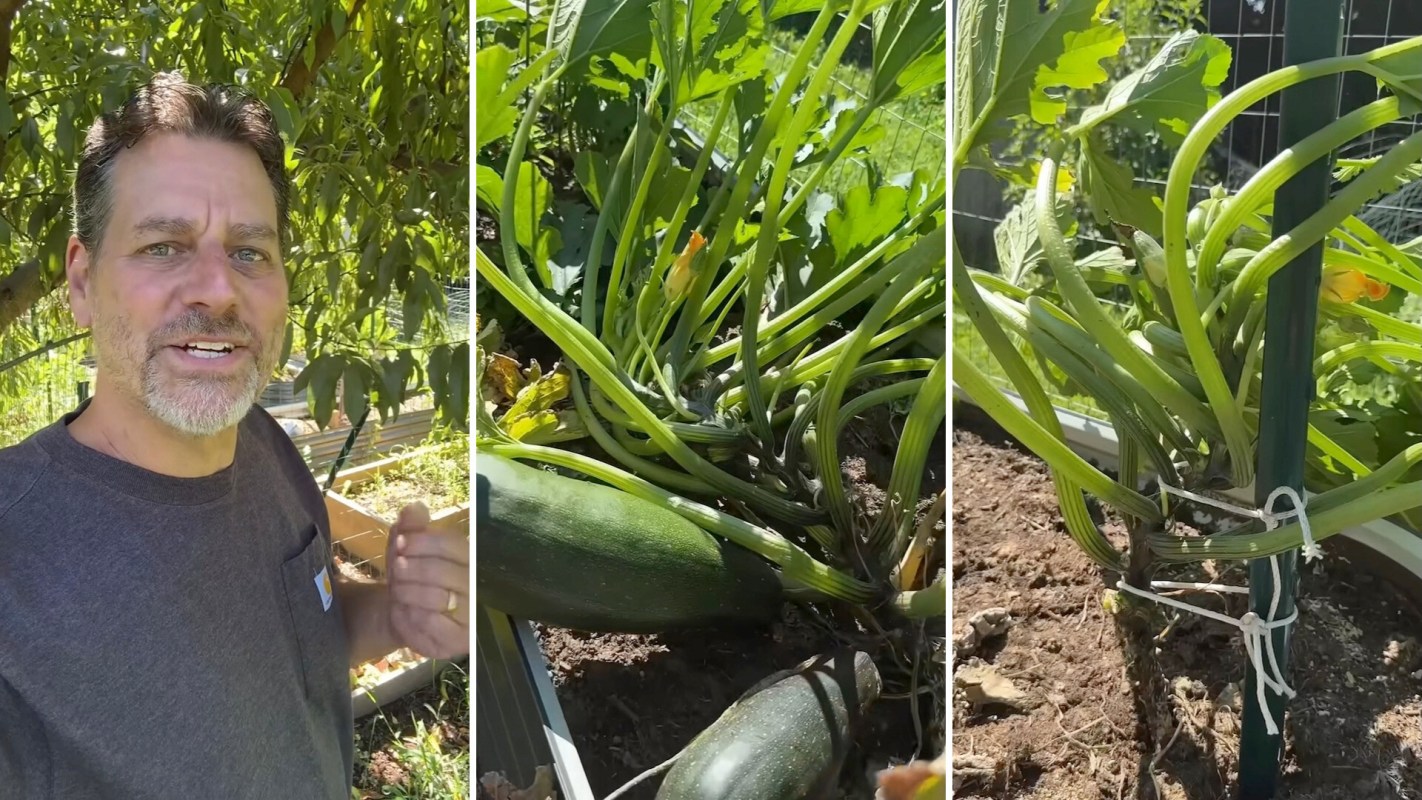
Zucchini plants are famous for taking over a garden bed in a hurry, but a simple staking trick from Gary Pilarchik of The Rusted Garden (@THERUSTEDGARDEN) can turn that sprawling summer favorite into a space-saving plant that is easier to harvest.
For gardeners working with small yards or raised beds, that can mean more food from the same patch of soil.
What's happening?
In a quick YouTube video, Gary shared a step-by-step demonstration of how to train zucchini and other summer squash to grow upward instead of outward for The Rusted Garden.
Pilarchik says these plants keep producing farther down the vine as it lengthens, which is why they can be trained upward instead of left to spread across the ground.
"You can almost grow it like a tree," he says.
Before raising the plant, he starts by removing any oversized zucchini, then gently lifts the vine and ties it onto a solid support.
TCD Picks » Quince Spotlight
💡These best-sellers from Quince deliver affordable, sustainable luxury for all




He says "a metal U-post about 6 ft tall" is a good option because "these plants can get heavy." He also recommends using ties that will not bite into the vine. After the plant is secured, he removes damaged leaves near the bottom, mounds some soil around the base, and follows up with watering and a soluble fertilizer.
The hack caught some commenters by surprise.
"Have been doing my cucumbers vertical," one shared. "I never thought about zucchini!"
Why does it matter?
Growing zucchini vertically can help solve several common gardening frustrations at once, as Sugar Maple Farmhouse explained. Lifting the plant off the ground improves airflow, frees up planting space, and can make it harder for pests and moisture-related disease issues to build up around crowded leaves.
It can also make harvesting easier. Instead of searching through a sprawling tangle, gardeners can more easily spot fruit before it gets oversized. Regular picking encourages more production and helps home growers get the most from each plant.
"I love growing my zucchini vertically," one commenter revealed. "In the heat of the summer I grow lettuce & cilantro in the shade from the huge leaves."
For households looking to cut grocery bills, a productive zucchini plant can provide a substantial amount of food for very little cost. Homegrown produce also tends to taste better because it can be picked at peak ripeness instead of being shipped and stored.
Gardening offers light physical activity, time outdoors, and a break from screens and daily stress.
What can I do?
Getting started is fairly straightforward. You can use a strong post and soft ties, and guide the plant upward little by little rather than trying to force it all at once. Pilarchik's demonstration shows that even a zucchini that has already sprawled can still be redirected.
After the plant is attached, check the older leaves near the base and remove any that are damaged or worn down. He also shows adding a bit of soil around the stem and giving the plant a thorough drink. Those small maintenance steps can support healthier growth while keeping your bed neater.
Gardeners should still be cautious.
"Summer squash vines are very brittle, training should be done when the sun is high and the vines are slightly dehydrated," a commenter warned.

Get TCD's free newsletters for easy tips, smart advice, and a chance to earn $5,000 toward home upgrades. To see more stories like this one, change your Google preferences here.






