


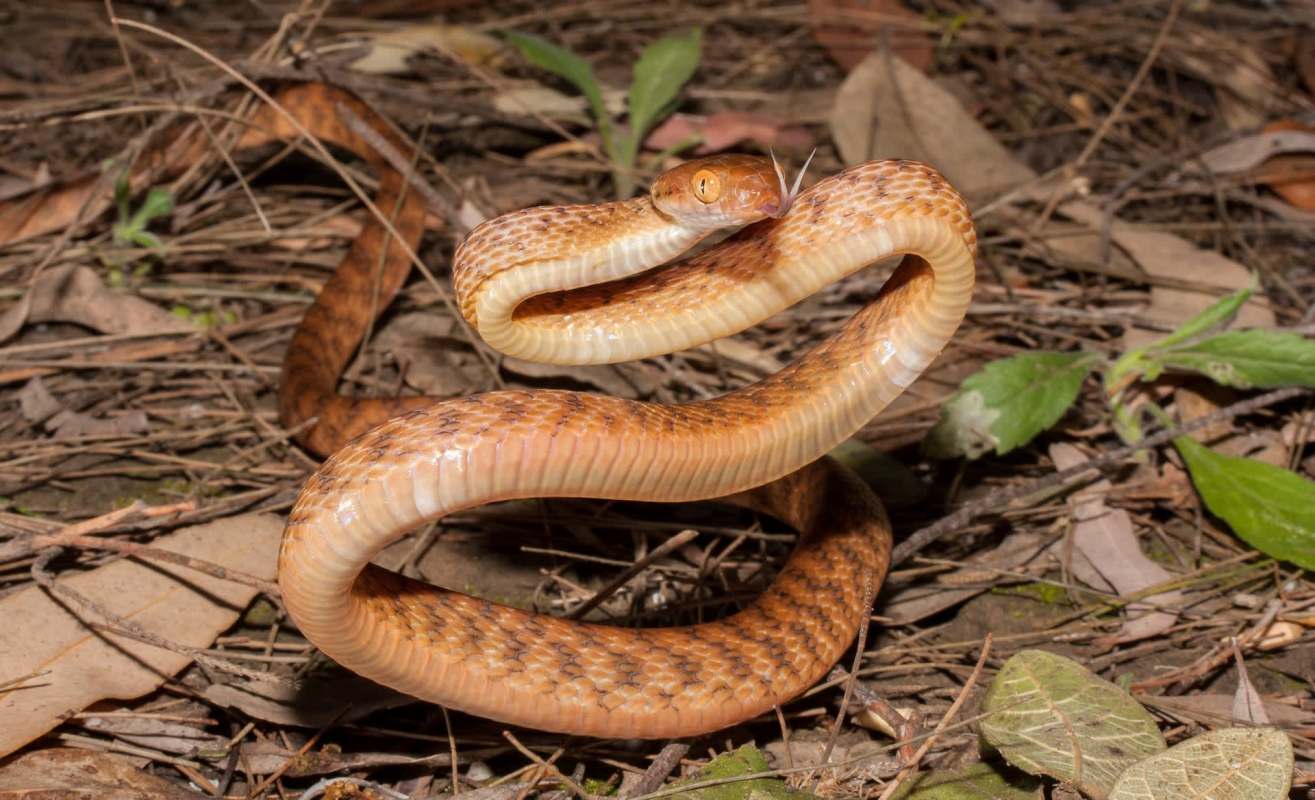
After reaching Guam with what appears to have been only a tiny founding group, brown tree snakes were expected to suffer the usual effects of inbreeding.
New genetic research points the other way, suggesting their DNA may have helped fuel the rise of a species that has become one of the island's most destructive invaders, worsening risks to wildlife and creating lasting problems for residents.
What happened?
As Gizmodo reported, researchers closely analyzed the genomes of Guam's brown tree snakes using long-read sequencing. They found more than 19,000 structural variants, including rearrangements, deletions, and duplications.
The study, published in the journal Science Advances, indicates that the snakes on Guam retain far more genetic variation than scientists would have expected from such a small founding population.
That finding challenges the long-standing assumption that the population would have passed through a genetic bottleneck after only a few snakes, likely transported on cargo ships sometime after World War II, reached the island. The U.S. Geological Survey says the species is native to Indonesia, the Solomon Islands, Papua New Guinea, and Australia, and that it was first reported on Guam around the 1950s.
Rather than disappearing, the snakes multiplied quickly across Guam. The population reached roughly 30,000 snakes per square mile while also developing differences associated with a stronger sense of smell and improved immunity.
TCD Picks » Quince Spotlight
💡These best-sellers from Quince deliver affordable, sustainable luxury for all




"It's possible that endangered species may have more flexibility in their genes than we realize," Christopher Osborne, an aquatic biologist at SUNY Oswego who led the study, said in a statement cited by Gizmodo.
Why does it matter?
On Guam, brown tree snakes have ravaged native forest habitats, sharply reduced local animal populations, and caused power outages by slithering onto electrical infrastructure.
The ecological damage has also become a community issue, disrupting power systems, straining conservation budgets, and destabilizing ecosystems, especially on islands where public services and natural systems are so closely connected.
The findings may help explain why controlling the snakes has been so difficult. Researchers said genetic changes may have equipped them to succeed in an unfamiliar environment instead of leaving them limited in the way inbreeding normally might.
If an invasive species can remain adaptable despite starting from a narrow population, scientists may need to rethink how both dangerous invaders and vulnerable species respond to environmental stress.
What's being done?
By reading long stretches of DNA instead of focusing only on individual base pairs, the researchers were able to detect a broader set of genetic changes that older methods may have overlooked.
That could eventually help wildlife managers better predict which introduced species are most likely to spread aggressively and why. It may also improve future control strategies by highlighting the biological traits, such as smell or immunity, that help invasive species survive.
Osborne said the same kind of hidden genetic flexibility could matter for struggling species, not just those causing harm.
"We're now getting a better understanding of unappreciated sources of genetic diversity that may explain how some inbred species can still respond to their environment," Osborne said.

Get TCD's free newsletters for easy tips, smart advice, and a chance to earn $5,000 toward home upgrades. To see more stories like this one, change your Google preferences here.






