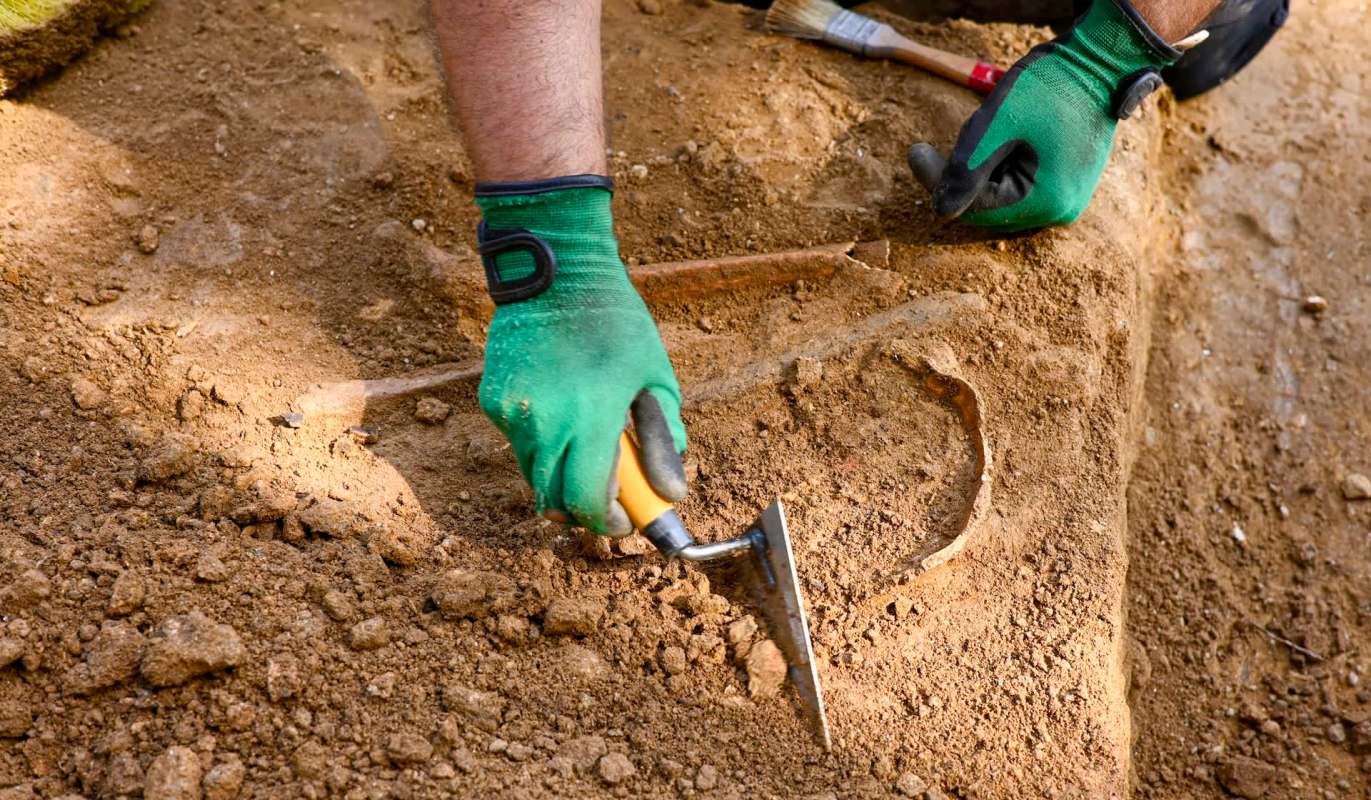
A recently uncovered burial in El Salvador may be close to 3,000 years old, giving archaeologists a possible window into some of the area's earliest known inhabitants.
Live Science reported that the burial, in Antiguo Cuscatlán near San Salvador, held a face-down skeleton and a sea turtle-shaped clay vessel. The find may add to what is known about pre-Maya life in the region.
What happened?
El Salvador's Ministry of Culture said, in a translated statement, that crews found the burial July 2.
The Plan de la Laguna crater buried the grave under thick layers of volcanic ash sometime around 850 to 830 B.C.
Researchers are now studying the preserved human remains and artifacts there to learn more about when the site was used and who may have been buried there.
Archaeologist Carlos Flores Manzano, a Yale University doctoral candidate, directed the dig alongside specialists from El Salvador's ministry.
TCD Picks » Good Store Spotlight
Get 10% off your next purchase with code TCD10



Officials haven't radiocarbon-dated the skeleton yet. The ash layer above the grave supplied the 850 B.C. estimate, and lab work should either back it up or revise it.
If the dating holds, the burial would place people in the San Salvador valley during Mesoamerica's Middle Preclassic era, roughly 1000 B.C. to 400 B.C.
Why does it matter?
Burial sites can tell researchers far more than simply where people were laid to rest.
Human remains and nearby objects can offer clues about diet, health, social customs, trade, migration, and spiritual beliefs, details that help piece together how early societies lived. Flores Manzano said chemical testing of these bones should show more about how the person lived, what they ate, and what killed them.
Researchers are still filling in large stretches of ancient Central American history.
Tropical climates, development pressure, and the passage of time can all make preservation difficult, so each well-preserved site has the potential to answer long-standing questions. Here the volcanic ash worked in researchers' favor. It sealed off the grave along with petrified cassava furrows nearby.
Unearthing and protecting cultural heritage can strengthen local identity, support education, and draw visitors to museums and sites in surrounding communities.
Finds near major urban areas show that historically significant places can remain hidden beneath modern landscapes for thousands of years.
What's being done?
Careful handling came first.
Archaeologists documented exactly where remains and artifacts lay before moving anything, since an object's context is often just as important as the object itself.
Careful documentation preserves information that vanishes once a burial area is open.
Conservators encased the fragile burial in plaster before lifting it out, and Flores Manzano expects the laboratory results in about a year.
The findings may also guide how officials manage nearby land so more buried history escapes accidental damage.
Ministry of Culture officials described the find in their statement, saying, "The remains were found in a prone position at 17 degrees east of north, and initial estimates suggest they date to 850 B.C."

Get TCD's free newsletters for easy tips, smart advice, and a chance to earn $5,000 toward home upgrades. To see more stories like this one, change your Google preferences here.