


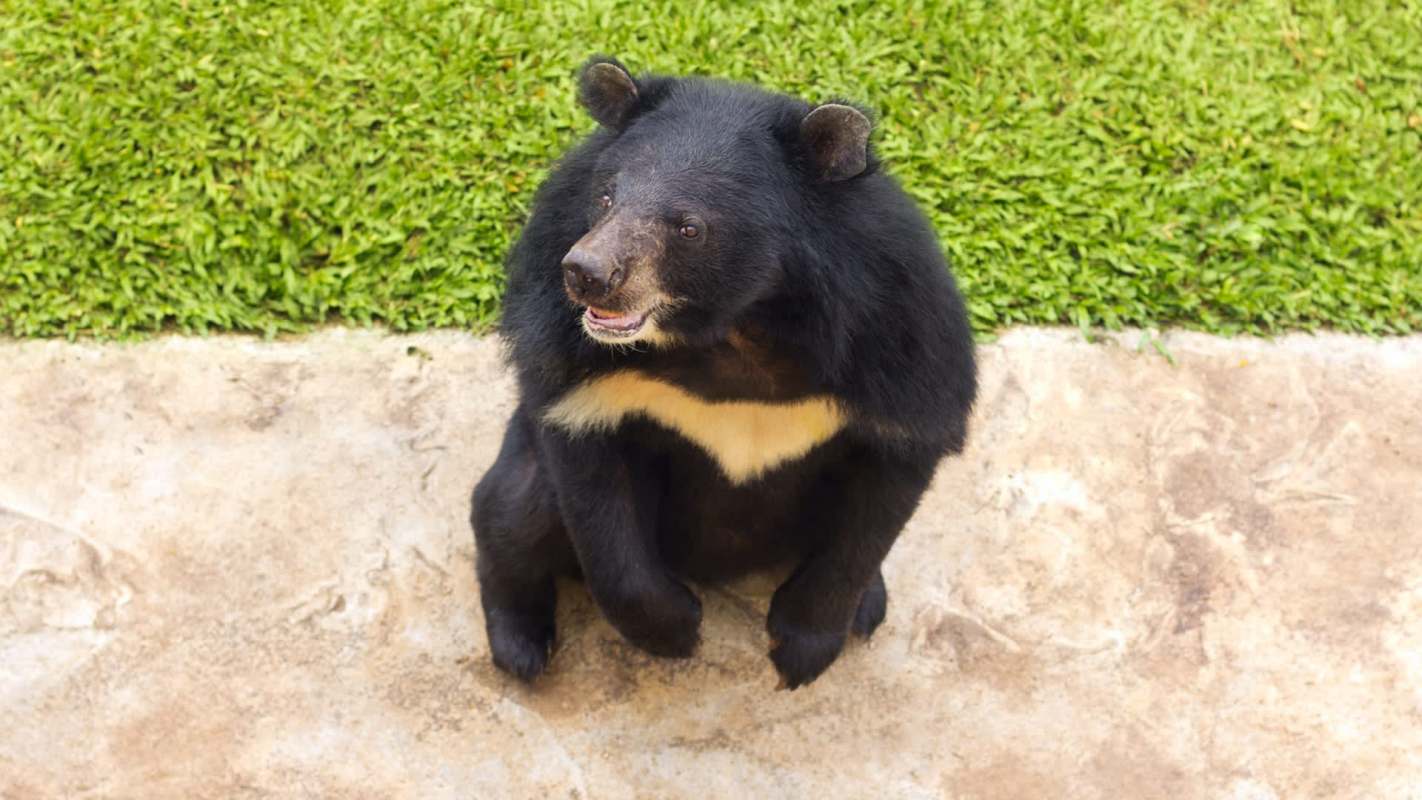
Sunlight was something Jing Lee, a young moon bear in Laos, had never experienced during years of confinement on an illegal farm.
Now out of the metal cage where the bear was kept, Jing Lee is beginning to experience a life far closer to the wild.
What happened?
According to Asia News, Jing Lee experienced the outdoors for the first time on July 2 after being rescued from a bile farm in Laos, where bears had been confined for years. Although illegal, bile farms keep bears in cramped cages so their bile can be extracted for use in some traditional medicines, often causing the animals years of suffering.
The outlet reported that Jing Lee was part of a wider effort to free the animals, which resulted in 27 moon bears being removed from the property.
Free the Bears, a conservation charity, led the operation, and Karthiriish Chandra was part of the rescue team. The animals had been taken from the foreign-owned farm in May, when it was found to be operating illegally.
According to Asia News, at Luang Prabang Wildlife Sanctuary, the rescued bears — estimated to be between 1 and 3 years old — are now safe to move around a forested area.
TCD Picks » Quince Spotlight
💡These best-sellers from Quince deliver affordable, sustainable luxury for all




Because of what they endured, behaviors that should be routine are unfamiliar to many of them.
"Things that might seem simple or basic to us are completely new to them," Karthiriish said, as reported by Asia News.
Why does it matter?
Bear bile farming often leaves the animals involved with physical and psychological trauma.
According to Asia News, their ordeal reportedly began when they were taken from the wild as cubs, after which they spent years eating only cornmeal.
As a result, even chewing harder foods at the sanctuary is something they are still adjusting to as they learn to use their teeth.
What's being done?
Free the Bears and staff at Luang Prabang Wildlife Sanctuary are now focused on the bears' rehabilitation.
Because of the trauma they endured, the animals are expected to need sanctuary care for life.
That means giving them space, enrichment, veterinary support, and time to adjust to a world that should have been familiar from the beginning.
Recovery now includes basic experiences such as walking on natural ground, climbing, and swimming.
Karthiriish captured the scale of that change in simple terms: "They hadn't stood on solid, natural ground, climbed a tree, swum in a pool or even eaten hard vegetables since they were stolen from the wild as cubs."

Get TCD's free newsletters for easy tips, smart advice, and a chance to earn $5,000 toward home upgrades. To see more stories like this one, change your Google preferences here.







