


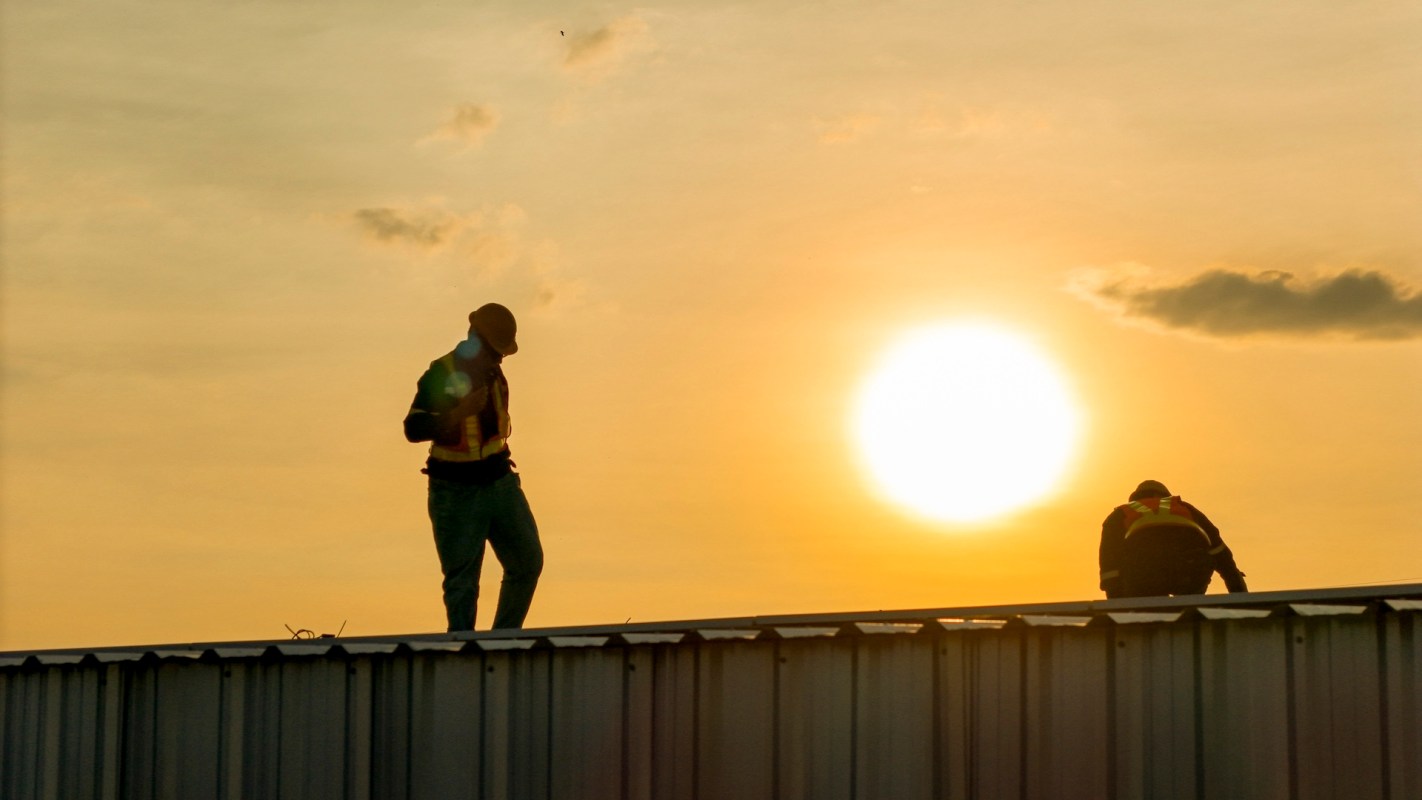
Even in a state accustomed to sweltering summers, this season's heat is pushing outdoor work into dangerous territory.
For roofers and other laborers in Louisiana, the threat goes well beyond discomfort — it can quickly become a medical emergency.
What's happening?
According to Fox 8 WVUE, the Bayou State has recorded four heat-related deaths this summer, and emergency room visits linked to heat have risen, especially in St. Tammany, Jefferson, and Orleans parishes. Heat warnings and advisories are also in effect across the state, and conditions can be even harsher on active job sites.
Ray Dellinger, owner of Suburban Roofing and Siding, said roof surfaces can reach 130 degrees Fahrenheit, intensifying the exposure for crews working above ground in direct sun.
Evan Canzoneri, a safety consultant with the Louisiana Workers' Compensation Corp., said the danger is often underestimated. "Just because you live in Louisiana, that doesn't mean you're acclimated to work outside in Louisiana on a daily basis," he told Fox 8.
Why does it matter?
Extreme heat is one of the most immediate ways weather can disrupt daily life, especially for people whose jobs require them to be outdoors for hours at a time. Construction crews, roofers, landscapers, delivery workers, and others often have few options when temperatures spike.
TCD Picks » Quince Spotlight
💡These best-sellers from Quince deliver affordable, sustainable luxury for all




Humidity makes the danger worse. When the air is saturated, sweat cannot evaporate effectively, reducing the body's ability to cool itself. That increases the risk of heat exhaustion and heat stroke, even for workers who believe they can push through the conditions.
The consequences also reach beyond job sites, as families are affected when a loved one ends up in the emergency room or misses work because of a heat illness.
Businesses may also experience lower productivity, delayed projects, and higher medical and insurance costs.
Anyone doing home repairs, yard work, or recreational activity in summer heat can face many of these hazards.
What's being done?
Safety experts say heat planning should happen before a workday begins.
For new or returning workers, Canzoneri said that means building tolerance by starting with one-fifth of a day in hot conditions and gradually increasing exposure over a five-day period until full days are manageable.
He also advised workers to hydrate before a shift, drink water every 20 minutes, and avoid coffee and sugary drinks, which can make heat stress harder to handle.
To help with day-to-day decisions, he recommended the Heat Safety Tool app — by the Occupational Safety and Health Administration and National Institute for Occupational Safety and Health — which gives live warnings based on a user's location and helps people evaluate risk before and during a shift, as well as the National Weather Service HeatRisk dashboard, which can show dangerous temperature patterns up to seven days in advance.
That information can help employers and workers move demanding tasks to safer hours, add breaks, or otherwise adjust schedules.
"These workers are very, very diligent. They're hard working, and they're dedicated to their craft. I am in awe of all of them, and they are the true backbone of our corporation," Dellinger said.

Get TCD's free newsletters for easy tips, smart advice, and a chance to earn $5,000 toward home upgrades. To see more stories like this one, change your Google preferences here.







