


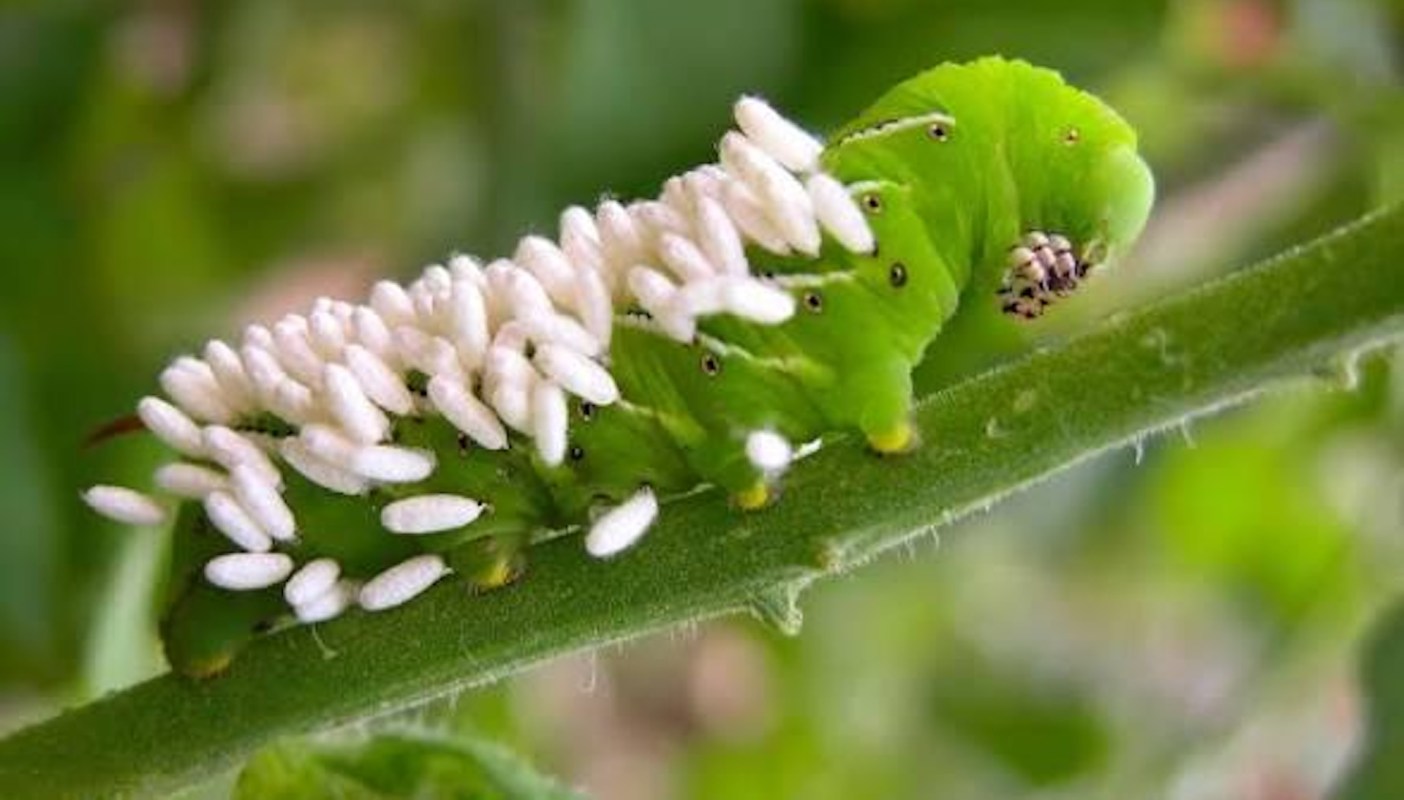
Seeing a tomato hornworm in the garden usually means trouble. But if that large green caterpillar is covered in tiny white cocoons, gardeners are being urged to pause before removing it.
That unsettling sight is actually a sign that nature may already be handling the problem — and doing it without chemicals.
What's happening?
A gardening PSA has been circulating online after someone shared a photo on Reddit of a tomato hornworm covered in white braconid wasp cocoons.
"They are a friend not a foe," the original poster said. "Do not touch, leave it be."
Those white cocoons signal that parasitic wasps have already laid eggs in the hornworm and are using the pest as a host. Commenters said that once the cocoons are visible, the caterpillar is no longer the same kind of threat to nearby plants.
The OP, who identified themselves as a parasitologist, wrote in the thread, "These hornworms can demolish a tomato plant very quickly and these cocoons paralyze the caterpillar and stop it from eating your plants."
TCD Picks » Quince Spotlight
💡These best-sellers from Quince deliver affordable, sustainable luxury for all




The original poster also noted the unfortunate side of the process, writing, "Kinda makes me sad though because I love a good hawk moth."
Why does it matter?
Because tomato hornworms can rapidly strip leaves, damage stems, and chew through fruit, it helps to know when natural pest control is already at work so gardeners can avoid unnecessary spraying or panic.
Gardening can bring real benefits, helping people to save money on produce, enjoy fresher and better-tasting fruits and vegetables, and get physical activity and stress relief in the process. Protecting plants naturally can make growing food at home more affordable and less frustrating.
The discussion also served as a reminder that wasps are not always garden villains.
As one commenter put it, "Gardening made me appreciate wasps so much. If there is a pest in your garden nature has evolved a specific wasp to kill it."
Beneficial insects offer one more reason to work with the ecosystem instead of against it.
What can I do?
The basic recommendation is to leave any hornworm covered in white cocoons exactly where it is. Those cocoons show that beneficial wasps are already taking care of the pest-control job.
Gardeners may also get better results by learning to identify pests at different stages and trying more natural methods before reaching for chemical sprays.
Several commenters suggested gentler ways to manage that balance, including planting extra "sacrificial" plants away from main crops.
One wrote, "This caterpillar itself is not 'bad.' It's a native species and turns into a moth that is a useful pollinator. It just happens to be eating a crop that we're trying to raise. I used to destroy them, but recently I've been trying to make a conscious effort to move them to another plant in my yard."
"These guys are important little fellas," another commenter wrote.

Get TCD's free newsletters for easy tips, smart advice, and a chance to earn $5,000 toward home upgrades. To see more stories like this one, change your Google preferences here.






