


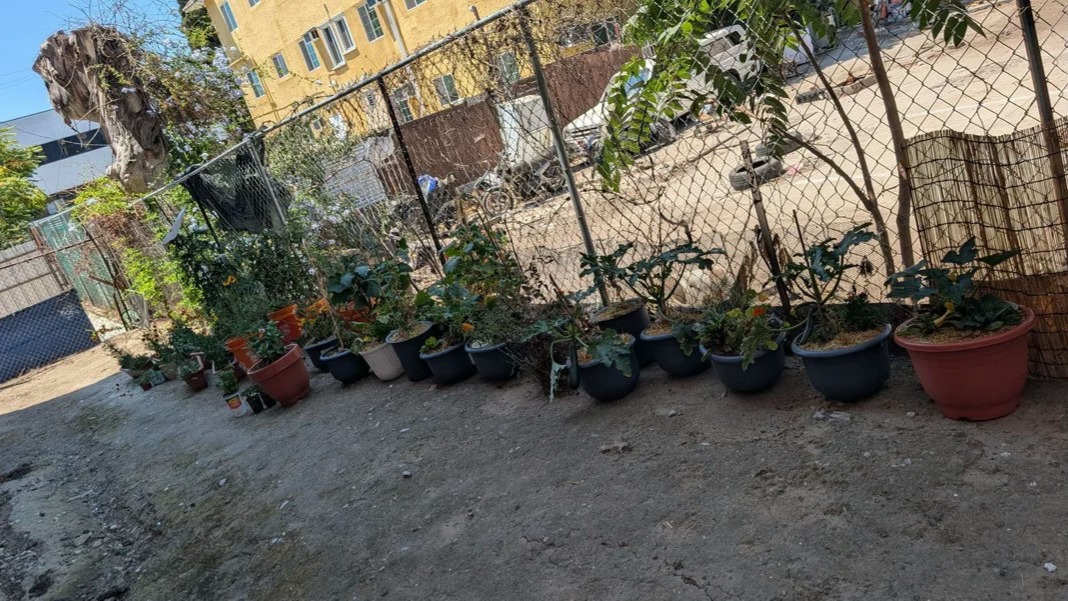
A Los Angeles renter says a container garden they created in a shared backyard could soon be removed after the landlord objected that no permission had been given, even though the setup is not blocking a walkway and is in an area that had previously been "just dirt and broken glass."
What happened?
Writing in a post on Reddit, the Koreatown tenant said they used roughly 40 containers for food and flower plants. They said other tenants had thanked them for the improvement, and that the garden was connected to automatic watering, but the landlord still intended to have it "thrown out."
For the renter, the conflict seemed to be about more than just a rule dispute.
"Is there any way to fight this because it's making the space more liveable?" they wrote, adding that the plants are in containers, not in a walkway, and that "no one goes to the back because it's so disgusting."
Some commenters zeroed in on the fact that the garden is in a common area, saying that detail may matter more legally than whether the plants are edible.
California's AB 2561 came up in the discussion, which allows tenants to grow their own food, but another commenter pointed to language saying tenants may use "portable containers approved by the landlord in the tenant's private area," which could mean a shared backyard is not covered.
TCD Picks » Quince Spotlight
💡These best-sellers from Quince deliver affordable, sustainable luxury for all




Other replies suggested the landlord's concerns might involve authority over shared space, liability, or pests rather than the garden itself.
One commenter warned that the setup should not create "a pest control or health hazard for the building and your neighbors."
Why does it matter?
For renters, growing food can be a practical way to lower grocery costs while also making a home feel more livable — particularly in crowded city neighborhoods with limited green space.
But tenants across the U.S. often run into restrictions when they try to adopt cheaper, lower-waste habits, whether that means planting vegetables or hanging clotheslines instead of depending on energy-intensive dryers. Even changes that seem beneficial can still require a landlord's approval.
In this case, the renter said the containers used a part of the property that others had largely avoided.
What can I do?
Much of the advice centered on going back to basics: check the lease first, then make a formal written request instead of relying on an informal understanding.
One commenter advised, "Ask him if you can have a container garden in the back," and suggested turning the conflict into a negotiation over conditions such as raised beds, fencing, or safer placement.
Commenters said the landlord may be worried about access, tripping hazards, utilities, or rodents. Addressing those issues directly can sometimes make an initial refusal easier to revisit.
If keeping the garden onsite is not possible, commenters also suggested backup plans including community gardens, local free groups, or nearby residents willing to foster plants temporarily. Readers trying to work with landlords or housing rules may also find useful strategies in TCD's guide to changing HOA bylaws, even outside formal HOA settings.
As one commenter put it, "people really should have the right to grow food." For the renter now trying to save dozens of plants, the feeling was even more direct: "I am so freaking heartbroken."

Get TCD's free newsletters for easy tips, smart advice, and a chance to earn $5,000 toward home upgrades. To see more stories like this one, change your Google preferences here.






