


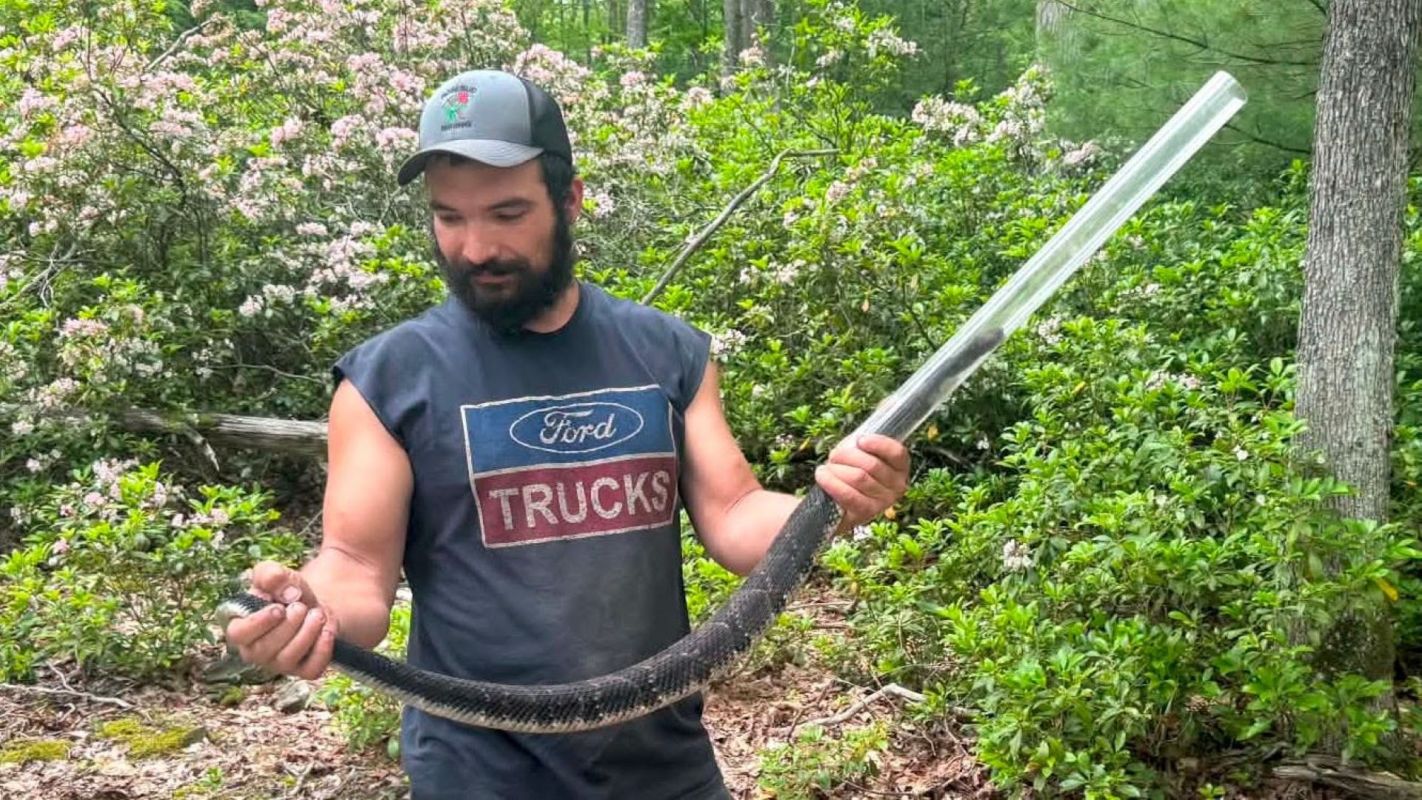
A Pennsylvania snake handler is urging people to give wildlife more space after a routine outing ended in a devastating injury when a timber rattlesnake bit his hand.
Now, he says, the snake was simply acting on instinct after he got too close, a reminder that most snakebites happen when people venture into an animal's territory rather than the other way around.
What happened?
On July 11, after already coming across more than a dozen snakes, Mark Kline, a 31-year-old snake handler from Central City, and his brother were on Mount Davis in Somerset County looking for venomous species when Kline noticed a yellow-phase timber rattlesnake nestled among rocks, GoErie reported.
Before using his hand, Kline said, he tried unsuccessfully to draw the snake out with a hook, a move he said he soon regretted.
"I reached down and grabbed her, trying to work her backward with my hand because I was far away from her head," he said. "She nailed me on the back side of the finger."
Because the brothers were roughly 900 yards from the closest road when Kline was bitten, they called 911 as they made their way out, GoErie reported. He was later flown to Conemaugh Medical Center in Johnstown and remained there for a week as doctors treated the bite and an allergic reaction.
TCD Picks » Quince Spotlight
💡These best-sellers from Quince deliver affordable, sustainable luxury for all




Kline said the bite caused major swelling in his hand and arm, and doctors now worry his ring finger will not recover.
"It's probably going to be removed," he said.
Why does it matter?
"She was scared. She did what she was supposed to do. You can't fault a snake for protecting itself," he said. "It doesn't know my intentions."
Pennsylvania is home to 21 snake species, including three venomous ones: timber rattlesnakes, copperheads and eastern massasaugas. World Population Review reports the state averages 64 venomous snakebite victims each year.
GoErie reported Kline works as a roof bolter at a coal mine, and he said he expects to miss about a month of work while recovering, adding a financial burden to an already painful ordeal.
Encounters like Kline's tend to happen when people enter a snake's habitat to hunt, hike, or handle the animal directly, rather than the reverse.
What can I do?
Kline said that if people see a snake, they should leave it alone, and the Pennsylvania Fish and Boat Commission recommends the same approach.
Venomous snakes in Pennsylvania are regulated. GoErie reported that anyone wanting to hunt, take, catch, kill or possess timber rattlesnakes and eastern copperheads needs a permit, and people also need a Pennsylvania fishing license. The handling season, GoErie reported, runs this year from June 13 to July 31.
Kline said even people with extensive experience can make serious mistakes.
A similar close call played out for another Pennsylvania man bitten by a timber rattlesnake in Somerset County, who needed a Life Flight helicopter rescue after an encounter near a roadside.
"I never thought I would have been bit; I've handled a couple hundred of them," he said, but added: "I knew better."
If a bite does happen, the state recommends going to a hospital immediately.
"If you see one, give it space," Kline said. "They're not there to hurt you. They are there doing their deal."

Get TCD's free newsletters for easy tips, smart advice, and a chance to earn $5,000 toward home upgrades. To see more stories like this one, change your Google preferences here.







