


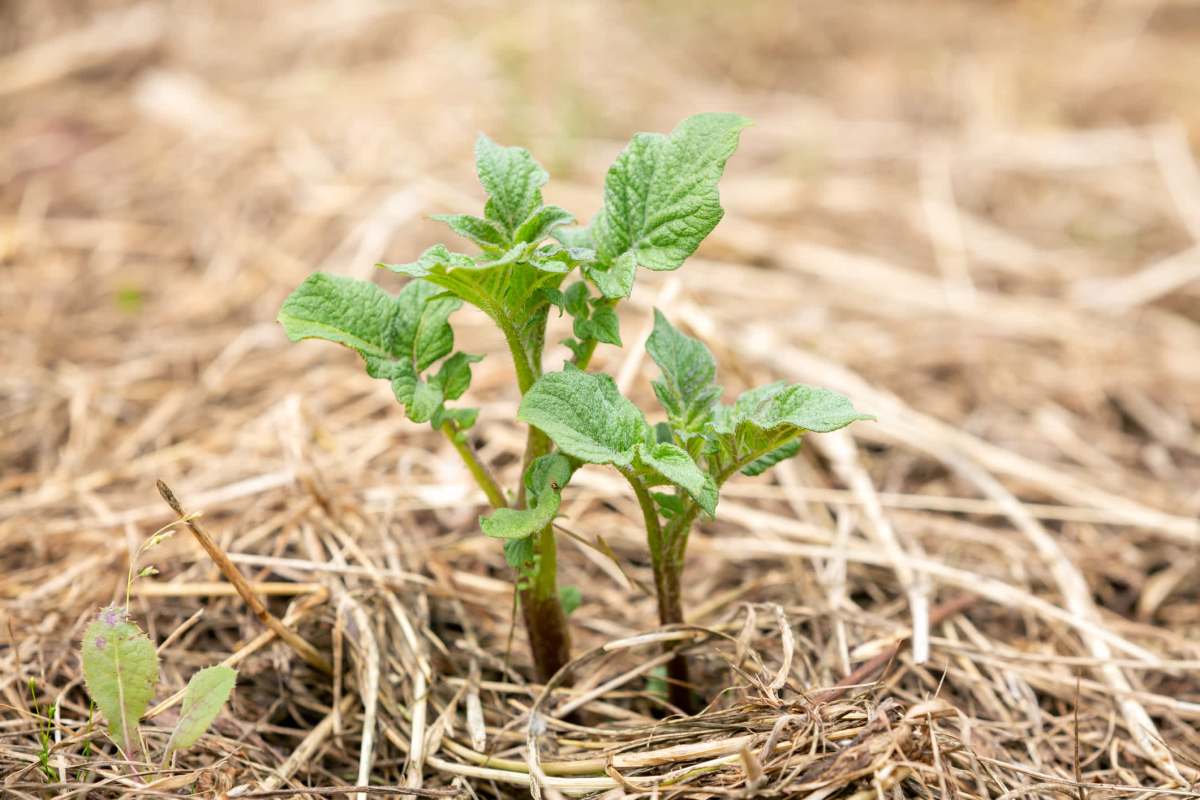
Traditional potato growing often involves digging trenches, mounding soil, and a harvest that takes plenty of digging. But one gardening video is gaining attention for spotlighting an easier approach.
For gardeners hoping to grow fresh food with less labor, the method offers a surprisingly practical shortcut with similar yields.
What happened?
A recent video from Epic Gardening documents a trial of the Ruth Stout method, a potato-growing technique associated with "The No-Work Garden" author Ruth Stout.
In the demonstration, the seed potatoes were not planted 4 to 6 inches underground. Instead, they were lightly pressed against the soil surface, spaced about 12 to 18 inches apart, and covered with a 6- to 8-inch layer of straw.
That thick layer keeps light away from the developing potatoes, helps the bed stay moist, and leaves the crop close enough to the surface that harvest is much simpler.
The creator also recommended using determinate potatoes, which typically produce in a single layer, and waiting until the seed potatoes are sprouted, or "chitted," to encourage quicker early growth.
TCD Picks » Quince Spotlight
💡These best-sellers from Quince deliver affordable, sustainable luxury for all




Shoots had already started emerging through the straw after three weeks. A couple of months later, harvest revealed several potatoes beneath each plant, with little digging needed to collect them.
One commenter wrote: "It's a neat method if you have access to free straw, but for me here, straw and hay are just too expensive. Like, literally more than the potatoes that would be growing underneath."
Why does it matter?
Low-effort methods like this can make gardening feel more approachable.
Potatoes are a staple crop, and producing even a modest harvest at home can help cut grocery costs while giving gardeners fresher, better-tasting food than many store-bought options.
Gardening can also support mental and physical health. Time outside, regular movement, and the satisfaction of growing something edible can help reduce stress while building healthy habits.
This method eliminates trench digging and minimizes weeding, which may also help more beginners get started. However, the nuance of this method might increase the chances of failure. Making sure instructions are followed is paramount.
Not every potato reached the size the creator expected, and the video suggested that limited water and a thinner-than-ideal straw layer were likely to blame.
The video also pointed out that potatoes can turn green if too much light reaches them, making them less safe to eat. It favored straw over hay as well, since straw usually brings along fewer weed seeds.
What can I do?
If you want to try this yourself, choose a determinate variety, set chitted seed potatoes on loosened soil, and cover them with a thick layer of straw.
Watch moisture levels closely, especially during hot weather, and add extra straw if any tubers begin to show.
This kind of setup can be especially useful for gardeners with hard soil, limited mobility, or anyone who wants a lower-maintenance food garden.
It may not be the cheapest option everywhere, especially if straw is pricey locally, but it can still be worthwhile if ease and convenience are your top priorities.
For anyone looking to stretch their budget and eat more homegrown produce, this guide to growing your own food offers practical ways to get started.
As the content creator put it, "You drop it, you cover it, you walk away, and then you get something at the end of the season."
One viewer wrote: "I've gardened for decades. Today I learned about determinate potatoes."

Get TCD's free newsletters for easy tips, smart advice, and a chance to earn $5,000 toward home upgrades. To see more stories like this one, change your Google preferences here.






