


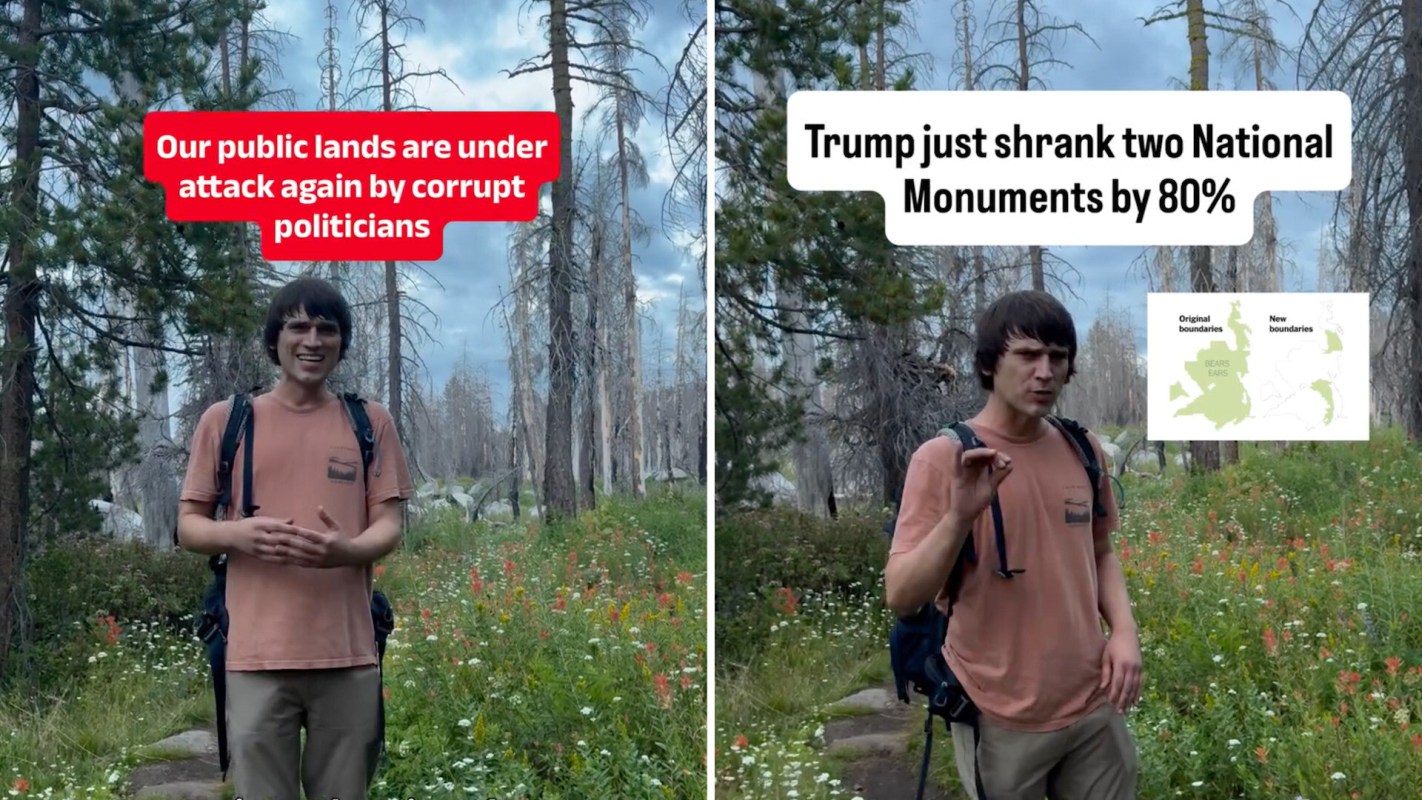
Millions of acres of protected Utah landscape are at the center of a wave of outrage online after an Instagram Reel warned that federal monument protections were being stripped from Bears Ears and Grand Staircase-Escalante.
Viewers were reacting to more than the sheer amount of land mentioned. Much of the concern centered on sacred places, habitat, and the possibility that land preserved for public use could instead be directed toward drilling and mining.
What happened?
In a viral Instagram Reel, Jessie Dickson (@sacramentofoodforest) said President Donald Trump had signed an executive order affecting roughly 3 million protected monument acres in Utah. The post also singled out Utah Sen. Mike Lee, presenting the move as part of a broader attack on public lands.
The warning emphasized what the land could be opened up to if protections are removed: oil development, coal and uranium mining, and the looting of Native artifacts. The creator said the changes involve Grand Staircase-Escalante National Monument and Bears Ears National Monument, and the caption said Grand Staircase-Escalante lost about 90% of its land while Bears Ears lost more than 1.7 million acres.
In the video, the creator stressed that both places are "sacred to Native Americans and biodiversity hotspots."
Why does it matter?
The issue is not just about redrawing lines on a map. National monuments are generally protected for cultural, scientific, and ecological reasons, and in this case the creator's warning focused on land connected to Native communities and landscapes known for wildlife habitat and native wildflower blooms.
TCD Picks » Quince Spotlight
💡These best-sellers from Quince deliver affordable, sustainable luxury for all




Access is also part of the debate. For many families, public land remains one of the most affordable ways to hike, camp, hunt, fish, and explore. If more acreage is redirected toward extraction or privatized uses, those low-cost opportunities can become harder to find.
Opening sensitive areas to coal, oil, and uranium development can increase pollution risks, disrupt ecosystems, and prolong dependence on those industries.
For towns that rely on tourism and outdoor recreation, the effects could also extend to local jobs and small businesses.
What can I do?
Commenters immediately started asking what action looks like. "How do we stop any of this from happening?" one person wrote under the post.
People can contact senators and House members, monitor public-comment opportunities, and follow tribal nations, local advocates, and conservation groups that track monument policy and land-use changes.
It can also help to support organizations protecting public access, learn more about culturally significant lands before visiting them, and practice Leave No Trace principles so fragile places are not further stressed.
Another commenter highlighted the economic debate behind the push for more extraction, writing, "It's insane that they're talking about mining coal on the Kaiparowits Plateau when Utah's existing mines are operating at half capacity in a private equity death spiral."
The creator made the stakes clear in their own words: "The one thing that truly makes America great is the land we can afford to recreate on, our public land. The land you own and the land I own."

Get TCD's free newsletters for easy tips, smart advice, and a chance to earn $5,000 toward home upgrades. To see more stories like this one, change your Google preferences here.







