


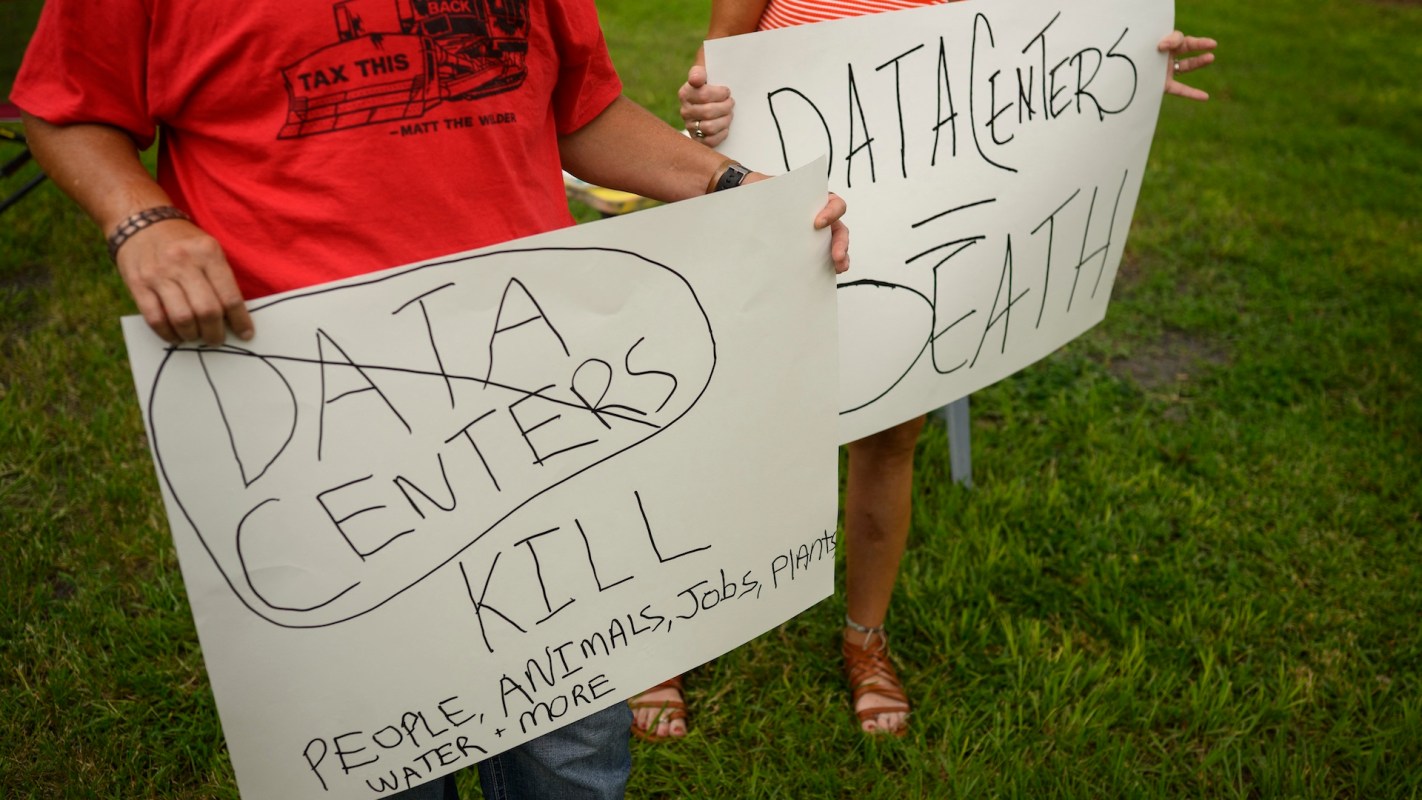
Resistance to artificial intelligence's physical footprint went national over the weekend as opponents of new data centers staged protests from Texas to California.
As Reuters reported, the demonstrations focused less on software than on the land, water, and electricity needed to keep AI systems running.
What happened?
Saturday's nationwide campaign included 142 demonstrations in 42 states, per the outlet. The effort was led by HumansFirst, which says the rush to build data centers is advancing with too little accountability and too little say from the public.
Public opinion suggests the backlash crosses party lines. In a June Reuters/Ipsos survey, only about one in three Americans said they were satisfied with the current pace of U.S. data center construction, and just 14% said they would back an AI data center in their own community.
"We were thrilled with the turnout," Chris Barron, who handles press for HumansFirst, told Reuters.
That is even as local organizers acknowledged weaker-than-hoped participation in some places. The outlet reported that Texas hosted 18 events, the most of any state, with Georgia next at 11 and California at eight.
TCD Picks » Quince Spotlight
💡These best-sellers from Quince deliver affordable, sustainable luxury for all




In Imperial County, California, a proposed project became a focal point because Reuters said it could take about 260 million gallons of Colorado River water each year.
"It's dystopian that you would use this much fresh water for AI," organizer Ivan DelSol declared to the outlet.
Why does it matter?
Data centers are becoming one of the clearest local consequences of the AI boom. While many people encounter AI through chatbots, search tools, and workplace software, the technology depends on massive server facilities that can consume large amounts of electricity and, in some cases, water for cooling.
That ties AI directly to the energy grid. AI tools could help utilities forecast power demand, manage outages, and optimize clean energy systems such as wind and solar.
However, that same expansion can also strain local grids, increase water demand, raise questions about security and misuse, and potentially contribute to higher household energy bills if infrastructure costs are passed on to ratepayers.
Those tradeoffs are becoming increasingly personal in communities where projects are proposed.
Amy Kremer, a co-founder of HumansFirst, said residents often feel blindsided.
"They just woke up one day and found out they're going to have this monstrosity in their community, and they don't want it," she asserted to Reuters.
What's being done?
Rather than rallying behind a single fix, the groups involved are seeking a more open development process, tougher environmental and public-health safeguards, community benefits such as well-paying union jobs, and mechanisms to make sure developers keep their commitments, Reuters reported.
The industry, for its part, says it is working to address those concerns.
"The data center industry is continuing to work with policymakers, stakeholders, and residents to ensure data centers strengthen, not strain, the areas where they operate — while mitigating any negative impacts to households and businesses," responded Josh Levi, president of the Data Center Coalition, per Reuters.
Proposed data centers often move through county commissions, planning boards, zoning hearings, and utility reviews long before construction begins.
For some new activists, that process is exactly the point, and why they showed up on Saturday.
"I've been hearing about unregulated AI and the rapid growth was alarming me," Tyler, Texas activist Eva Cardona told Reuters. "I wanted to do something more hands-on than just your standard Facebook post."

Get TCD's free newsletters for easy tips, smart advice, and a chance to earn $5,000 toward home upgrades. To see more stories like this one, change your Google preferences here.






