


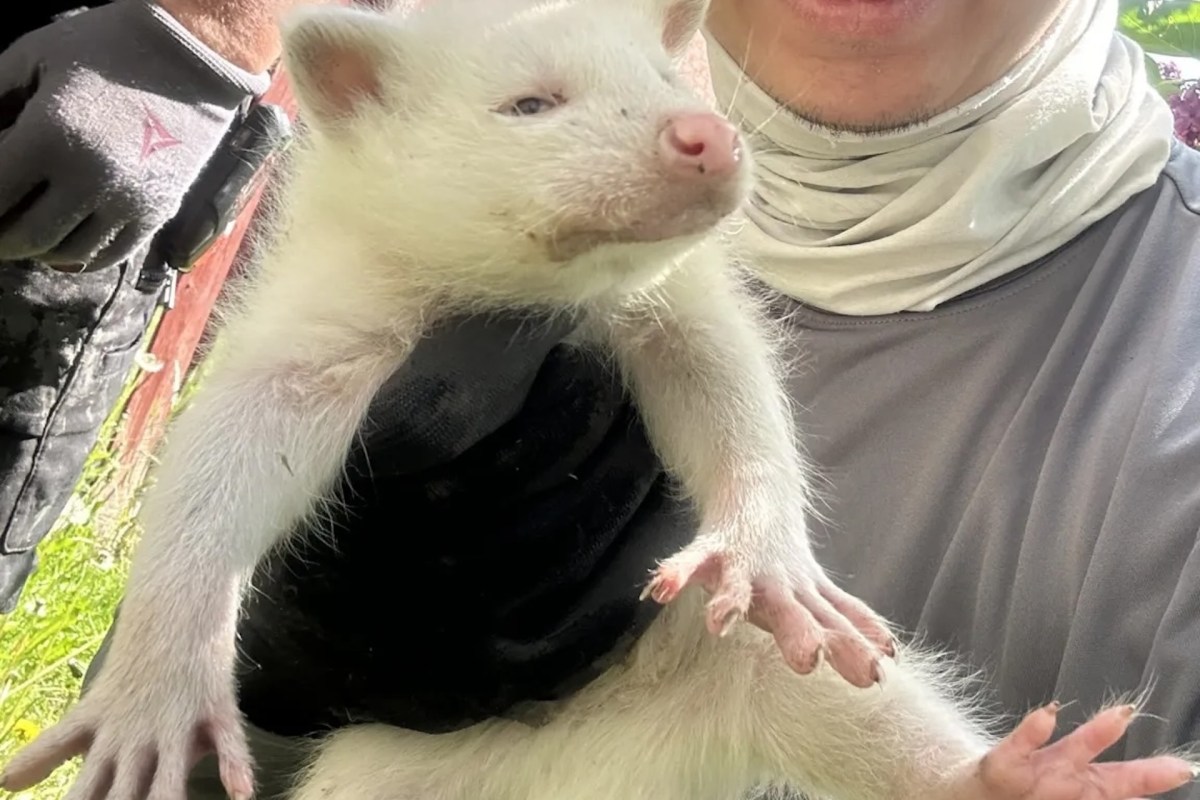
During an otherwise ordinary wildlife removal call in Ontario, Canada, technicians came across something unusual under a front porch: a baby raccoon that appeared almost completely white. Beside its normally colored littermates, the pale youngster was an immediate standout and a rare sight.
What happened?
According to Durham Post, Skedaddle Humane Wildlife Control found the raccoon while working a removal job in Aurora, Ontario. The mother had set up a den between the trusses beneath the home's front balcony, using the space as a concealed shelter for her litter.
Although the baby first seemed to be albino, it was actually leucistic, which is a different genetic condition that reduces pigmentation rather than eliminating it entirely. Animals with leucism usually keep their normal eye color and can still retain some of their natural markings.
To avoid splitting up the family, technicians first encouraged the mother to leave, then removed all of the babies, including the white one, without injury and placed them in a reunion box so she could return and move them to a new den herself.
Why does it matter?
The find is unusual because leucistic animals are rare, especially in ordinary suburban settings where most people would never expect to encounter one. A white or nearly white raccoon can look strikingly different from the masked, gray-toned animals people are used to seeing in neighborhoods and parks. Many people use "albino" to describe any white animal, but leucism is a separate condition.
Porches, balconies, and crawl spaces can become den sites during baby season. When young animals are involved, rushed or aggressive removal can split up families and put the babies at risk.
TCD Picks » Quince Spotlight
💡These best-sellers from Quince deliver affordable, sustainable luxury for all




What's being done?
If people hear scratching, chittering, or movement under a porch or deck, experts generally advise against sealing entry points right away, since babies may still be inside. Trapping or removing a mother without checking for a litter can create a much bigger problem.
Humane wildlife professionals can inspect the space, confirm whether young animals are present, and help the animals leave safely. That was the approach in this case: rather than harming the raccoons, technicians used a reunion box so the mother could reclaim her young and relocate the family, resolving the issue for the homeowner while keeping the litter together.
Once the family has moved on, homeowners can repair gaps and reinforce vulnerable areas to help prevent another den from being built in the same spot.

Get TCD's free newsletters for easy tips, smart advice, and a chance to earn $5,000 toward home upgrades. To see more stories like this one, change your Google preferences here.






