


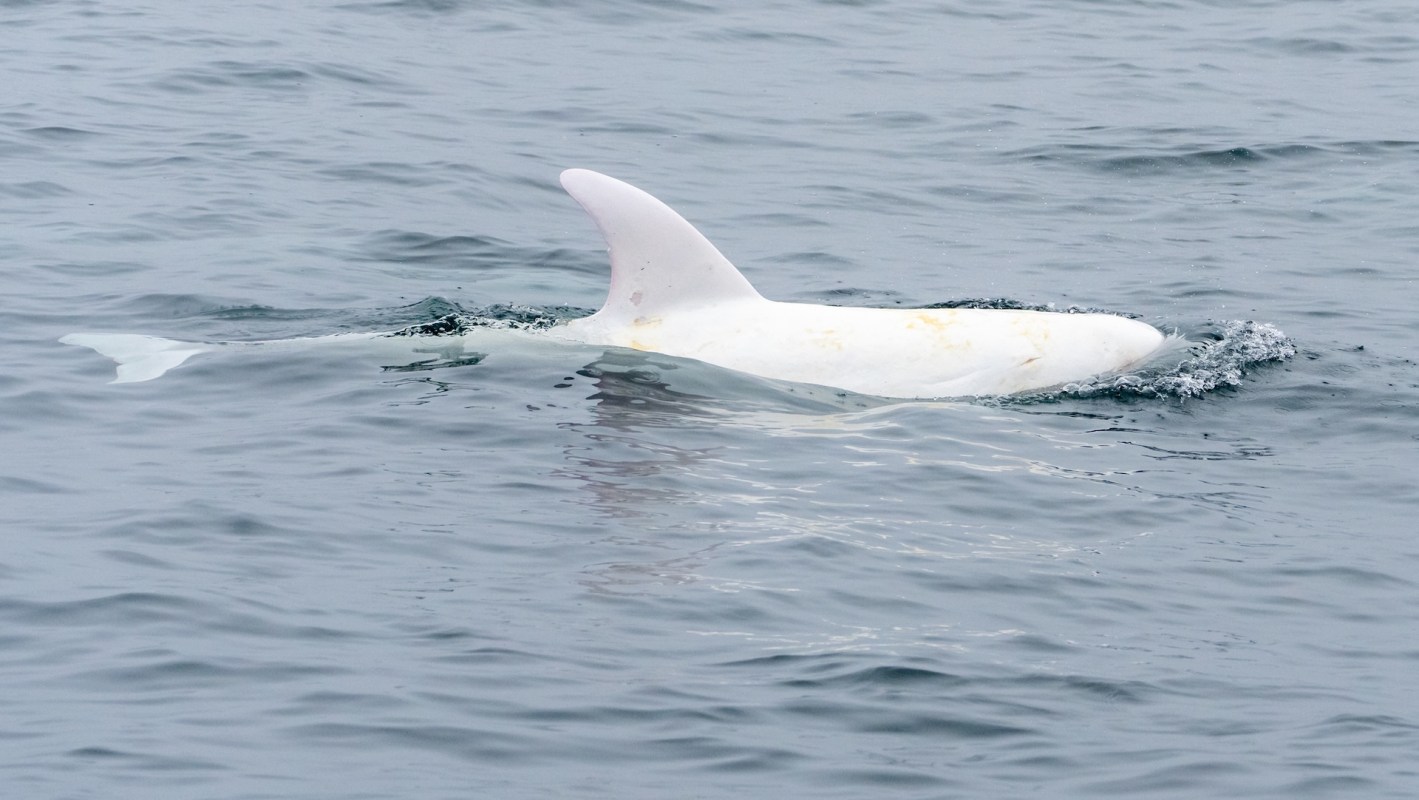
Two unusually pale dolphins are drawing attention off the Delaware coast, but marine experts are urging people to admire them from a distance rather than try to get a closer look.
Off Delaware, the MERR Institute says a juvenile dolphin it suspects is leucistic and a separate albino calf both appear healthy as they travel with their family groups.
What happened?
People on and near the water have been sending the MERR Institute reports, photos, and videos of the dolphins. As WDEL reported, the nonprofit is continuing to follow the animals' movements while asking the public not to interfere.
These dolphins' unique look comes from two different genetic conditions that might be confused with each other. MERR believes the juvenile has leucism, a genetic trait that can make an animal that is normally darker appear white or very light. On the other hand, the calf appears to be albino, meaning it lacks some or all melanin pigment in the skin, iris, and other features.
By all indications, the dolphins are swimming and feeding normally with their pods, and MERR says they seem healthy. Their unusual coloring, however, makes them especially noticeable to people looking out in the ocean to spot wildlife.
Why does it matter?
Rare wildlife sightings can become risky very quickly when crowds gather on boats or along shorelines.
TCD Picks » Quince Spotlight
💡These best-sellers from Quince deliver affordable, sustainable luxury for all




To help prevent that, MERR is asking people to stay at least 300 feet away and not post the dolphins' exact locations on social media, saying the added attention could unintentionally put them in danger.
Encounters like this are often amplified by phones, drones, boats, and social media posts, all of which can turn a natural moment into a stressful one for wildlife. As the BBC has explored in its reporting on why wild animals attack humans, many tense interactions are shaped not by animal aggression alone but by human pressure on wild spaces.
Disturbing dolphins can interfere with feeding, socializing, and rest, while boats that approach too closely can increase the risk of strikes or separation from their pods. Negligent acts from boaters can also hurt other sea creatures such as whales, with one boater's collision with a minke whale in New Jersey sparking outrage after the whale later passed away.
What's being done?
The institute's response has focused on two tracks: keeping tabs on the dolphins and circulating advice meant to limit disturbance.
Its recommendations are straightforward: keep back, avoid chasing the animals, and do not publicize their exact whereabouts.
Dolphins already face natural challenges, and unusual coloration may make them more vulnerable by not only drawing attention from predators but also increasing the chance of large crowds of people getting too close and interfering with natural wildlife behaviors.
MERR also recommends using binoculars or zoom lenses, keeping boat speeds low in areas where dolphins may be present, and giving them room to travel and feed without interruption.
For now, MERR says both dolphins appear healthy, but the institute warns that extra human attention could change that.

Get TCD's free newsletters for easy tips, smart advice, and a chance to earn $5,000 toward home upgrades. To see more stories like this one, change your Google preferences here.







