


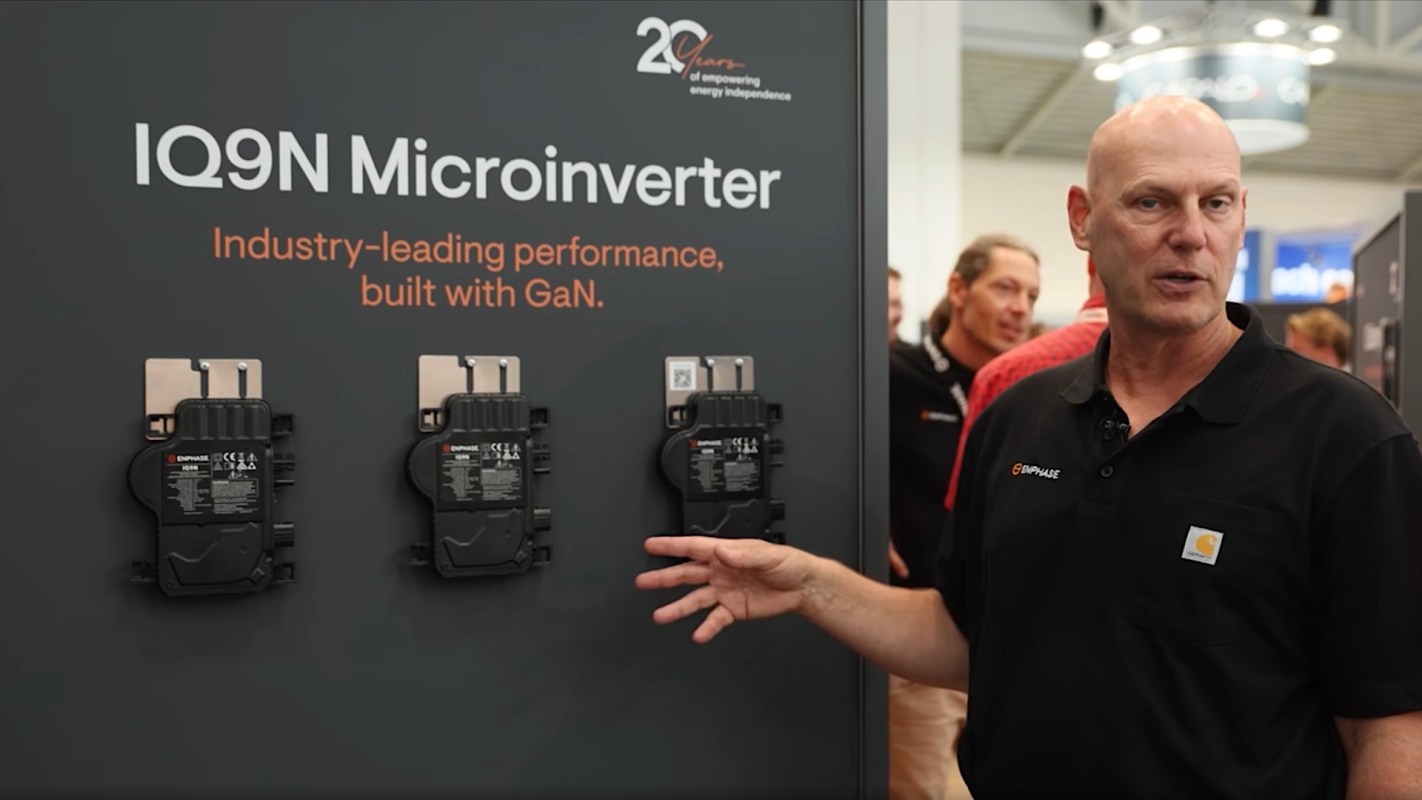
Enphase Energy is bringing its latest residential solar hardware to Australia and New Zealand, expanding a broader global rollout that could make rooftop systems more productive, easier to expand, and better suited to harsh real-world conditions.
For homeowners considering solar, that could mean more usable electricity from each panel and more control over household energy costs.
What happened?
Enphase has now introduced its IQ9N microinverters to residential customers in Australia and New Zealand, following recent launches across Europe and in the United States, according to SolarQuarter. The company says the devices are built with gallium nitride, or GaN, and are intended to pair with newer, higher-power solar panels.
Enphase says the IQ9N can hit an efficiency as high as 97.95%. The units are rated for as much as 427 VA of continuous output power, support 16 A of continuous DC current, and come with a 25-year limited warranty.
For households already using Enphase products, the company says the IQ9N works with IQ Batteries and remains backward compatible with the IQ7 and IQ8 series. That could let homeowners enlarge an existing solar setup without rebuilding it or adopting a different installation approach.
With microinverters, power conversion happens at each panel instead of through one central string inverter. In practice, that means shade or buildup on a single panel is less likely to reduce output across the rest of the system.
TCD Picks » Quince Spotlight
💡These best-sellers from Quince deliver affordable, sustainable luxury for all




Why does it matter?
For many households, the biggest draw is economics. If each panel can produce more usable electricity, especially during partial shading or in high heat, homeowners may get better value from limited roof space and potentially lower their power bills over time.
Safety is part of the appeal as well. Enphase says this distributed architecture avoids long high-voltage DC cable runs, which can lower system risk compared with conventional string-inverter designs, and the units also include integrated rapid shutdown capability.
The launch is especially notable in Australia and New Zealand, where rooftop solar is already widespread and weather conditions can be demanding. Enphase says the IQ9N has an operating temperature range of minus-40 to 149 degrees Fahrenheit (minus-40 to 65 degrees Celsius).
That kind of durability can help households rely more on clean electricity and less on power generated from dirtier fuels like coal and gas.
What's being done?
Enphase says customers in Australia and New Zealand can now get the IQ9N microinverters through authorized distribution partners. The units meet AS/NZS 4777.2:2020 grid requirements and appear on Australia's Clean Energy Council list.
Homeowners can monitor system performance in real time through the Enphase App, and the platform supports over-the-air software updates, which may help systems stay optimized without requiring an on-site service visit.
For people who already have rooftop solar, the backward compatibility with IQ7 and IQ8 products could offer a practical path to expansion, especially when paired with battery storage. That can be useful for households trying to use more of their own solar power at night or prepare for grid instability.
Growing battery adoption is following a similar pattern elsewhere: Australian homeowners have been installing home batteries at a record pace to store solar power and, in some cases, sell it back to the grid.
The product offers a longer warranty, high efficiency, app-based monitoring, and a design meant to keep generating even when conditions are less than ideal.

Get TCD's free newsletters for easy tips, smart advice, and a chance to earn $5,000 toward home upgrades. To see more stories like this one, change your Google preferences here.






