


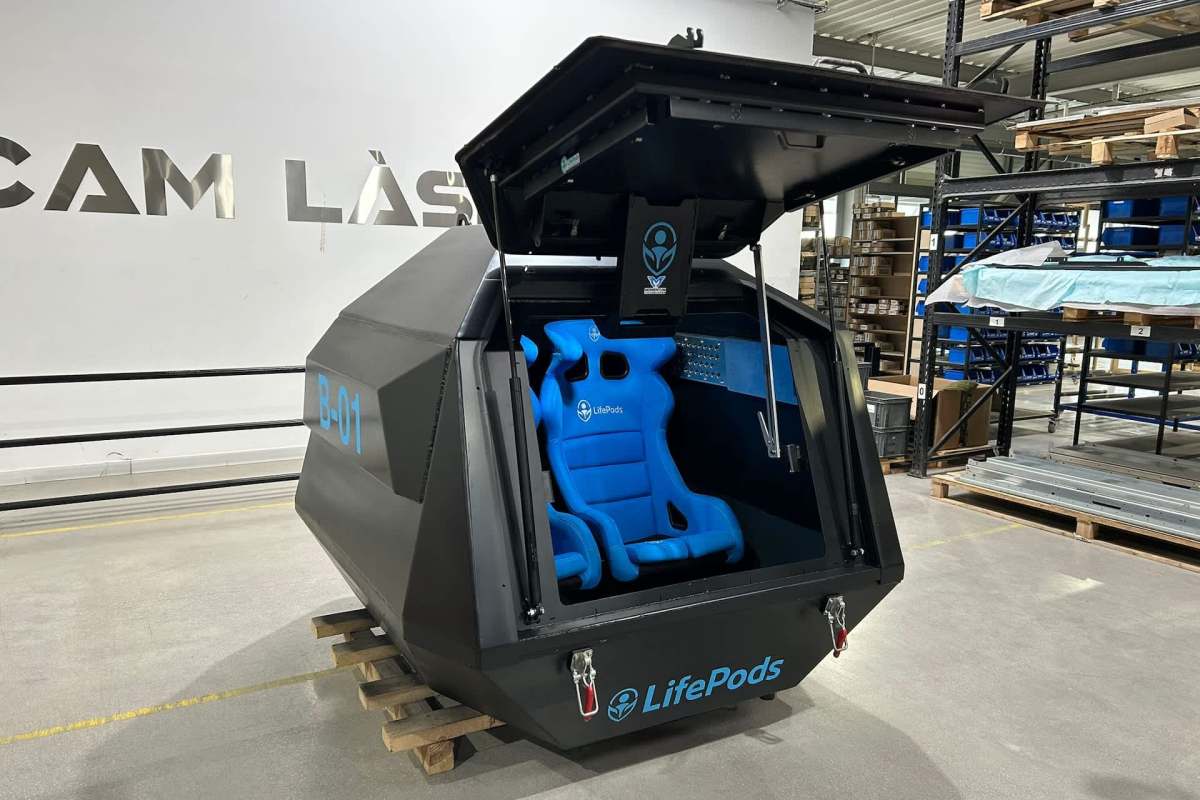
As extreme weather and public safety concerns push more families to think about emergency planning, one French startup is pitching a new kind of backup shelter: portable "Lifepods" built to help people ride out disasters when homes and infrastructure fail.
These shelters are intended for a wide range of emergencies, pairing portability with built-in survival features and protection against multiple kinds of hazards, including earthquakes, floods, and ballistic threats.
What's happening?
According to Wyoming News Now, French startup Momentum Technologies has introduced two Lifepod emergency shelter models meant to provide a place to take refuge during disasters.
For water-related events, the W-01 is a floating capsule built for floods, submersion, tsunamis, and other climate disasters. The B-01, by contrast, is a land-based model intended to protect against ballistic threats, blasts, and fire. Momentum Technologies says both versions are self-sustaining shelters with multiple protective layers and onboard survival systems.
Rather than functioning as permanent shelters, the capsules are designed to be transported, stacked, and set up quickly in cities, industrial locations, or remote areas. The company also says they can be moved by aircraft, and that the floating version may travel with tsunami waters.
Listed pricing for the capsule alone ranges from $34,223 to $47,015. Momentum Technologies expects its next funding round for additional shelter development to open sometime between late 2026 and early 2027.
TCD Picks » Quince Spotlight
💡These best-sellers from Quince deliver affordable, sustainable luxury for all




Why does it matter?
The idea behind these pods points to a growing real-world problem: Disasters are becoming more disruptive, and many people want options that do not depend entirely on functioning roads, power grids, or emergency buildings.
In flood-prone or disaster-prone regions, a self-contained refuge could offer a place to wait for rescue, avoid exposure, and stay protected when standard buildings are no longer reliable.
The pods are expensive, so they will not be a practical purchase for everyone. Still, for some households, businesses, or worksites, the upfront cost may be easier to justify when weighed against the financial and personal toll of major property damage, evacuation delays, or life-threatening conditions during a crisis.
Products like this also reflect a shift toward resilience technology — tools designed not just to respond after a disaster, but to help people stay safer during one.
What's being done?
Momentum Technologies is focused on positioning the shelters for use across a variety of environments, including urban areas and more isolated places where emergency response can take longer, according to Wyoming News Now.
The company is also moving ahead with industrialization, certifications, and wider commercial deployment.
Lifepods remain a premium product, but they are part of a growing market for tools aimed at protecting lives before disaster strikes rather than after the damage is done.
"The market is confirming the strategic interest in our next-generation resilience solutions," said Momentum Technologies CEO Cedric Choffat. "Our objective is now to accelerate industrialization, certifications and the commercial deployment of our capsules."

Get TCD's free newsletters for easy tips, smart advice, and a chance to earn $5,000 toward home upgrades. To see more stories like this one, change your Google preferences here.






