



A Reddit post about SparkNotes is tapping into the familiar internet-age frustration of a chaotic wall of ads invading nearly every page.
In this case, one student told the r/Anticonsumption subreddit that SparkNotes' website had become so crowded with moving promotions that it was no longer practical to use for studying at all.
What happened?
The original poster said SparkNotes loaded six ads at the same time on the page, and attached a screenshot to confirm their count.
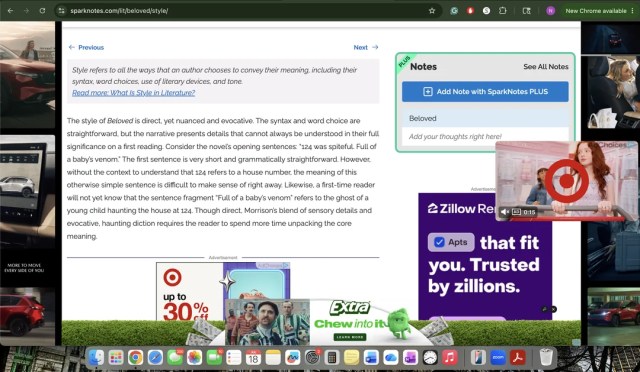
They tallied Zillow and Extra Gum placements, a car promotion divided into two panels across the page, and two separate Target ads showing different videos or graphics.
What seemed to annoy the student most was the disconnect between the site's purpose and the experience it created.
"What's even more frustrating to me is that SparkNotes is supposed to be an educational tool," they wrote. "How am I supposed to focus and work when I have 6 ads flashing in my face."
TCD Picks » Quince Spotlight
💡These best-sellers from Quince deliver affordable, sustainable luxury for all




Several commenters joked about the dystopian feel of the overloaded screen, with one invoking a scene from "Idiocracy."
Others argued that websites that demand users disable ad blockers are driving people away.
Why does it matter?
This kind of ad saturation can turn a basic task into a battle for concentration.
Auto-playing or expanding ads do more than distract. They can slow pages down, make them harder to navigate, and create an even more frustrating experience for people using older devices or limited data plans.
"I deliberately avoid so many websites while browsing on my phone just because of the sheer number of ads," one commenter wrote. "There are so many ads on them that they will crash the page and devour my phone's battery life."
When a site designed to deliver information starts draining time, data, and battery life instead, users may simply stop visiting.
Educational websites occupy a public-facing role, especially for younger users, and many readers expect them to prioritize readability over constant consumer pressure.
When every spare inch of a page becomes ad inventory, it reinforces the sense that much of the free web is built around extraction rather than usefulness.
What can I do?
Multiple users recommended switching browsers and using stronger content-blocking tools.
"I'd go back to books before having to use the web without an ad-blocker," a user wrote. "Switch from Chrome to Firefox and install the 'uBlock Origin' extension and your web experience will be dramatically improved."
Others pointed to how some sites now block access unless ad blockers are disabled, which creates another obstacle.
Alternatives include library databases, text-only or reader modes, study guides from schools or nonprofits, or print resources when digital pages become too cluttered to use comfortably. Some users said they simply avoid websites that require ad blockers to be disabled.
"A site that makes you remove your Adblock is a site that doesn't get my visit lol," a user concluded.

Get TCD's free newsletters for easy tips, smart advice, and a chance to earn $5,000 toward home upgrades. To see more stories like this one, change your Google preferences here.







