


Canceling a subscription may seem like a small move, but for people facing rising monthly bills, it can feel like a major milestone. That was the sentiment after one Redditor on the r/Anticonsumption subreddit shared a personal victory of canceling Netflix after 14 years.
What happened?
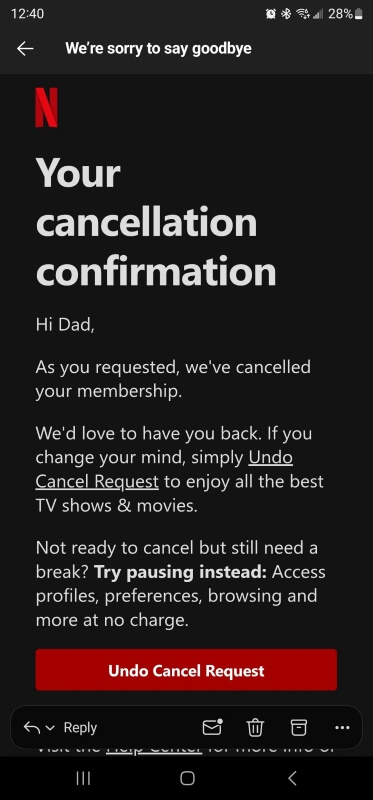
The post was short and to the point. Alongside a cancellation screenshot, the user wrote, "I finally did it!" and added, "I was a netflix customer for 14 years!"
Its popularity reflected a familiar frustration for households trying to cut ongoing costs without major lifestyle changes.
Several commenters said they had done the same.
"This is my last streaming service I've held on to for some reason," one wrote. "Proud that you cancelled!!"
Another said, "ya, I did this a few months ago and I've had the account since they mailed out DVDs."
TCD Picks » Quince Spotlight
💡These best-sellers from Quince deliver affordable, sustainable luxury for all




The more playful replies noticed a humorous aspect in the original poster's screenshot.
"Netflix is your child?" a user inquired jokingly, in reference to the OP being addressed as "Dad" in the email.
"Dad is my dad's name too!" another user quipped.
Jokes aside, the common sentiment in the thread was that many people keep the same subscription for years because the charge blends into the background of everyday spending.
Why does it matter?
For many consumers, recurring charges are among the easiest expenses to miss. A streaming bill may not seem significant on its own, but over time, several subscriptions can quietly take a noticeable bite out of a household budget.
In a cost-of-living crunch, the flexibility that comes from ending a streaming subscription can make a real difference and bring immediate and long-term savings.
The conversation also reflected a broader change in how people view streaming. What was once pitched as a cheaper, simpler replacement for cable now leaves many viewers feeling like they are once again juggling a growing pile of separate monthly bills. If you're making a conscious decision to try and reduce your spending, cutting services like Netflix is a great place to start.
What can I do?
If one recurring charge has become a default expense in your life, a quick subscription audit can be a good place to start. Checking bank statements and app-store renewals can help show what is still charging each month, after which consumers can decide whether they are using each service enough to justify keeping it.
Free and lower-cost options can help as well. Libraries, free ad-supported streaming platforms, and borrowed DVDs or digital media can help fill the gap for people looking to reduce recurring spending.
If you mostly hold on to a streaming service for the convenience of returning to old favorites, consider swapping to physical media — especially if you can buy used or use your local library. While streaming something once causes less pollution than the manufacturing and shipping process, as entertainment writer Jeff Rauseo showed, anything you'd watch several times uses a lot less energy to do so with DVDs or Blu-rays.
Small steps such as setting renewal reminders or canceling subscriptions kept "just in case" can also add up over time. The hardest part may simply be making the decision to finally do it.

Get TCD's free newsletters for easy tips, smart advice, and a chance to earn $5,000 toward home upgrades. To see more stories like this one, change your Google preferences here.






