


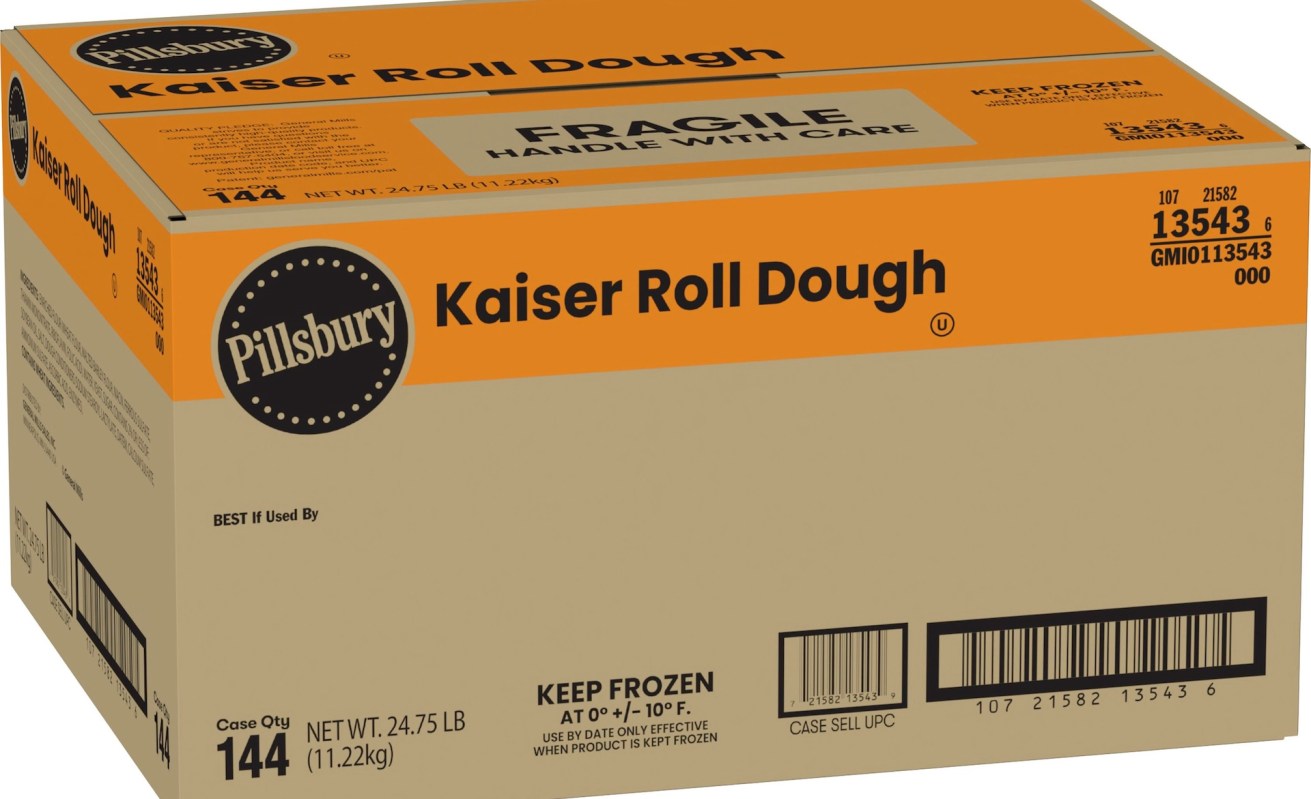
A recall is raising concerns for restaurants and other commercial kitchens that rely on ready-to-bake dough products.
More than 735,000 packages of Pillsbury bread roll dough have been pulled due to the possibility that they may contain glass.
What happened?
According to The Healthy, the U.S. Food and Drug Administration has now classified a recall first issued June 19 involving 735,840 packages of Pillsbury bread roll dough. In the agency's notice, the reason is listed as "Potential foreign material (glass)."
Most of the affected inventory was Pillsbury Bread Rolls "Hard Roll Dough," totaling 3,080 cases, with 180 units per case, for a total of 554,400 units. The Healthy reported that the rest involved Pillsbury Bread Rolls "Kaiser Roll Dough," with 1,260 cases packed at 144 units per case, for roughly 181,400 additional units.
All of the impacted lots have "Better if Used by" dates in October 2026. The FDA listed distribution to foodservice accounts in Arkansas, California, Florida, Georgia, Indiana, Louisiana, and Maine, as well as Missouri, New Mexico, New York, Ohio, Oklahoma, Pennsylvania, South Carolina, Tennessee, Texas, Virginia, Washington, and Wyoming.
The product names and package details indicate these items were meant for BOH, or "back of house," use. That makes it more likely consumers would encounter the dough through restaurants, cafeterias, or other institutional food settings rather than on grocery shelves.
TCD Picks » Quince Spotlight
💡These best-sellers from Quince deliver affordable, sustainable luxury for all




Why does it matter?
Glass contamination is especially concerning because even a small fragment can cause cuts or other injuries if it ends up in prepared food. The FDA classified this as a Class II recall, meaning the agency believes exposure "may cause temporary or medically reversible adverse health consequences" while the likelihood of severe harm is considered lower.
Products used behind the scenes can end up in school cafeterias, hospitals, workplace kitchens, quick-service restaurants, and other places where the brand or dough base is not visible to diners.
What's being done?
The immediate step is to remove the affected lots from circulation. Foodservice operators are being told to check their freezers and storage areas against the listed product names, UPCs, lot codes, and "Better if Used by" dates and to avoid baking or serving any matching items.

Get TCD's free newsletters for easy tips, smart advice, and a chance to earn $5,000 toward home upgrades. To see more stories like this one, change your Google preferences here.







