


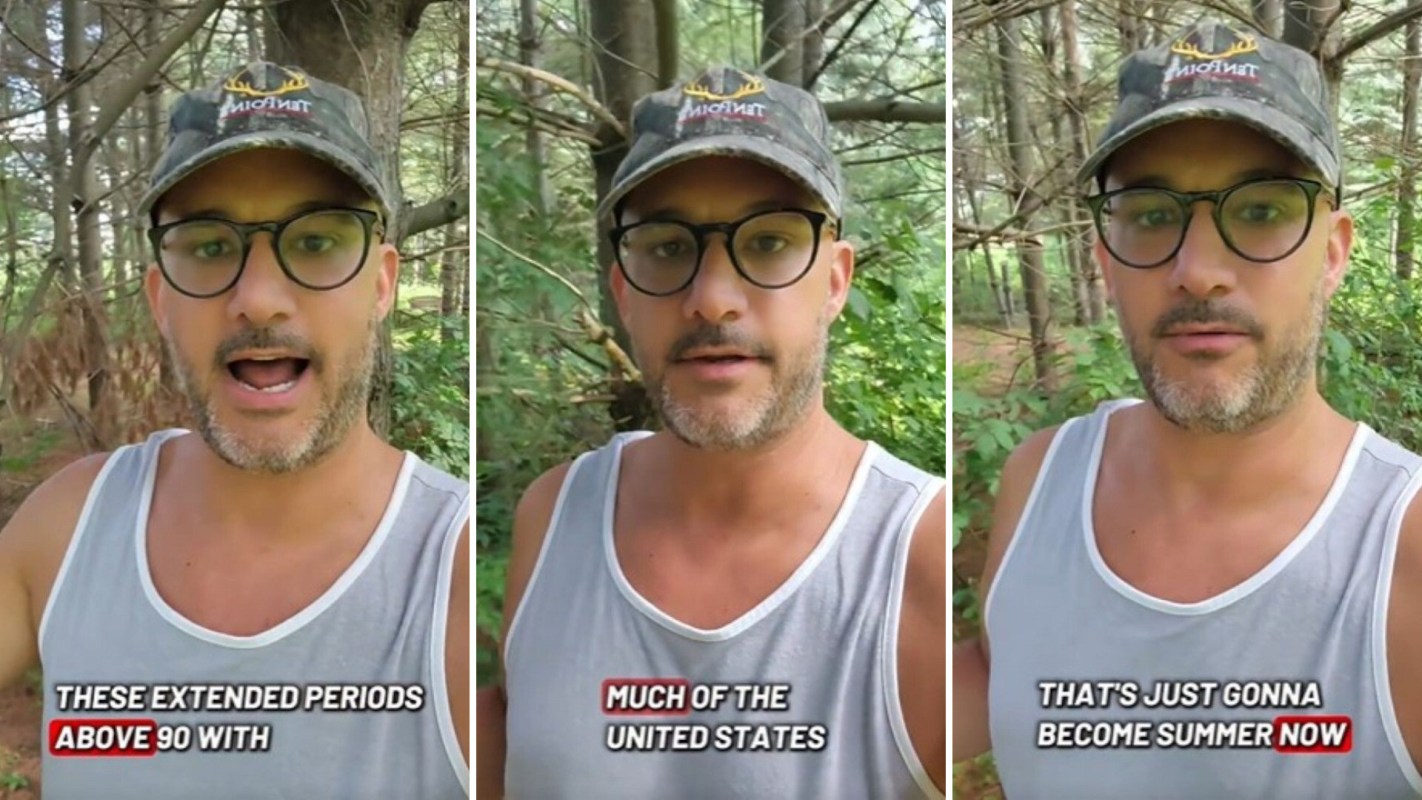
Oppressive heat settling over the upper Midwest and New England is making climate change harder to dismiss as an abstract idea.
Now, one independent commentator is discussing what the current weather could mean for our future. In his telling, the heat wave should not be thought of as abnormal, but as a sign that climate change has already arrived.
What's happening?
His message was simple. What feels like an exhausting run of extreme heat may be moving toward an expected part of the season.
In a TikTok video, the poster argued that "what we're calling heat waves right now across much of the United States especially the upper Midwest and into the East Coast, New England, that's just gonna become summer now."
@chasinggnosis What's climate change going to be like? Go outside, this is the new normal. Until we decide to truly prioritize our environment, we continue down the path of climate catastrophe. #climatechange #heatwave #capitalism #environment ♬ original sound - ChasingGnosis
His claims focused less on whether this kind of weather has ever happened before (it has) and more on how often it now shows up and how long it lasts.
He went on to explain that "these extended periods above 90 with high humidity" have frequently occurred before in places like the Midwest, but "we're getting many more days put together at those temperatures, and more often. That's just becoming summer because that's the reality of climate change."
TCD Picks » Quince Spotlight
💡These best-sellers from Quince deliver affordable, sustainable luxury for all




One commenter summed up the mood simply: "This as a new norm is rough."
Why does it matter?
Extreme heat is one of the clearest ways climate change reaches into daily life. It raises health risks, especially for older adults, children, outdoor workers, and anyone without reliable air conditioning.
From that perspective, treating every dangerous hot spell as a standalone anomaly misses the broader pattern. If stretches of 90-degree weather are lasting longer and happening more often, communities may need to plan for them as a recurring risk.
Once heat is understood that way, decisions about school schedules, work routines, housing, and emergency response start to change.
It should also affect how people frame solutions to climate change. In the video, the man argued that current priorities are "not about planetary habitability," but "concentrating wealth in the hands of the smallest amount of people," suggesting that worsening heat reflects broader political and economic choices, not just bad luck.

Get TCD's free newsletters for easy tips, smart advice, and a chance to earn $5,000 toward home upgrades. To see more stories like this one, change your Google preferences here.






