


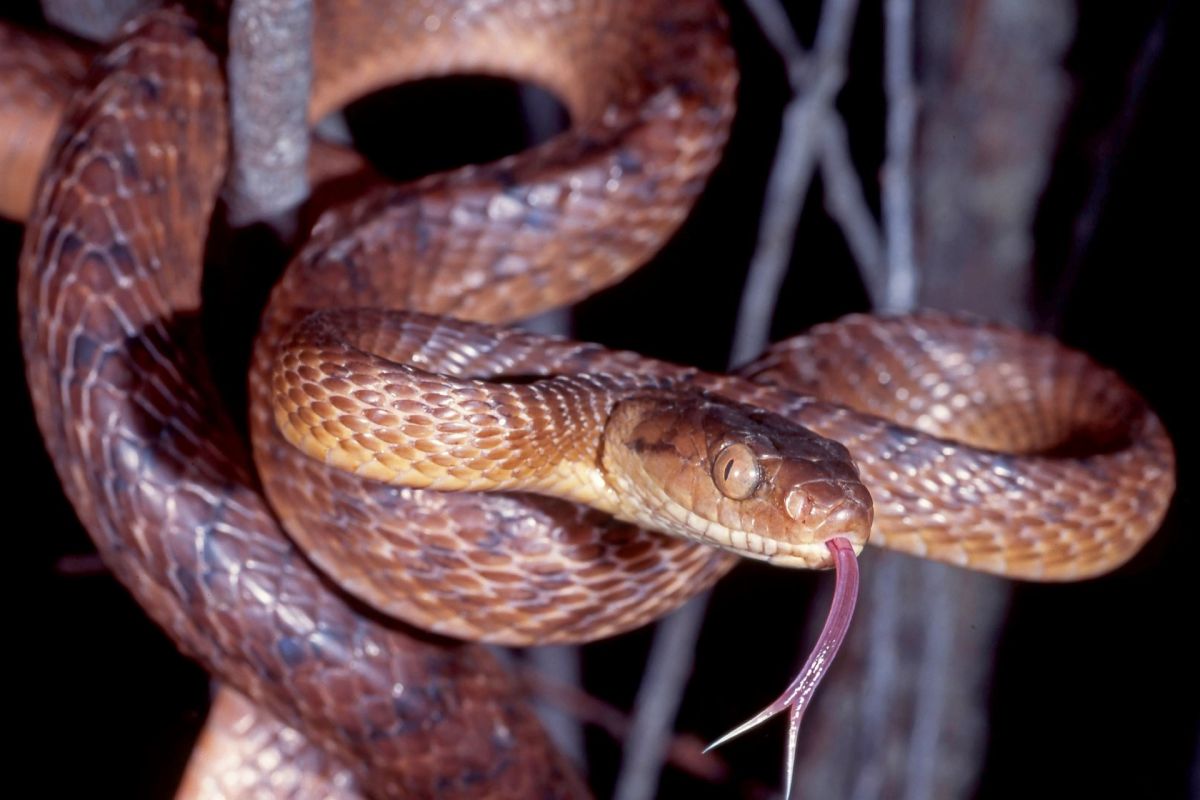
At a recent Guam event, roughly 60 community volunteers were taught how to identify and safely manage the brown tree snake, one of the island's most damaging invaders, before joining a nighttime outing that resulted in about 20 captures.
The event turned education into direct action against the brown tree snake, a species that has devastated Guam's native wildlife for decades.
What happened?
According to Joint Region Marianas and the University of Guam, the two groups held another brown tree snake workshop on June 23 at Tarague Beach on Andersen Air Force Base, followed by a night hunt, as reported by Stars and Stripes.
Before the search began, volunteers received training on how to recognize the invasive snakes, handle them without injury, and kill them humanely. After that, they went out to look for the species, which is active after dark.
Officials from the National Park Service and the U.S. Department of Agriculture Wildlife Services also attended to discuss the damage the snakes have done to Guam's environment. Although the species is only mildly venomous, its greatest toll has been on native animals, with many of the island's birds and reptiles wiped out.
Among the methods professionals use is "spotlighting," in which workers search at night with flashlights until the snakes' scales catch the beam. The USDA has also used traps and Jack Russell terriers trained to sniff out the animals.
TCD Picks » Quince Spotlight
💡These best-sellers from Quince deliver affordable, sustainable luxury for all




Why does it matter?
Authorities believe the brown tree snake got to Guam in military cargo during wartime. The case shows how human transportation systems can unintentionally carry invasive species into delicate ecosystems.
Once those invasive species take hold, the effects can reshape daily life for people and wildlife alike. Invasive predators can damage biodiversity, strain conservation budgets, and leave communities spending years trying to recover from ecological losses.
After more than 70 years on Guam, the brown tree snake, native to Melanesia and Indonesia, has become one of the island's most notorious invasive species. That long history is one reason public education and community participation are especially important.
What's being done?
The workshop is part of a cooperative agreement launched in 2025 between the University of Guam and the Joint Region Marianas to raise awareness of brown tree snakes, especially among military personnel and their families living on the island.
Tayah Hawley, extension associate for the University of Guam Island Conservation Lab, said the effort requires broad participation: "The University views invasive species management as a collaborative effort that requires participation from government agencies, researchers, conservation organizations, and the community."
Joint Region Marianas oversees Department of Defense installations on Guam and in the Commonwealth of the Northern Mariana Islands and has safety measures in place to stop the species from spreading through cargo and transportation networks.
"Joint Region Marianas employs a comprehensive, multi-layered biosecurity framework combining strict cargo interdiction, physical barriers, mandatory canine and visual inspections, active on-island population control, and targeted community education and training to prevent the spread of invasive species through the Department of Defense transportation network," Lt. Cmdr. Kristina M. Wiedemann said.

Get TCD's free newsletters for easy tips, smart advice, and a chance to earn $5,000 toward home upgrades. To see more stories like this one, change your Google preferences here.







