


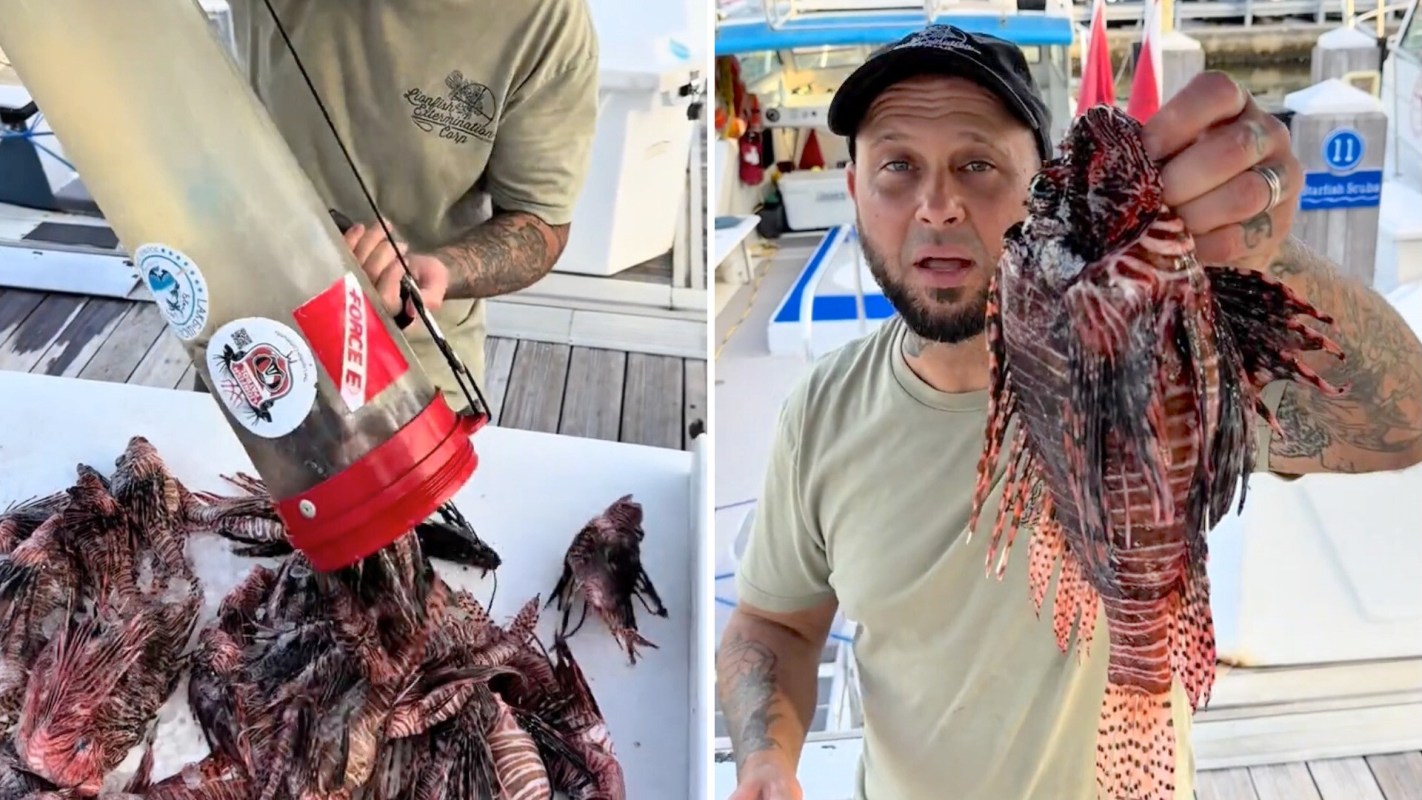
A diver who removes invasive lionfish for a living is pushing back on one of the internet's most common objections: Why not just leave them alone and let nature handle it?
In a widely viewed video, he argues that in places where lionfish do not belong, waiting can mean losing the reef species that coastal communities depend on.
What's happening?
A diver and content creator used a video to address criticism of lionfish culling. In the footage shared on TikTok, he says, "The only problem is this isn't natural. These fish are here completely unnaturally, so nature can't come in because nature doesn't have any way to do that right now."
@lionfishextermination Why don't we just leave these fish alone and let nature do the trick? #Lionfish #invasivespecies #boom #lionfishextermination @Alex Borsutzky @XAIN'S W🌎RLD ♬ original sound - Lionfish Extermination Corp
His argument is that lionfish may face natural controls in the places they come from, but those checks are absent in the waters where they have become invasive. "So we need to be their unnatural predator," he says.
He also uses the video to illustrate the damage in practical terms, explaining that lionfish consume young fish before they can grow into larger, ecologically important species. "These fish eat barracudas when they're babies," he says. "They eat certain groupers when they're babies, when they can get to them."
The reaction included both praise and questions. One viewer wrote, "Well said. The average person has very little understanding of how dangerous invasive species are for ecosystems." Another asked, "How can a fish be invasive if it's an open ocean, so can someone explain?"
TCD Picks » Quince Spotlight
💡These best-sellers from Quince deliver affordable, sustainable luxury for all




Why does it matter?
For many people, invasive species are easier to grasp as a concept than as a real-world ecological problem.
When an invasive predator spreads without enough limits, though, the consequences reach beyond the fish it eats. Reefs support food webs, local fishing economies, tourism, and shoreline communities. Over time, the ecosystem can weaken if native fish are being eaten before they reach maturity.
Stronger reefs, in turn, help support jobs, local businesses, and the natural systems many communities rely on.
What's being done?
The response shown in the video is selective removal by trained divers. The aim is to reduce the impact of a species that lacks enough local predators to control its population.
Education is part of the effort as well, with the diver using the video to respond directly to common misunderstandings.
Another commenter wrote, "Thank you for being so informative."
He sums up the stakes by saying, "If we just let nature take its course, there will be nothing left for nature to take its course on." In his view, "We're only trying to remove the fish that are really bad for the environment. We're trying to help."

Get TCD's free newsletters for easy tips, smart advice, and a chance to earn $5,000 toward home upgrades. To see more stories like this one, change your Google preferences here.






