


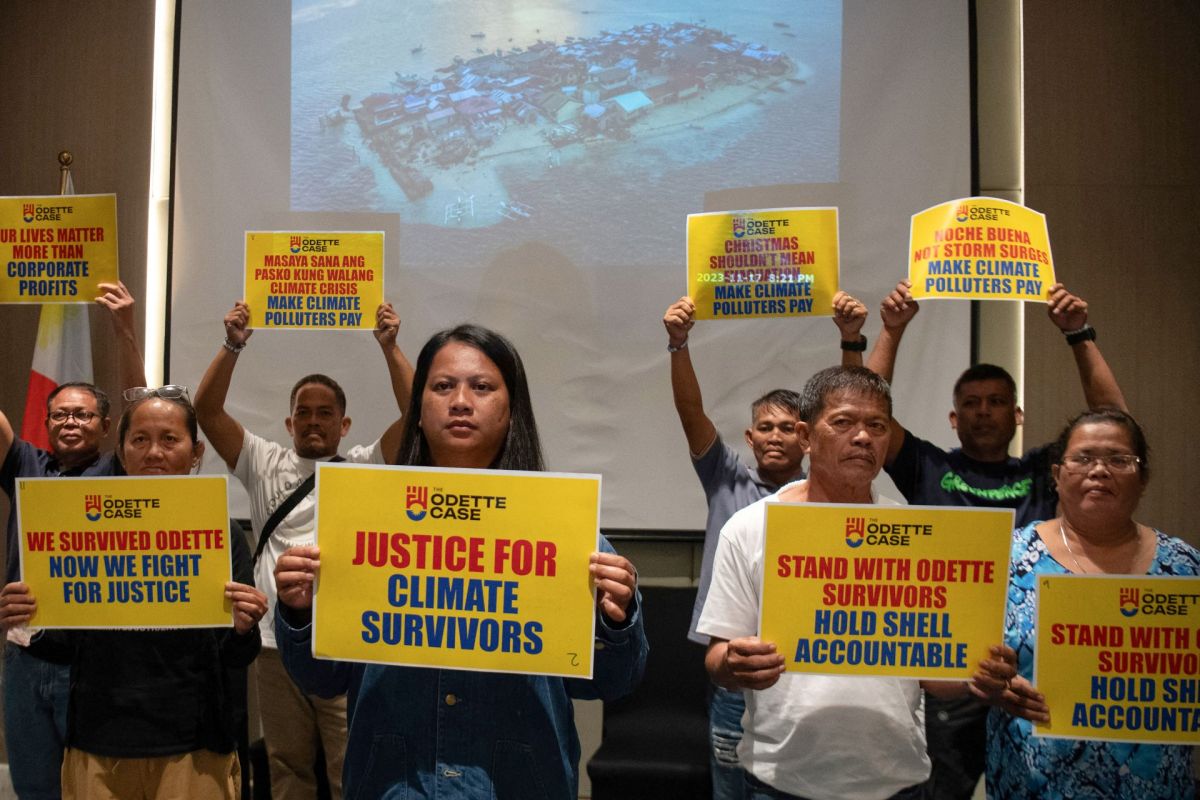
When Super Typhoon Rai tore through Batasan Island in the Philippines in 2021, one survivor said the disaster was so severe that feeding her family meant eating animals found dead after the storm.
Now, she is among 67 people suing Shell, arguing that the oil giant's historic pollution helped intensify the climate conditions behind the catastrophe.
What happened?
As Rai hit Bohol in December 2021, Trixy Elle said she escaped her home with her husband, their two children, and her father. Rai was equivalent to a Category 5 hurricane, The Xylom reported.
When morning came, the house Elle and her family had spent years building was gone. Across the Philippines, Rai affected 10.6 million people, killed more than 400, and displaced 1.4 million.
"As a mother, it was up to me to find ways to feed my family," Elle told The Xylom. "It got to the point where we were eating dead chickens, dead pigs. We got to that point because the government's response took so long."
Filed at the Royal Courts of Justice in December, the lawsuit says Shell's historic emissions helped fuel the changing climate and make disasters such as Rai more severe.
TCD Picks » Quince Spotlight
💡These best-sellers from Quince deliver affordable, sustainable luxury for all




The plaintiffs also argue that Shell has understood since the 1960s that climate change threatens vulnerable communities. The case is considered the first civil suit to directly connect a major fossil fuel company to deaths and injuries caused by climate impacts in the "global south," or developing countries below the Brandt Line, The Xylom reported.
Why does it matter?
Even though climate litigation has expanded rapidly around the world, less than 10% of those cases come from the global south.
According to the Sabin Center for Climate Change Law, 3,099 climate cases had been filed worldwide by mid-2025, The Xylom noted. Nearly two-thirds were in the United States, while Asia accounted for 6% and Africa 2%.
"I remember years ago people would say climate litigation would never take off in Asia because it's not part of the Asian culture to fight poverty and … to litigate," Jolene Lin, director of the Asia-Pacific Centre for Environmental Law, told The Xylom. She said weak rule of law and judicial corruption remain major barriers.
The case highlights claims that the fossil fuel industry harms communities long before a storm hits and long after it passes.
Coal and natural gas power plants release air and water pollution linked to asthma, heart disease, cancer, and premature death while also keeping energy costs high for households that remain tied to fuels that must be extracted, processed, and transported but could instead use abundant energy from sunlight and wind.
Industry lobbying can further delay cleaner, cheaper energy solutions that would better protect families and reduce bills.
What's being done?
Rulings in South Korea and India reflect a shift, The Xylom reported. In 2024, the Constitutional Court of Korea found parts of the country's Carbon Neutrality Act unconstitutional because it did not safeguard future generations. The Supreme Court of India also recognized protection from changing climate's adverse impacts as a fundamental constitutional right.
Malaysia and Indonesia offer other examples. A Malaysian climate watchdog brought a first-of-its-kind greenwashing suit against the federal government, alleging that a fossil fuel company promoted a product as "carbon neutral." In April, Malaysian youths sued their government over deforestation, while four residents of Pari Island in Indonesia filed litigation against Holcim, a construction company, per The Xylom.
Some of these cases seek monetary damages. Others look to force emissions cuts or stop misleading environmental claims.
Communities facing the worst climate impacts are increasingly demanding accountability from governments and major polluters alike.
"What we really want is to inspire other communities to say that this is actually possible," Greenpeace Philippines campaigner Jefferson Chua said. "We can hold big companies like Shell accountable."

Get TCD's free newsletters for easy tips, smart advice, and a chance to earn $5,000 toward home upgrades. To see more stories like this one, change your Google preferences here.






