


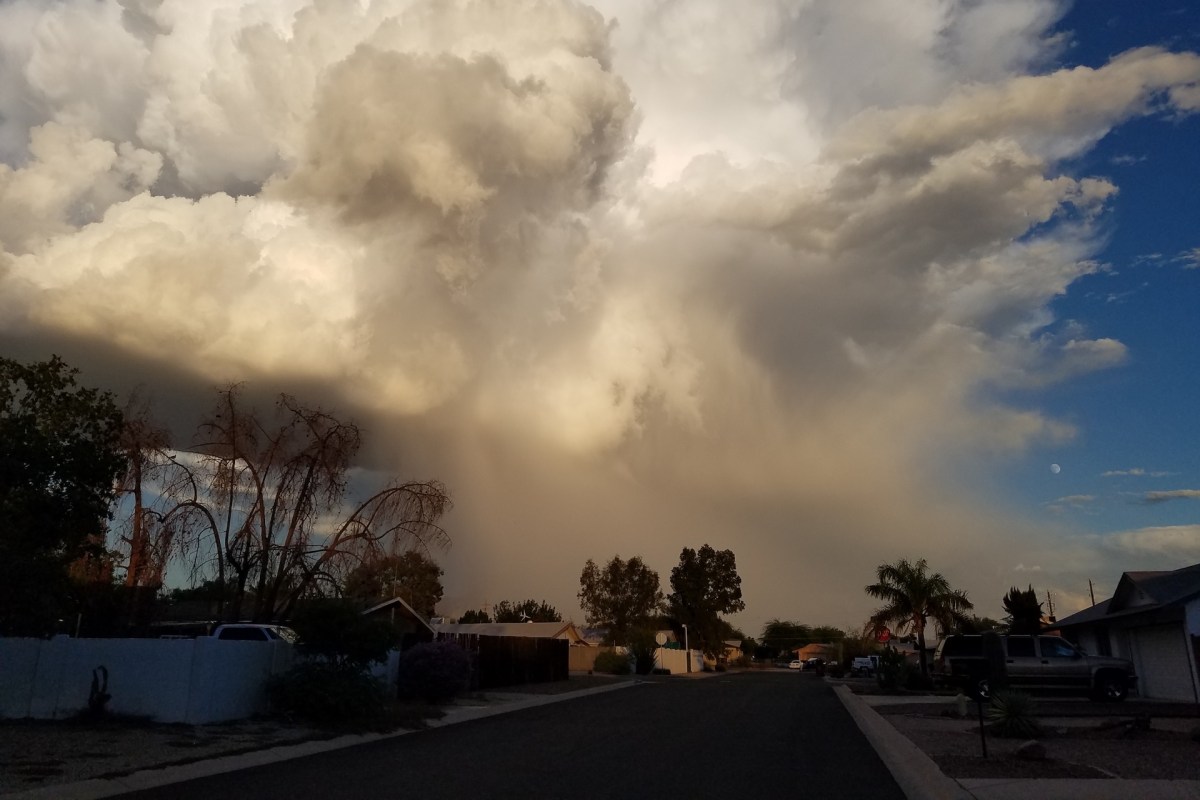
Metro Phoenix was hit by a July 13 monsoon storm that brought a towering dust cloud, drenching rain, and wind gusts above 50 mph, scattering debris across neighborhoods and knocking out power to thousands.
What happened?
According to The Arizona Republic, the storm pushed into central Phoenix behind a massive dust plume that sharply reduced visibility in parts of Maricopa and Pinal counties. The National Weather Service warned drivers not to travel during dust storms, and conditions grew more hazardous as thunderstorms and flash-flood threats followed.
Then the rain hit. A gauge in central Phoenix logged 1.26 inches in about an hour, while totals across the metro area ranged from a few hundredths of an inch to more than an inch.
Long after the worst weather passed, disruptions were still unfolding. Arizona Public Service and Salt River Project said thousands of customers were without electricity overnight while crews worked to clear downed lines and other storm damage. Phoenix Sky Harbor International Airport briefly issued a ground stop before flights resumed once conditions improved.
Why does it matter?
Monsoon rain is essential in the desert, but more extreme and erratic weather can put lives and livelihoods at risk. Dust storms trigger crashes, flash floods can trap drivers on low-lying roads and in washes, and power outages can create serious problems for people who rely on refrigerated medication, air conditioning, or medical devices.
Outages like these can also strain household budgets and disrupt local businesses, echoing the kind of prolonged disruption some New Orleans homeowners have faced after hurricanes.
Adding battery storage is one of the best ways to protect your home during outages, save on energy costs, and even go off-grid in some situations. If you're curious about your options, explore EnergySage's free tools to learn about home battery storage, including competitive installation estimates. EnergySage has teamed up with the electrification brand Qmerit to guarantee you get the best price on home battery storage solutions.
What's being done?
Runoff continued to rise after the rain stopped, and officials warned motorists to use extra caution near underpasses, washes, and other flood-prone areas. Utility crews kept working to restore service through the morning of July 14, though outage numbers had fallen significantly from the night before.
Save $10,000 on solar panels without even sharing your phone number Want to go solar but not sure who to trust? EnergySage has your back with free and transparent quotes from fully vetted providers in your area. To get started, just answer a few questions about your home — no phone number required. Within a day or two, EnergySage will email you the best options for your needs, and their expert advisers can help you compare quotes and pick a winner. Solar panels can save you more than $50k over their 25-year lifespan, and EnergySage can help you save as much as $10k on installation. Which begs the question — isn't that worth an email or two? |

Another option for backup power is Pila, which offers excellent battery backup options. Its plug-and-play batteries are priced at a fraction of the cost of a whole-home backup system, making them a more accessible way for some households to keep essentials running when the grid goes down.
Phoenix received some badly needed rain, but the storm's damage showed how quickly monsoon season can turn dangerous.

Get TCD's free newsletters for easy tips, smart advice, and a chance to earn $5,000 toward home upgrades. To see more stories like this one, change your Google preferences here.







