


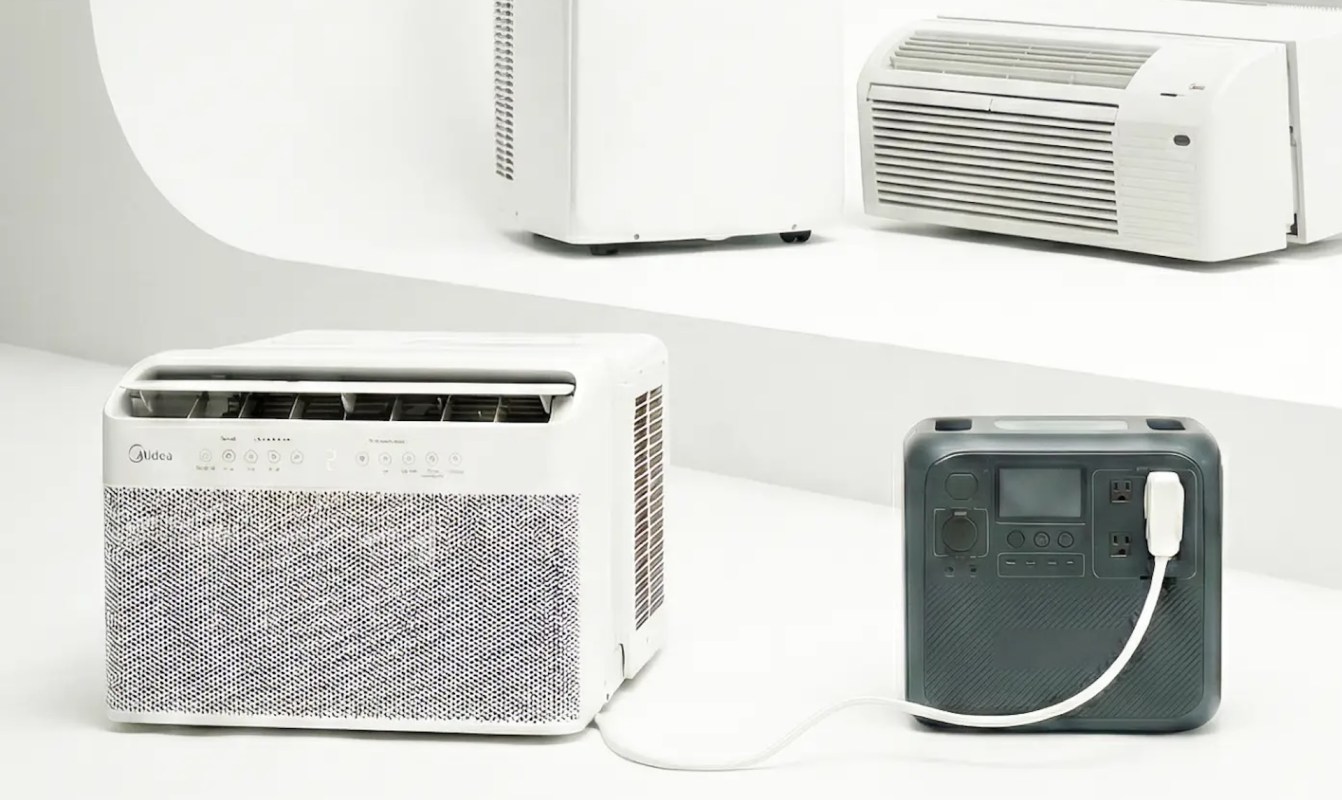
Hundreds of New York City renters kept their apartments cool through a dangerous heat dome without changing their thermostat settings, even as the city's power system approached its limits.
Their window AC units were connected to plug-in batteries that supplied stored electricity during some of the summer's highest-demand hours, helping reduce pressure on the grid.
What happened?
As temperatures climbed ahead of the July 4 weekend, city leaders asked New Yorkers to cut back on electricity use. Mayor Zohran Mamdani wrote on X, "Let's ease demand — and get through the heat — together," while a separate pilot was showing how residents could lower grid demand without giving up cooling, Canary Media reported.
Under that program, Every Electric teamed up with Con Edison so residents could run window air conditioners through Wi-Fi-connected battery packs. Those batteries fill up when the grid is under less stress and then power the AC units during peak periods.
Canary Media reported that the company has distributed more than 1,000 batteries across around 600 apartments so far. The program is free to join, except for a $50 refundable deposit for the battery. Participants can earn up to $150 per battery pairing through Con Edison's Smart Usage Rewards program.
For homeowners looking for similar protection, battery storage is one of the best ways to protect your home during outages, save on energy costs, and even go off-grid. If you want to compare options, EnergySage's free tools can help you explore home battery storage solutions and get competitive installation estimates. EnergySage has also teamed up with the electrification brand Qmerit to guarantee you get the best price on home battery storage solutions.
Another option is Pila, whose plug-and-play batteries cost a fraction of what a whole-home backup system would.
Why does it matter?
Because so many New Yorkers live in older apartments without central air, window AC units play an outsized role in summer electricity use. On the hottest days, they can account for about 20% of the city's total power demand and roughly 75% of a household's peak energy use.
Save $10,000 on solar panels without even sharing your phone number Want to go solar but not sure who to trust? EnergySage has your back with free and transparent quotes from fully vetted providers in your area. To get started, just answer a few questions about your home — no phone number required. Within a day or two, EnergySage will email you the best options for your needs, and their expert advisers can help you compare quotes and pick a winner. Solar panels can save you more than $50k over their 25-year lifespan, and EnergySage can help you save as much as $10k on installation. Which begs the question — isn't that worth an email or two? |

That makes cooling a critical stress point during heat waves as extreme weather becomes more frequent. Canary reported that New York's grid operator expected citywide peak demand to jump 45% on July 2, when temperatures soared to 104 degrees Fahrenheit. Every Electric said the ACs in its program were using about 130% of their usual weekly peak that day, though the batteries absorbed much of that increase.
When the grid is stretched, the result can be voltage reductions, higher utility bills, and a greater chance of outages at the very moment cooling is most necessary.
Batteries can also keep essential devices running during blackouts, making heat waves and storms less disruptive and less dangerous for households. One family with a solar and battery system was even able to keep their home powered through an outage that cut power to the rest of their neighborhood.
What's being done?
Canary Media reported that Every Electric's battery network currently totals about 2.5 megawatt-hours of distributed storage — still only a small share of the city's overall demand. The outlet also reported that a standard window AC can run for about four hours on one of these batteries during an outage, giving renters a form of backup power they often do not have.
If systems like this expand, utilities could rely less on expensive, polluting peaker plants during periods of high demand. According to Canary Media, broader deployment could also help avoid some of the costs of building out cable lines and installing more transformers and substations.
Battery storage is becoming more adaptable, with options ranging from apartment-friendly packs to larger whole-home systems. That could make it easier to stay comfortable in extreme weather, with less tension among affordability, reliability, and grid stability.
"The air conditioner can stay on, but we can still reduce load on the grid," Every Electric CEO Andrew Wang told Canary Media. "And the big thing is, you don't impact someone's preferred settings."

Get TCD's free newsletters for easy tips, smart advice, and a chance to earn $5,000 toward home upgrades. To see more stories like this one, change your Google preferences here.






