


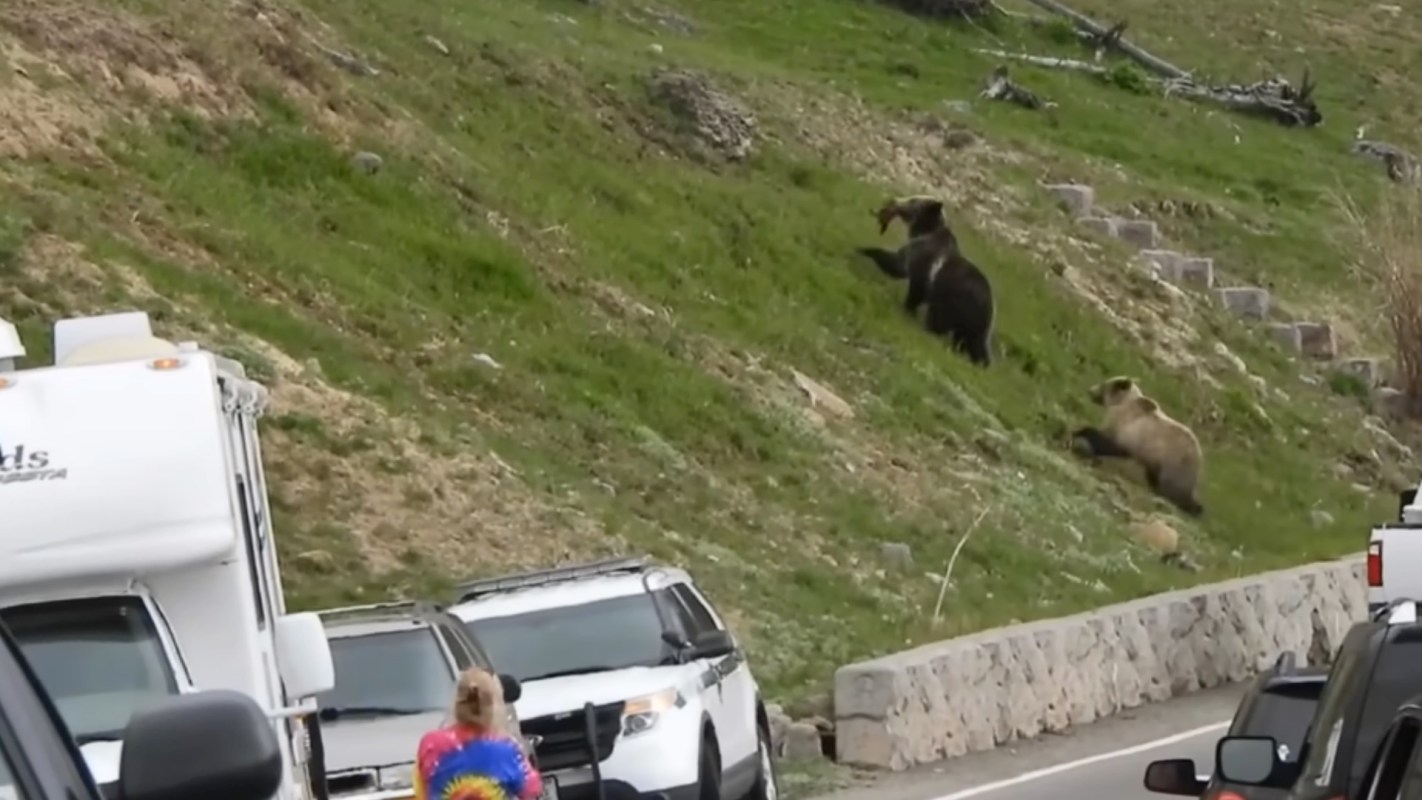
A mother grizzly and her cub briefly turned a Yellowstone wildlife sighting into a traffic jam after heading straight for the road — not to confront tourists, but to collect roadkill and carry it back uphill for dinner.
What happened?
Near Yellowstone Lake, a video shows the mother and cub coming down a hillside toward a road bordered by stopped cars. They were there for a marmot carcass at the roadside, which the mother retrieved and took back to her cub, Unofficial Networks reported.
"At first it is not clear as to why they went down to the road with so many people in their way, but you soon see the mother grizzly grab the road kill and then run back up the hill. She then gives the road kill to her cub to eat," the footage description reads.
Grizzly bear eating habits are broader than many visitors assume. Although Yellowstone grizzlies are often pictured going after large mammals, about 61% of what they eat comes from plants, and ants make up a bigger share of their diet by volume than elk — 15.8% compared with 8.3%, according to Unofficial Networks.
A park ranger helped manage traffic and keep tourists safe while the bears retrieved it.
Why does it matter?
The bears were acting naturally by scavenging an easy meal, but that meal was available because it was on or near a roadway built and used by people.
TCD Picks » Quince Spotlight
💡These best-sellers from Quince deliver affordable, sustainable luxury for all




Food can draw bears closer to cars and crowds, increasing the risk of conflict. In heavily visited parks such as Yellowstone, a single carcass can quickly trigger a "bear jam," with visitors stopping in unsafe places or trying to get too close for photos.
What can I do?
Yellowstone tries to reduce these encounters in part by removing large-animal carcasses from busy areas. That keeps foraging bears farther from roads and crowds.
Visitors also play a major role in preventing unsafe encounters. If you come across a wildlife jam, use designated pullouts when possible, allow traffic to keep moving, and remain in your vehicle rather than gathering around animals on foot.
The park also tells visitors to carry bear spray, hike in groups, make noise on trails, and never leave food unattended. Steps like these help keep bears from becoming comfortable around human food or vehicles, which can ultimately put the animals at risk.

Get TCD's free newsletters for easy tips, smart advice, and a chance to earn $5,000 toward home upgrades. To see more stories like this one, change your Google preferences here.







