


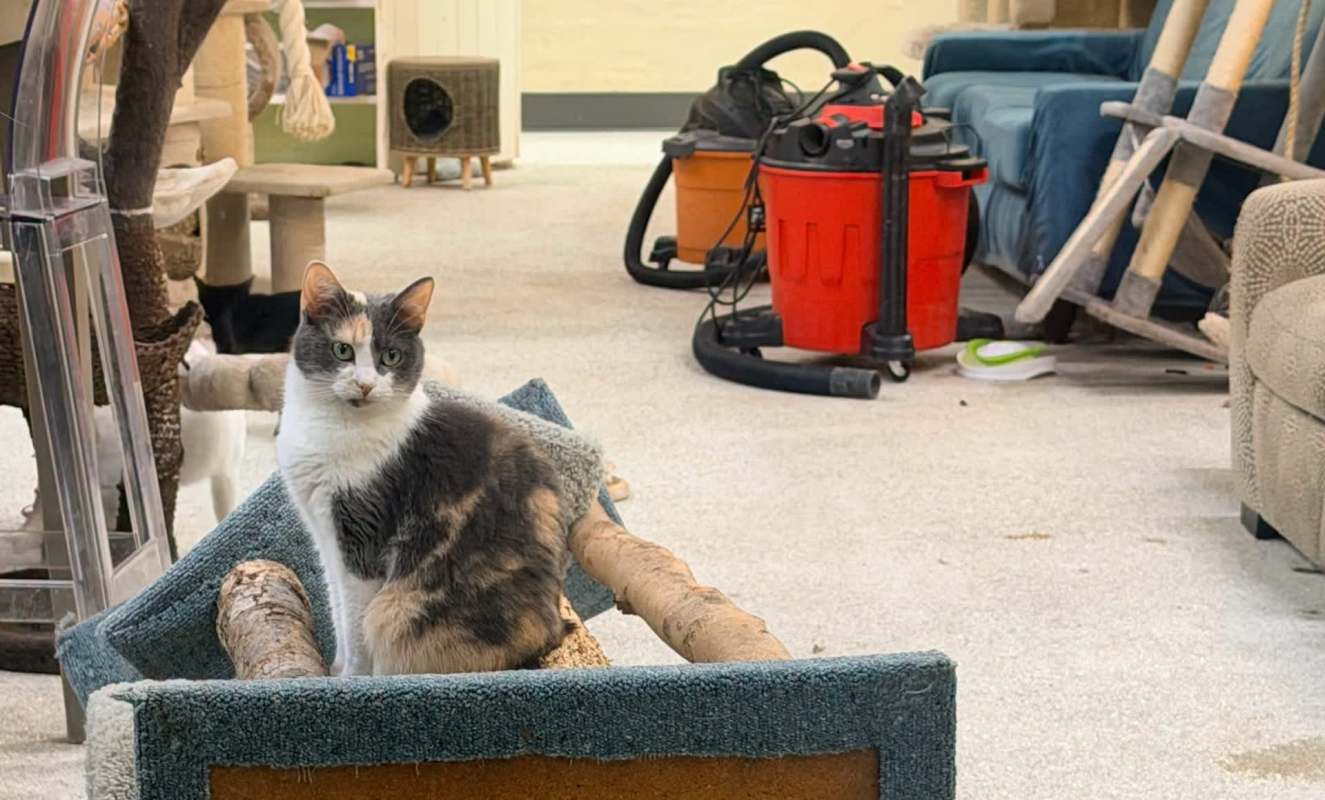
A Tennessee cat rescue is asking for community support after severe flooding tore through its shelter, damaging the building and destroying supplies needed to care for the animals inside.
For a small rescue that relies on donations, the setback could be especially difficult. A permanent fix may cost more than $30,000.
What happened?
In Mt. Juliet, Tennessee, staff at True Rescue said this flood was particularly severe, with water reaching every area of the shelter.
Because the building is set into a hill, the shelter has had water issues before, but this round of flooding caused far more extensive damage than in past incidents.
"This is a post we were hoping to not have to make this year, but here it goes. Our shelter flooded really, really bad last night. This was probably ranked as the worst thus far, and the reason there aren't any photos of the water levels, is because everyone was too busy removing the water, since it covered the entire shelter, and time was of the essence since it was pouring in so fast," the rescue wrote in a Facebook post.
After spending money on stopgap repairs during earlier floods, the organization now says it needs a lasting solution; WSMV reported that the project could cost more than $30,000.
TCD Picks » Quince Spotlight
💡These best-sellers from Quince deliver affordable, sustainable luxury for all




Among the items lost in the flooding were cat towers and other shelter supplies. In addition to repairing the property, True Rescue now has to pay to replace those day-to-day necessities.
The nonprofit says no city or county money supports its work. Instead, it depends on donations and occasional grants, so even ordinary disruptions can put pressure on its ability to provide care.
Why does it matter?
When a shelter floods, the effects go well beyond damage to walls and floors. Water intrusion can ruin bedding, food storage areas, enrichment items, and other essentials that help keep animals safe, healthy, and comfortable while they wait for foster placement or adoption.
For a rescue already operating with limited funding, a five-figure repair need can also put pressure on the rest of its budget. Money that might otherwise go toward litter, food, veterinary care, and daily operations may instead have to be diverted to cleanup and construction.
Recurring flooding can become a long-term challenge for community organizations. When a building's location leaves it vulnerable, temporary fixes may not be enough, and repeated damage can make it harder for nonprofits to plan ahead and consistently serve animals.
What can I do?
As it cleans up and looks for a permanent fix, True Rescue said even small donations would make a difference, according to WSMV. That support can go toward both replacing ruined supplies and covering the larger repair bill.
Support does not have to be monetary. According to the shelter, people can also help by volunteering, fostering cats, or adopting, all of which can reduce crowding and ease daily demands.
The rescue also maintains a wish list for practical supplies, including cat towers, food, treats, and litter.

Get TCD's free newsletters for easy tips, smart advice, and a chance to earn $5,000 toward home upgrades. To see more stories like this one, change your Google preferences here.






