


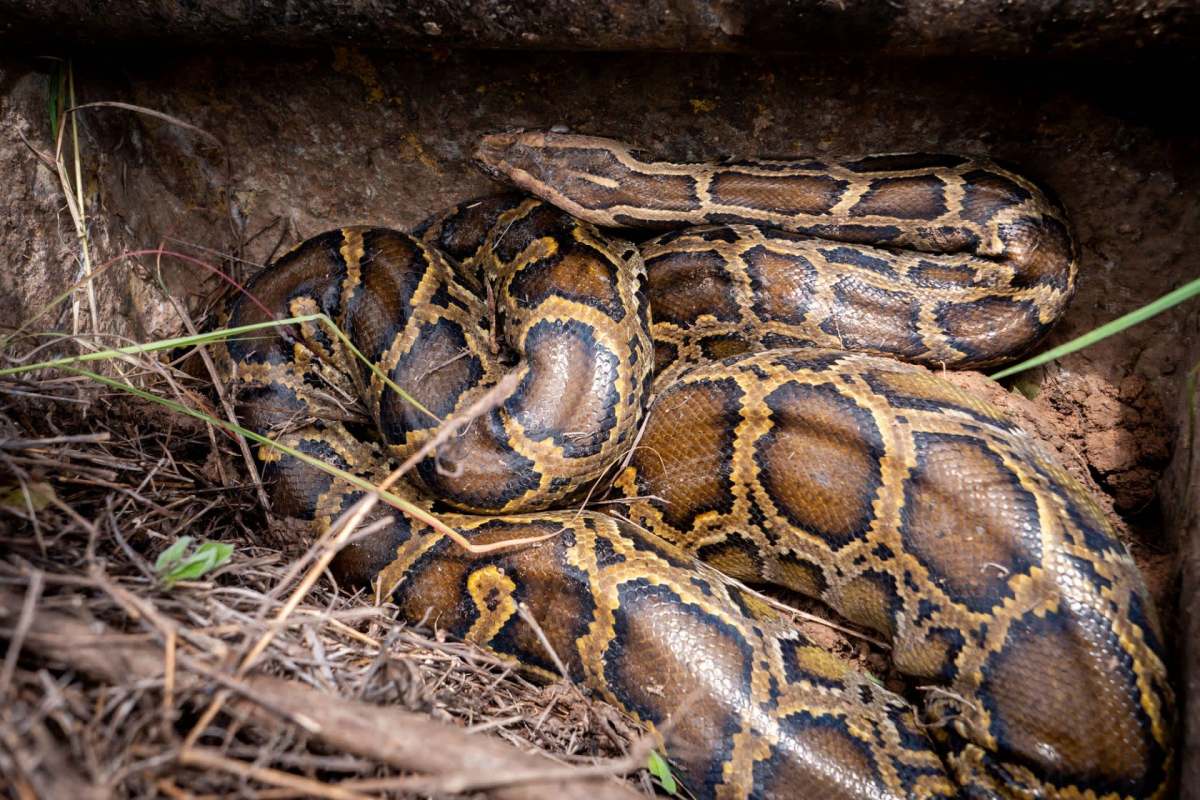
Near Everglades Holiday Park, a Florida python tracker reached a nesting Burmese python only after forcing his way through thick vegetation and clouds of mosquitoes on a small artificial island.
The female snake, about 10 feet long, was coiled over her eggs.
The scene was dramatic, but it also highlighted a distinctly human-made problem: invasive snakes are thriving in altered landscapes and putting more pressure on native wildlife.
What happened?
According to the Miami Herald (@miamiherald), Brandon Welty and his crew traveled by an airboat called "Python Patrol" to a rocky spoil island near Everglades Holiday Park.
The snake they were after was on the opposite side, where the 10-foot female had settled over a clutch of eggs.
The team had followed the python for months with help from a transmitter and a trail camera.
TCD Picks » Quince Spotlight
💡These best-sellers from Quince deliver affordable, sustainable luxury for all




Even so, getting to her required weaving through dense lantana, slipping under tangled branches, and enduring swarming mosquitoes.
"I'm just kind of following this path. I don't know if it's gonna work, but we'll try," Welty said in the video. "Got bug spray all over my GPS."
The Miami Herald wrote, "Burmese pythons are an invasive nightmare in Florida. They're eating their way up the food chain, swallowing everything from marsh rabbits, to wading birds, to deer — and robbing panthers, bobcats, and raptors of their food."
@miamiherald Brandon Welty eased his airboat named "Python Patrol" onto the rocky edge of a man-made island carved from the spoil of a canal near Everglades Holiday Park. His team was on a mission. A 10-foot female Burmese python was guarding her clutch of eggs on the other side of the island. Nesting mothers can be more defensive, and reaching her meant bushwhacking through dense vegetation with mosquitoes swarming for blood. Welty, who stands 6-foot-4, ducked beneath tangled tree branches and pushed through rugged lantana to lead the way. For months, he and his team had watched the snake using a transmitter and a trail camera. "I'm just kind of following this path. I don't know if it's gonna work, but we'll try," he said. "Got bug spray all over my GPS." Burmese pythons are an invasive nightmare in Florida. They're eating their way up the food chain, swallowing everything from marsh rabbits, wading birds, to deer — and robbing panthers, bob cats and raptors of their food. #miami #dade #florida #climatechange #everglades #python #eggs #broward #removal ♬ original sound - Miami Herald
Why does it matter?
Burmese pythons are not native to Florida, and their spread is widely linked to human activity, including the exotic pet trade and releases or escapes over time.
The confrontation also took place on a man-made island carved out by canal construction, where altered habitats can create new pathways and hideouts for invasive species.
Apex-level invaders can disrupt food webs on a huge scale. When pythons consume prey animals of all kinds, they not only threaten individual animals but also reduce prey for native predators.
Those ecological changes can ripple outward. Healthy wetlands support tourism, outdoor recreation, and biodiversity in South Florida. When invasive species destabilize those systems, the damage can become expensive and difficult to reverse.
Florida's python problem also shows how human decisions can compound over time. The introduction of non-native animals, engineered waterways, and fragmented habitats can all make it easier for invasive predators to gain a foothold.
What's being done?
Welty's team demonstrates one of the most direct ways of fighting back: finding breeding females and tracking them carefully.
That kind of work is labor-intensive. One nesting female represents the next generation of invasive predators. Using transmitters and trail cameras helps trackers target the snakes more efficiently instead of searching randomly through vast wetland areas.

Get TCD's free newsletters for easy tips, smart advice, and a chance to earn $5,000 toward home upgrades. To see more stories like this one, change your Google preferences here.







