


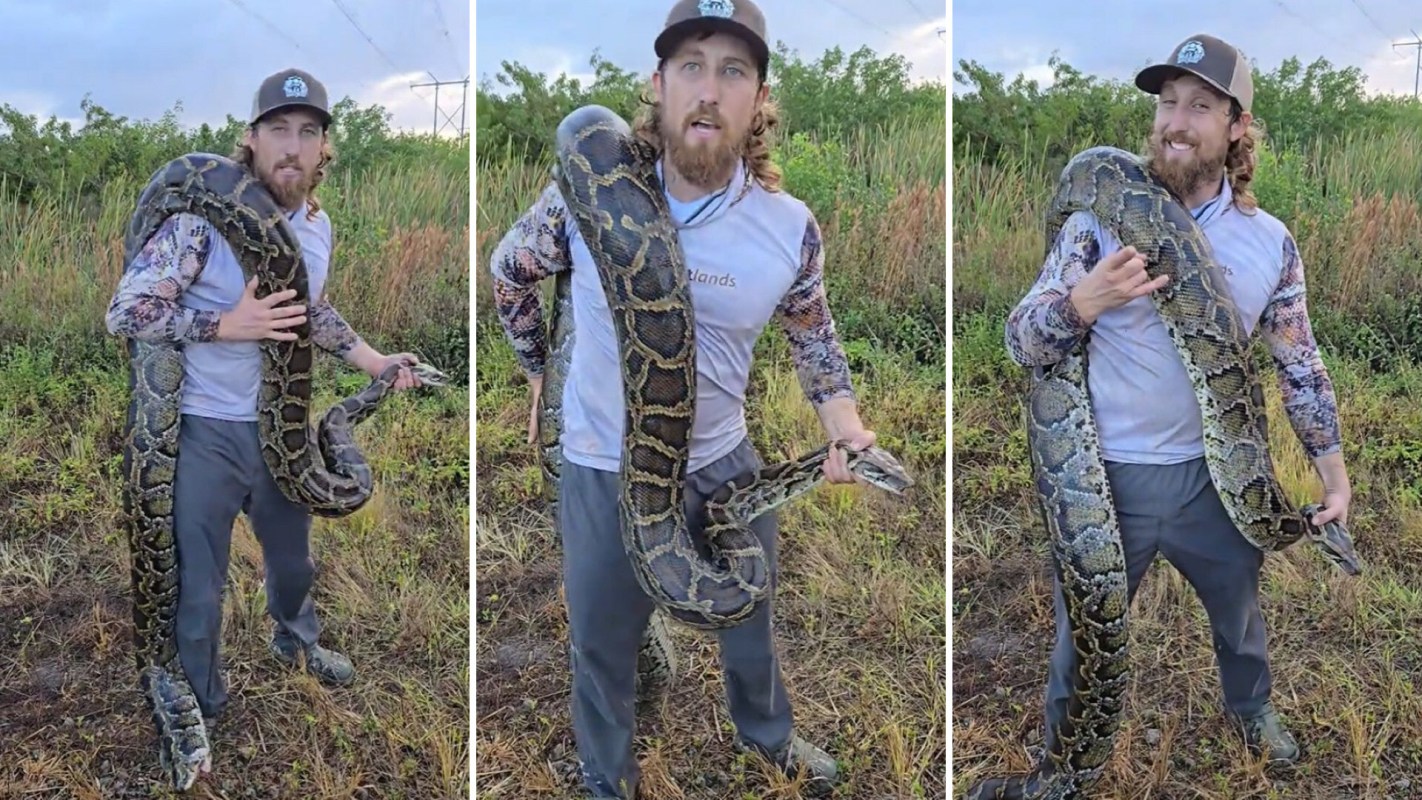
In Florida, python removal is often presented as a test of nerve and skill.
One professional python hunter, however, says the priority should be the protection of native animals, not the excitement of the encounter.
What happened?
In a recent TikTok post, The Snakeaholic (@thesnakeaholic) underscored that removing Burmese pythons in Florida should be understood first as conservation work.
"It's very important to me that people understand that invasive python removal is about saving native wildlife," he wrote, noting that wildlife already faces critical pressure from habitat loss, vehicle collisions, and pollution, among other things.
Burmese pythons were brought to Florida as part of the pet trade and likely ended up in the wild after pet owners released them, either intentionally or accidentally, according to the South Florida Water Management District. Ever since then, they have preyed on local birds, mammals, reptiles, and other native wildlife, dramatically reducing their numbers and contributing to an ecological crisis.
@thesnakeaholic It's very important to me that people understand that invasive python removal is about saving native wildlife. I understand that the challenge of catching one is a thrill with a big adrenaline rush, but that's should always be reason number 2. Wildlife today faces pressure from so many different angles. Habitat loss, vehicular collisions, pollution, the list goes on an on. If we don't wake up and take action, we could loose some of the most incredible species on earth. . #python #snake #wildlife #florida #nature ♬ original sound - thesnakeaholic
Why does it matter?
When a large predator is introduced into a place where it has no natural checks, the effects can ripple through food webs, creating real-world consequences beyond its new habitat.
TCD Picks » Quince Spotlight
💡These best-sellers from Quince deliver affordable, sustainable luxury for all




Healthy ecosystems support tourism, recreation, and water systems that people rely on. When biodiversity drops, the damage does not stay confined to remote locales.
In this case, people created the conditions that allowed pythons to spread, and now native species — and even the pythons themselves — are paying the price.
"I've been working with Burmese pythons in captivity since I was 11 years old. They're beautiful animals. I love them," the creator said. "But they are not supposed to be in Florida."
In the caption, he wrote, "If we don't wake up and take action, we could lose some of the most incredible species on Earth."
What's being done?
Florida is home to organized removal efforts, monitoring programs, and public awareness campaigns, including the annual python removal challenge, which is running from Friday to July 19.
While such programs may provide "a big adrenaline rush," as The Snakeaholic noted, they are designed to protect native species in ecologically sensitive areas.
Prevention is one of the most important steps.
That means never releasing exotic pets into the wild, learning about invasive species, and reporting sightings through official channels.
You can also support habitat restoration and science-based conservation efforts, which help native wildlife withstand multiple threats at once.
Individual action will not solve this problem, but responsible pet ownership and public cooperation can keep the human-caused ecological damage from getting worse.

Get TCD's free newsletters for easy tips, smart advice, and a chance to earn $5,000 toward home upgrades. To see more stories like this one, change your Google preferences here.







