


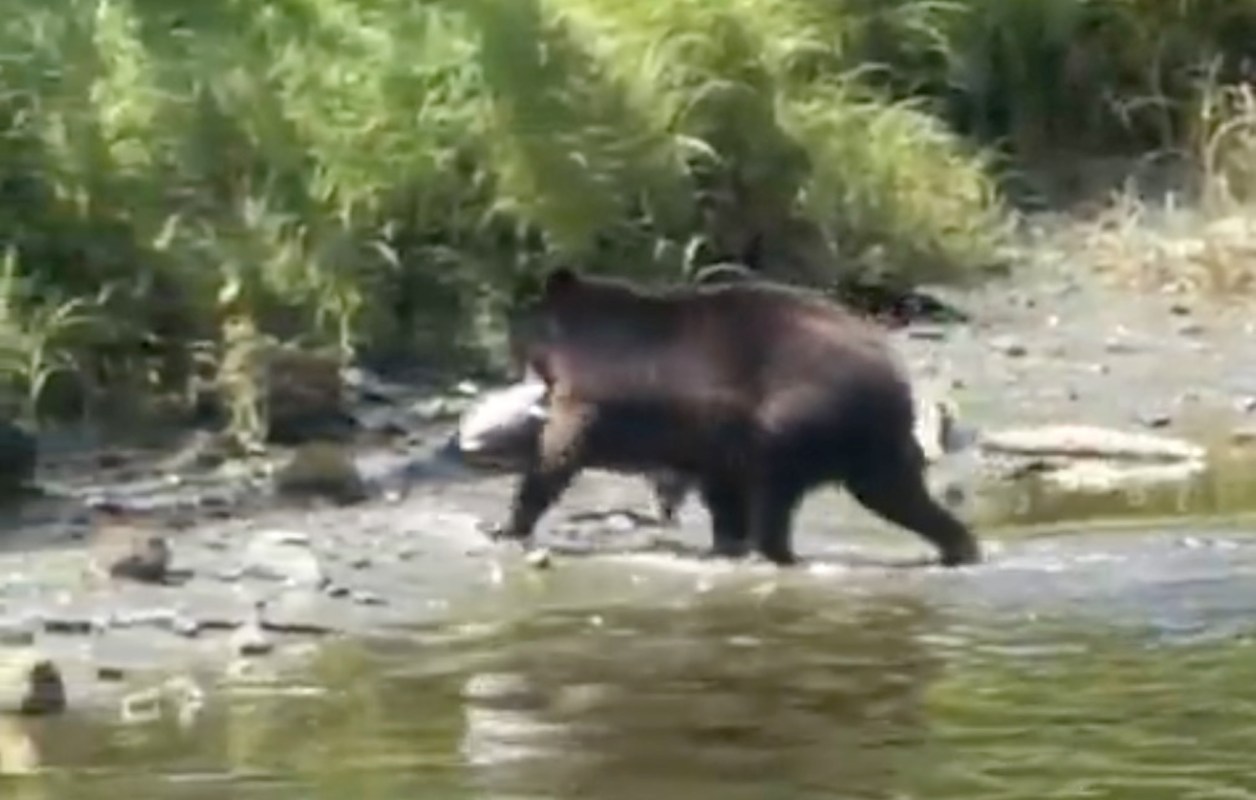
A black bear in Alaska just offered the kind of wildlife scene most people expect from a nature documentary: walking away with an enormous king salmon as if the outcome had never been in doubt.
What happened?
At Alaska's Herring Cove, an amateur photographer filmed a black bear carrying off a king salmon that, according to Whiskey Riff, locals estimated at nearly 40 pounds.
Cindy and I stopped at Herring Cove in Ketchikan, Alaska Thursday and witnessed a big ole bear land a king salmon! Locals estimate the fish was close to 40 lbs. That bear had a feast! pic.twitter.com/DW5eQ6YGGk
— Ed Piotrowski (@EdPiotrowski) July 3, 2026
Amateur photographer Ed Pitotrowski said he and a companion had stopped at Herring Cove in Ketchikan, Alaska, when they saw the bear make the catch. He described the moment this way: "Cindy and I stopped at Herring Cove in Ketchikan, Alaska Thursday and witnessed a big ole bear land a king salmon! Locals estimate the fish was close to 40 lbs. That bear had a feast!"
In the video, the bear secures the fish and drags it onto shore with little visible strain, a familiar sight during salmon season.
That kind of catch is easier to understand given what Whiskey Riff noted about black bears: they have been reported to handle several hundred pounds with a paw and deliver a very powerful bite. They are known for their fishing ability, with their speed and sharp claws helping them catch salmon in rivers and streams.
One X user commented, "Been there before, beautiful place. That is a huge salmon."
TCD Picks » Quince Spotlight
💡These best-sellers from Quince deliver affordable, sustainable luxury for all




Why does it matter?
The clip is a reminder of how important salmon runs are for bears and the ecosystems around them.
For bears, salmon are a concentrated source of calories. Some bears have been documented catching and eating more than 30 salmon in a single day, Whiskey Riff reported, making moments like this part of a normal feeding pattern that helps sustain wildlife.
The clip also highlights the growing overlap between people and wild animals. In places where roads, pull-offs, and tourism bring humans close to salmon streams, encounters like this are easier to witness — but they can also become more dangerous.
Even if a bear appears focused on its food rather than on nearby people, moving in for a closer photo can create stress for the animal and risk for visitors. Attempts at photos can quickly turn dangerous if people disregard rules and get too close to wildlife, as seen in an incident in Yellowstone National Park, where tourists were caught on video approaching wild bison at an unsafe distance.
What can I do?
Use a zoom lens rather than moving closer, stay alert near rivers and streams, and never get between a bear and its food source.
Secure trash, avoid leaving food behind, and follow posted warnings or temporary closures around active feeding areas. Bears that learn to associate people with food often face the worst outcomes.
Habitat protection also helps. Healthy salmon runs and intact stream corridors provide bears with reliable food sources in the wild, reducing the likelihood that they will move into human spaces.
As one commenter put it, "WOW. He could'a had his friends over for a feast!" Another summed it up even more simply: "Holy heck! That's a whopper."

Get TCD's free newsletters for easy tips, smart advice, and a chance to earn $5,000 toward home upgrades. To see more stories like this one, change your Google preferences here.







