


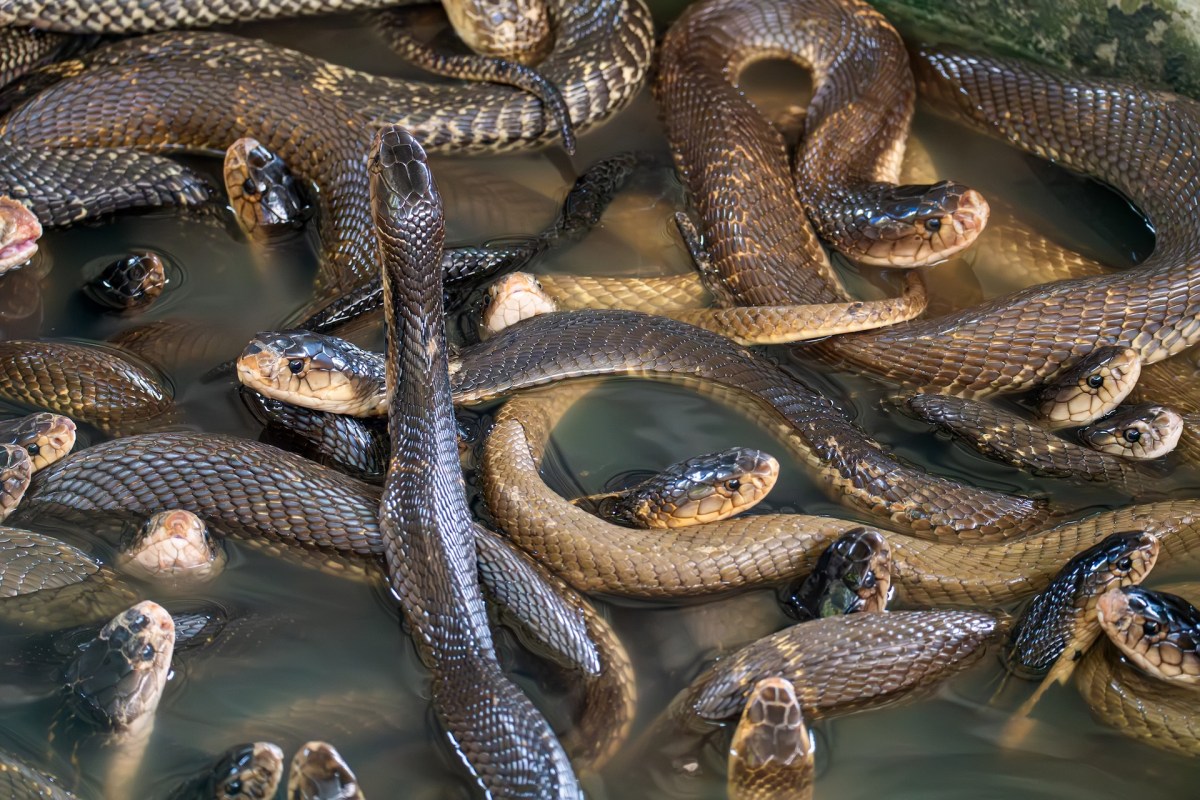
Days after Typhoon Maysak hit southern China, a snake farm in Hengzhou, Guangxi Zhuang, was flooded, setting hundreds of snakes free from their breeding pens.
In one dramatic video, locals were seen using nets to catch the snakes — including cobras.
"Hundreds of snakes escaped all at once," one man told Beijing News, according to The Guardian. "I've seen five or six." He had been bitten by a cobra while cleaning the first floor of his home.
What happened?
Officials warned residents that the displaced snakes could end up in stairwells, along riverbanks, and inside homes. During floods, snakes often move in search of dry ground, and this situation was especially severe because so many got loose.
Hengzhou is part of a major snake-farming industry. Cobras and rat snakes are commonly bred in the area because they mature quickly, reproduce in large numbers, and can be housed in small spaces, The Guardian reported.
In Zisiqiao, one of China's largest snake-trading areas, more than 100 farms are believed to keep around 3 million snakes, according to BBC News. The animals are marketed for food, skins, and traditional medicine products.
TCD Picks » Quince Spotlight
💡These best-sellers from Quince deliver affordable, sustainable luxury for all




Why does it matter?
The typhoon may have freed snakes from their enclosures, but commercial breeding operations had already placed large numbers of venomous animals close enough to residential areas that floodwaters could carry the threat directly to people.
Snakebites can be life-threatening, especially when roads are damaged; hospitals are stretched; and families are already dealing with contaminated water, flooded homes, and power outages.
For residents trying to clean up after a storm, every pile of debris or patch of standing water could conceal another danger.
What's being done?
The Hengzhou Media Convergence Center issued emergency guidance Wednesday, telling residents to seal openings around doors, walls, and drainpipes in homes and temporary shelters so snakes could not get inside.
Officials increased antivenom stocks at Municipal People's Hospital, added medical resources, and stepped up patrols and search and rescue activity in flooded neighborhoods, Discover Magazine reported.
Officials also told people not to put bare hands into floodwater or floating debris since displaced snakes could be hiding there.
In any flooded area, avoiding standing water, using tools instead of bare hands during cleanup, and contacting trained responders rather than trying to catch a dangerous animal can reduce the risk of injury.

Get TCD's free newsletters for easy tips, smart advice, and a chance to earn $5,000 toward home upgrades. To see more stories like this one, change your Google preferences here.






