


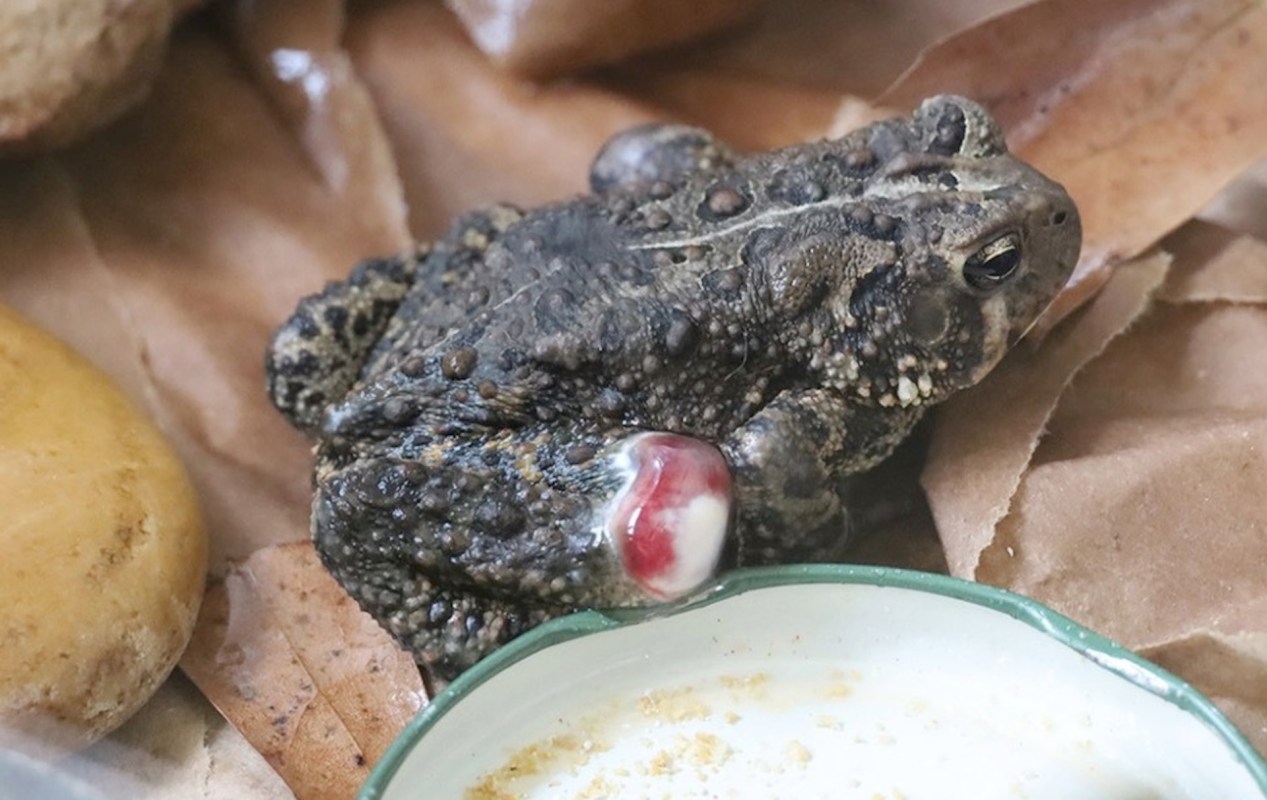
The Toronto Wildlife Centre says a woman's time in her yard led to a rescue after she found an American toad with a serious wound on its knee.
Rather than trying to handle the situation on her own, she reached out for help — a step that got the small amphibian connected with care.
What happened?
The rescue started when Stephanie found the injured toad in her yard and contacted wildlife experts for advice on what to do next. In a post from Toronto Wildlife Centre (@torontowildlifecentre), the organization said its Wildlife Hotline explained how to safely contain the animal.
The center said, "Stephanie was relaxing in her yard when she noticed an American toad with a large, painful wound on her knee." The post added, "Her heart went out to the little amphibian — could something be done to help her?"
After the toad was brought to Toronto Wildlife Centre, Dr. Cameron Berg examined the injury. Before that, Stephanie had followed the hotline's instructions by placing the animal in a container lined with a wet paper towel to help keep her skin moist.
The initial assessment was concerning. As the center described it, "Once at TWC, Dr. Cameron Berg lifted the small patient out of the container to assess the severity of the wound. It was quite large."
TCD Picks » Quince Spotlight
💡These best-sellers from Quince deliver affordable, sustainable luxury for all




Why does it matter?
Amphibians are especially vulnerable to injury, habitat disruption, and drying out. Toads depend on moist skin and safe outdoor spaces to survive, and an untreated wound can quickly become life-threatening.
Yards can also provide habitat for wildlife. Lawns and gardens are often shared with frogs, toads, birds, and pollinators.
Well-meaning people sometimes try to handle wildlife without guidance, which can add stress or worsen an injury. In this case, the homeowner contacted experts and followed their instructions.
Sensitive species can require specialized care.
What can I do?
If you find an injured wild animal, the safest first step is usually to contact a licensed wildlife rehabilitator or local animal rescue hotline before intervening. They can explain whether the animal truly needs help and, if necessary, how to safely contain it.
For amphibians in particular, moisture is critical. People should also avoid using chemicals, ointments, or household treatments unless a wildlife professional specifically recommends them.
Homeowners can also make yards safer for wildlife by reducing pesticide use, leaving some natural cover in place, and checking carefully before mowing or moving garden materials. Small changes can help reduce the risk of accidental injuries.
In this case, one person's compassion set a rescue in motion.
"The toad is now in a thoughtfully-constructed enclosure with lots of places to hide, wet paper towels for moisture (instead of soil to keep her wound clean), and plenty of worms to eat," the rescue wrote. "TWC's team is closely monitoring her progress, and once she's fully recovered she'll hop on back to her wild home!"

Get TCD's free newsletters for easy tips, smart advice, and a chance to earn $5,000 toward home upgrades. To see more stories like this one, change your Google preferences here.







