


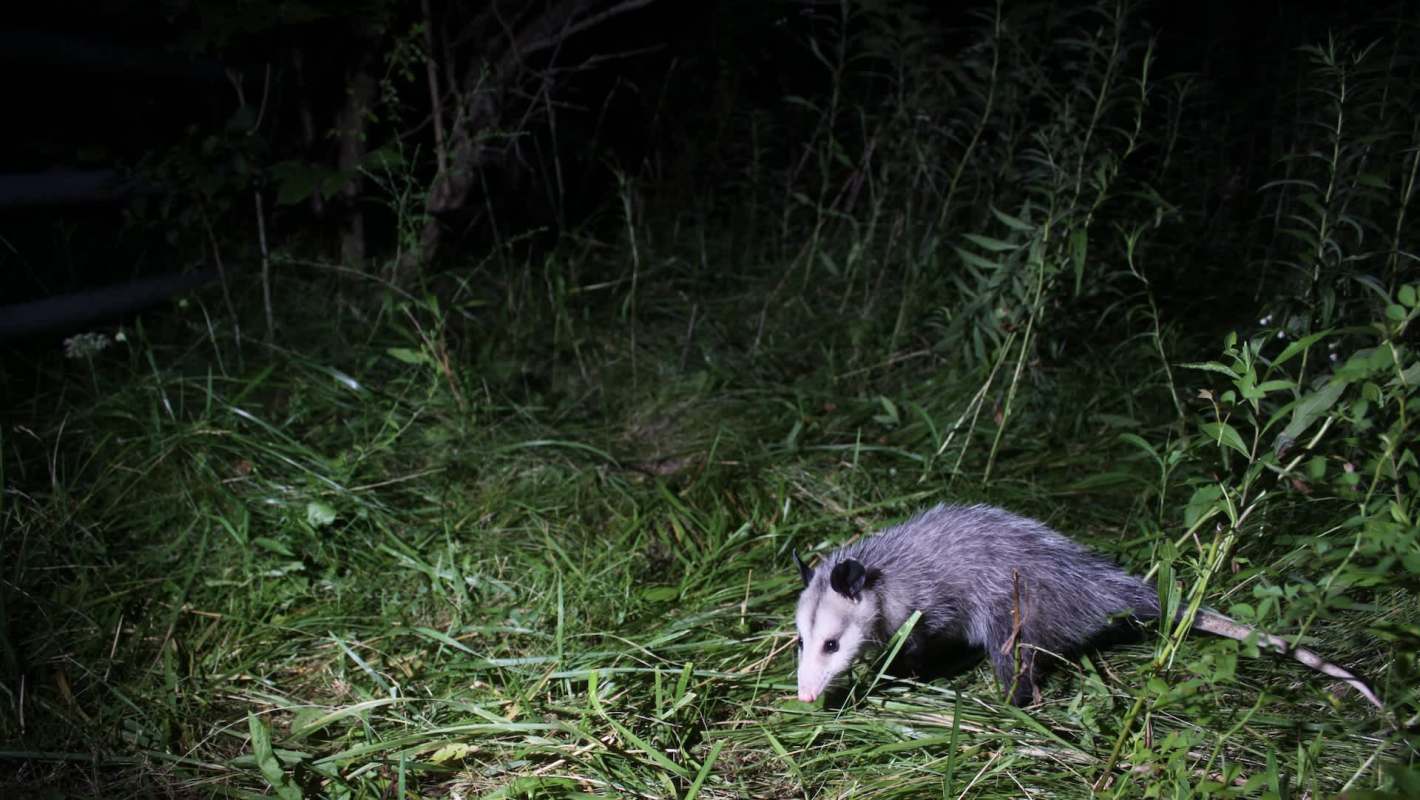
South Florida's campaign against invasive Burmese pythons has already involved everything from drones to thermal imaging. Researchers are now trying a much less obvious tactic: putting GPS collars on possums so the devices can help reveal where the snakes are.
According to the South Florida Sun Sentinel, the experiment is underway at Crocodile Lake National Wildlife Refuge near Key Largo.
What's happening?
Repeated death alerts from tracked mammals are what first pointed scientists toward the idea. In 2022, Michael Cove, a biologist at the North Carolina Museum of Natural Sciences, was monitoring raccoons and possums at the refuge when their GPS collars began to signal mortality, as Outdoor Life reported.
When the team went to collect those collars, they frequently discovered them inside big Burmese pythons.
That turned a failed tracking effort into a new strategy. Cove and Crocodile Lake National Wildlife Refuge manager Jeremy Dixon began treating swallowed collars not as the end of the trail, but as a clue that could lead them to the snakes.
The plan became much more practical once collar prices fell, dropping from about $1,500 each to roughly $190. With grant funding from the South Florida Water Management District's python elimination program, the group also brought in A.J. Sanjar, a graduate researcher at Southern Illinois University.
TCD Picks » Quince Spotlight
💡These best-sellers from Quince deliver affordable, sustainable luxury for all




Using this method, researchers have already removed at least 18 Burmese pythons. Dixon said every one was longer than 8 feet, and the largest stretched to around 13 feet.
Why does it matter?
Burmese pythons have become one of South Florida's most destructive invasive species, preying on mammals, birds, and other wildlife across the region. Because they are so difficult to detect in dense wetlands, they can keep spreading even while removal teams are actively searching for them.
That threat extends beyond the snakes themselves. The Everglades and nearby habitats support native wildlife, recreation, tourism, and ecosystems that help safeguard water resources for surrounding communities. When invasive predators disrupt the food web, the effects can spread widely.
Larger pythons are especially important to remove because they can consume more prey and contribute more heavily to breeding populations, meaning their removal can help slow the invasion closer to its source.
The project reflects a shift toward smarter, lower-cost technology rather than relying on brute-force searching alone.
What's being done?
Researchers found that possums are better suited to this work than raccoons. They are more common in the refuge and more likely to move deep into the backwater swamps where pythons hide, making them a more effective early-warning system.
There are 32 GPS-collared possums in the field right now, and the researchers want to push that total to at least 40 by the height of summer. Dixon said they would use hundreds if funding allowed.
Possum collars are one more addition to Florida's widening anti-python toolkit. Other efforts include drones, thermal imaging, and scout snakes fitted with GPS devices, all aimed at helping wildlife managers protect native species and ease pressure on ecosystems that have been strained for years.
Dixon said the work is really about observing a danger that already exists in the python habitat. As Dixon told the South Florida Sun Sentinel, "We're not putting these animals out there and in harm's way. Harm's way is there. We're just documenting what is happening."

Get TCD's free newsletters for easy tips, smart advice, and a chance to earn $5,000 toward home upgrades. To see more stories like this one, change your Google preferences here.







