


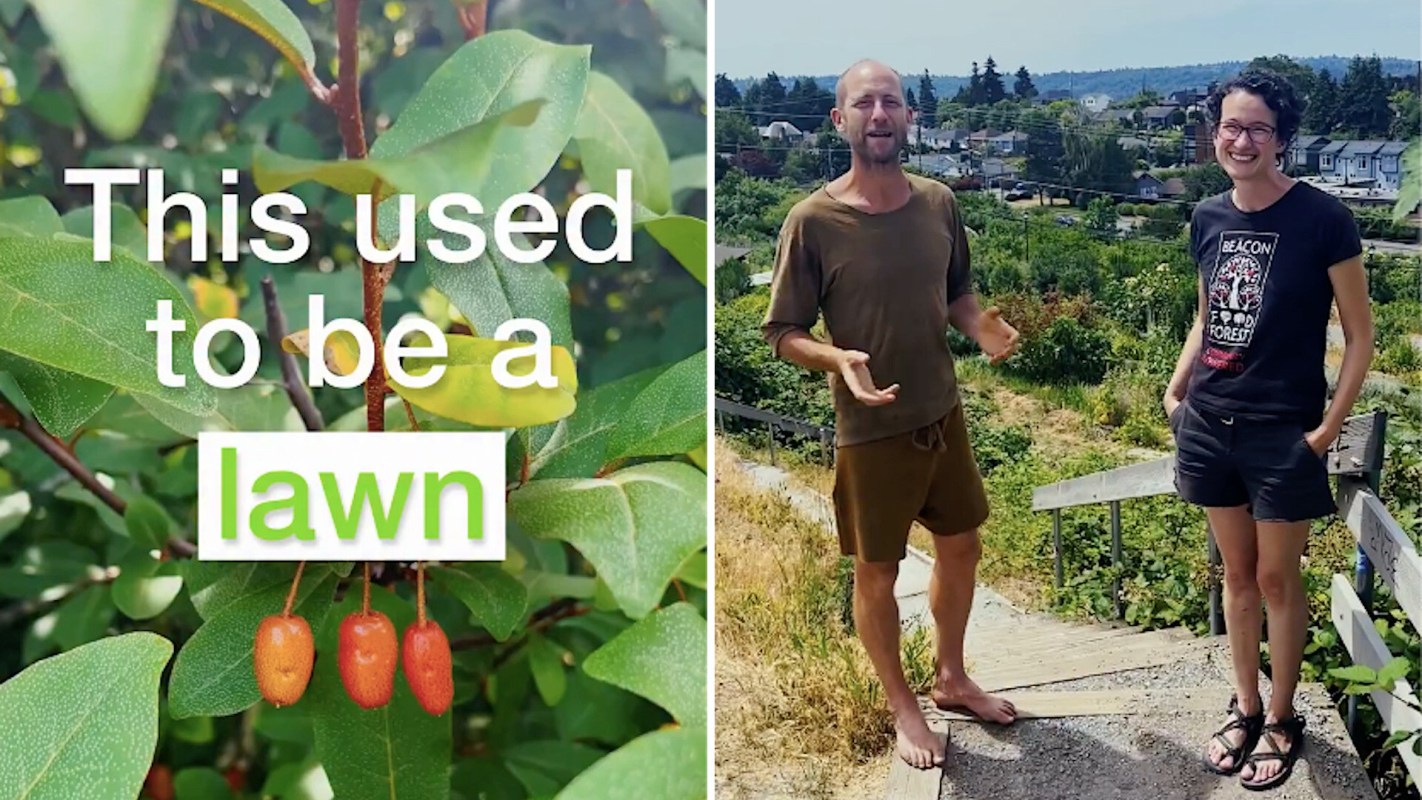
On public land in Seattle, a slope that used to be mostly lawn has been turned into a place where neighbors can gather free food, including fruit, nuts, and native plants.
What happened?
Robin Greenfield (@robin.greenfield) recently spotlighted Seattle's Beacon Food Forest (@beaconfoodforest) in an Instagram post, presenting the several-acre site as an open-harvest space where visitors are free to pick food.
Elise, a longtime volunteer and steward, explained just how dramatic the transformation has been.
Because the property is public, neighbors in and around Beacon Hill worked with the city after deciding they wanted the land to serve a different purpose. Elise recalled how simple the site looked at the start: "When they got started 14 years ago, what you would have seen was just lawn like this. It was seven acres of grassy hillside," she said.
After years of work, Elise said the project has become "four acres of cultivated food forest and growing," a change made possible by "thousands of volunteers over the years."
The plantings now range from everyday foods like apples, walnuts, and pears to native species such as wapato and camas. The forest also includes newer sections centered on more calorie-dense crops, such as chestnuts.
TCD Picks » Quince Spotlight
💡These best-sellers from Quince deliver affordable, sustainable luxury for all




Greenfield said, "The Beacon Food Forest has been a beacon in my life for over a decade."
In the comments, one visitor wrote, "I love it there! We spent a lot of time there during herbalist school. So much to see and learn!!"
Why does it matter?
Food costs remain a major concern for households, and projects like Beacon Food Forest show how shared spaces can improve access to fresh food close to home.
A public food forest can help cut grocery expenses, expand access to plant-based foods, and give people a place to spend time outdoors while learning practical skills such as gardening, harvesting, and stewardship.
These spaces can also do more for urban environments than conventional landscaping by creating shade, supporting pollinators and other wildlife, and producing food without the intensive inputs often associated with standard landscape maintenance.
Will, who said he has volunteered there for roughly eight years, pointed to the oldest part of the site as proof of how much it has matured: "Now we have closed canopy in this spot and shade. It's nice."
The project also reflects how local food systems can be shaped by the people using them. Elise said volunteers are growing "culturally relevant foods" and learning from one another along the way.
What can I do?
Beacon Food Forest shows what residents, volunteers, and public agencies can build together over time.
For people who want to know more or participate, Greenfield encouraged viewers to visit the organization's website.
The first step does not have to be launching a seven-acre project. Joining a local community garden, volunteering at a public orchard, supporting edible landscaping in parks, or planting a fruit tree or herbs at home can all help build more resilient neighborhood food access.

Get TCD's free newsletters for easy tips, smart advice, and a chance to earn $5,000 toward home upgrades. To see more stories like this one, change your Google preferences here.







