


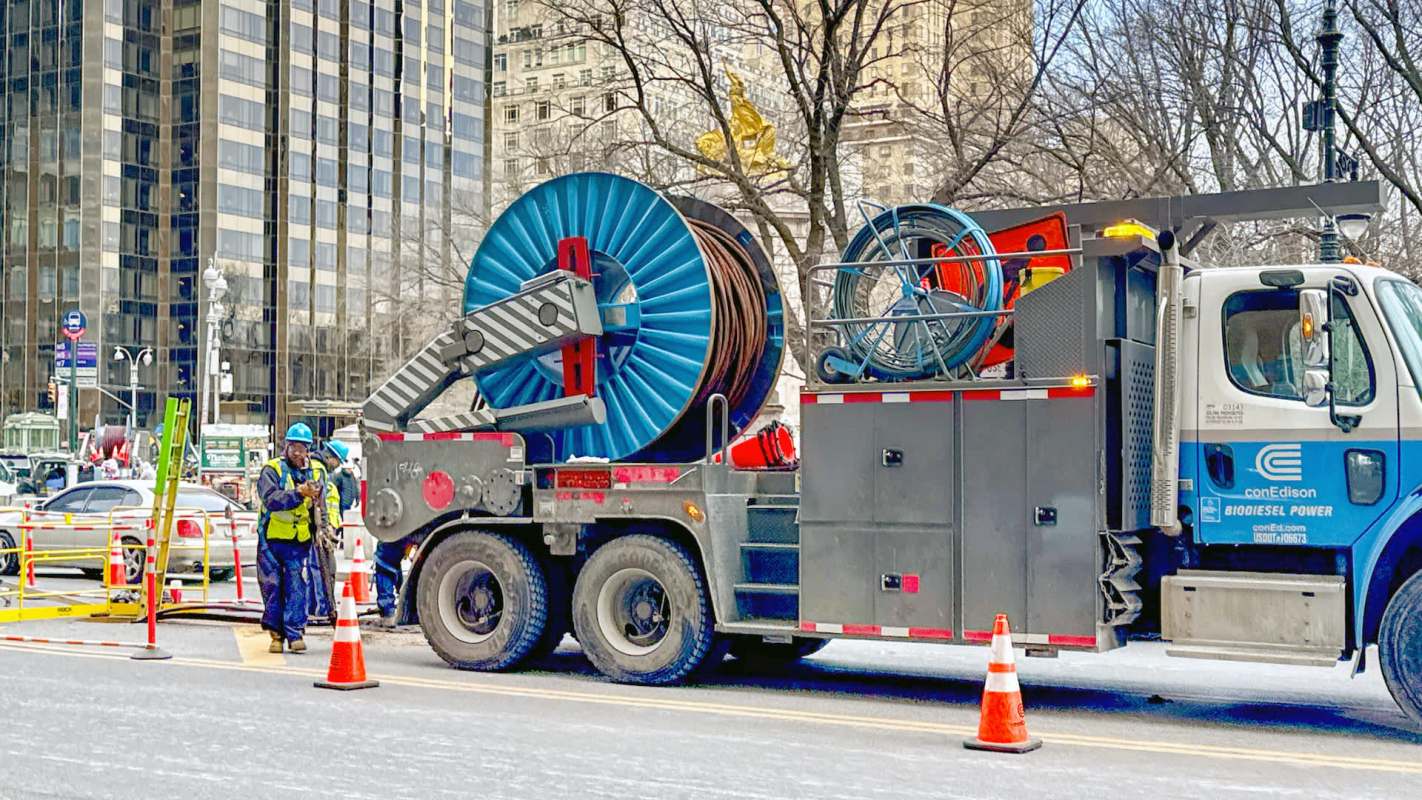
As temperatures climb across New York City, the power system is under heavier strain — and the dispute over how battery projects connect to the grid could shape electricity costs and reliability during future summer heat waves.
What's happening?
During off-peak hours, battery systems can bank electricity and then release it back to the grid when demand surges, a role that could be especially crucial in a heat wave. But developers and clean energy advocates say Con Edison is making new storage projects too costly to connect, City Limits reported.
For homeowners, it may be worth exploring EnergySage's free tools to compare home battery storage options and competitive installation estimates. EnergySage has teamed up with the electrification brand Qmerit to guarantee you get the best price on home battery storage solutions. Another option is Pila, which offers excellent battery backup options; its plug-and-play batteries are priced at a fraction of what a whole-home backup system would cost.
Patrick Robbins, director of the Utility Customers Association, told the outlet: "This is a time when we should be embracing technologies that relieve some of that strain rather than hindering them."
Con Edison argues that widespread battery charging can create neighborhood-level spikes in electricity use, forcing expensive infrastructure work. Developers counter that Con Ed's newer policy adds costs so steep that some projects can lose their entire budgets. They also noted batteries can be programmed to charge at staggered times, helping reduce strain on the grid rather than creating the large demand spikes Con Edison projects.
Why does it matter?
When battery storage projects stall, New Yorkers can be left more exposed to blackouts, high electricity prices, and pollution from older fossil fuel plants brought back online during periods of peak demand.
The risks are especially prominent in neighborhoods that have long borne the health burden of dirty energy infrastructure. Supporters say additional storage capacity could reduce reliance on aging "peaker" plants, which City Limits noted are tied to detrimental health consequences, such as pediatric asthma in disadvantaged communities.
Bill Acker, executive director of NY-BEST, said, "In New York City, utilization of the grid is typically less than 50 percent." He added: "Going forward, we believe that we need a much more intelligent grid that incorporates energy storage and other flexible assets."
Crushed by your bills? See instant solar savings from vetted installers in just a few clicks With energy prices through the roof, there's never been a better time to go solar — and EasyHome can help you find the best prices from the best installers in your area. EasyHome takes the guesswork and headaches out of energy upgrades by showing you estimated savings from a network of vetted local partners. To get started, just enter your ZIP and share a few details about your home — seeing your estimate is really that easy. |

City Limits reported that New York City now has 84 active battery facilities and no reported BESS fires, though proposed projects in parts of Queens and Staten Island have still faced pushback over safety and property values.
What's being done?
City officials are trying to loosen the bottleneck. City Limits reported that in April, Councilmember Sandy Nurse sponsored a resolution urging the state Public Service Commission to reverse Con Ed's more expensive interconnection policy. The outlet also reported that Councilmember James Gennaro introduced legislation to ease certain fire code limits on small residential battery systems and to speed up permitting for medium-scale projects.
Gennaro emphasized how his proposed bill could make it easier to install battery storage systems, stating: "We can protect public safety while also making it easier for New Yorkers to adopt technologies that strengthen our grid, reduce emissions and improve resilience during extreme weather."
Separately, the city filed comments in May supporting NY-BEST's petition over Con Ed's "two-step test," which developers say is freezing projects, according to City Limits. That slowdown could make it harder for the state to reach its 6,000-megawatt energy storage goal by 2030. State data cited by City Limits show just 16.3 megawatts were installed this year, versus 57.6 megawatts in 2025.
"To avoid blackouts in moments like this, we need to get more renewable energy flowing into our grid," Nurse said. And as Leslie Vasquez, an organizer with The Point CDC, put it: "Battery storage allows us to not depend on the usage of power plants that keep polluting our air, especially now in the peak of the summer heat."

Get TCD's free newsletters for easy tips, smart advice, and a chance to earn $5,000 toward home upgrades. To see more stories like this one, change your Google preferences here.






