


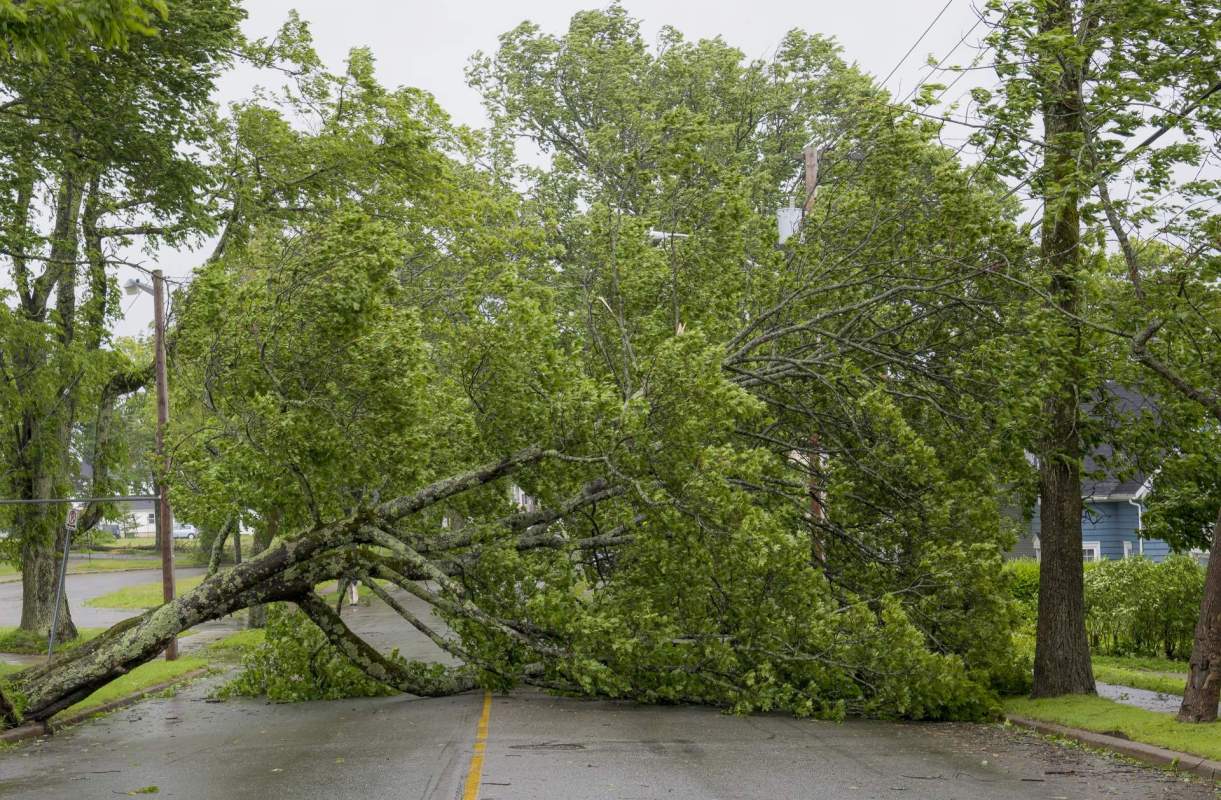
After overnight thunderstorms swept New York's Mid-Hudson region, more than 27,000 Central Hudson customers were still without electricity on Monday, affecting homes and businesses across the area, the Daily Freeman reported.
For many households, an outage can quickly become a safety, health, and financial issue.
What happened?
By 9:22 a.m. Monday, Central Hudson's outage map showed major service disruptions in Dutchess and Ulster counties, with 20,198 customers out in Dutchess and 5,937 in Ulster, according to the Daily Freeman.
At the storm's peak on Sunday, about 37,000 customers lost power. By Sunday night, the utility said in a statement it had restored service to roughly 17,000 of them, or 32% of those affected.
Most customers were expected to have electricity restored by 10 p.m. Tuesday, according to the Daily Freeman.
"The severe storms that impacted our service area on Saturday evening caused significant damage throughout our service area," Eric Kiszkiel, Senior Vice President of Engineering & Operations at Central Hudson, said in the statement.
As more families think about how to prepare for outages like this, it may be worth exploring EnergySage's free tools to get information about home battery storage options and competitive installation estimates.
Why does it matter?
Power outages can upend daily life. Refrigerated food can spoil, medical devices may lose power, traffic signals can fail, and in-home temperatures can become dangerous.
Save $10,000 on solar panels without even sharing your phone number Want to go solar but not sure who to trust? EnergySage has your back with free and transparent quotes from fully vetted providers in your area. To get started, just answer a few questions about your home — no phone number required. Within a day or two, EnergySage will email you the best options for your needs, and their expert advisers can help you compare quotes and pick a winner. Solar panels can save you more than $50k over their 25-year lifespan, and EnergySage can help you save as much as $10k on installation. Which begs the question — isn't that worth an email or two? |

Battery storage can help reduce some of that risk for homeowners. It can also allow you to protect your home during an outage, save money on energy, and build more resilience when the grid goes down. EnergySage has also teamed up with the electrification brand Qmerit to guarantee you get the best price on home battery storage solutions.
There are also more affordable backup options, including Pila. Their plug-and-play batteries are priced at a fraction of what a whole-home backup system would cost.
What can I do?
For residents dealing with an outage now, safety remains the top priority. Avoid downed power lines, keep refrigerators and freezers closed as much as possible, and use generators only outdoors and away from windows. It is also wise to charge phones in the car or at community locations, if available, and to check on neighbors who may need assistance.
Preparing before the next outage can mean assembling an emergency kit, keeping flashlights and backup charging options ready, and reviewing whether your home is equipped for multi-day disruptions.
In this case, many customers across New York were still waiting on Monday for their electricity to return.
"With more than 600 damage locations remaining, there remains a significant amount of work ahead of us, but we will not stop until every customer has their power restored," Kiszkiel concluded in the statement.

Get TCD's free newsletters for easy tips, smart advice, and a chance to earn $5,000 toward home upgrades. To see more stories like this one, change your Google preferences here.






