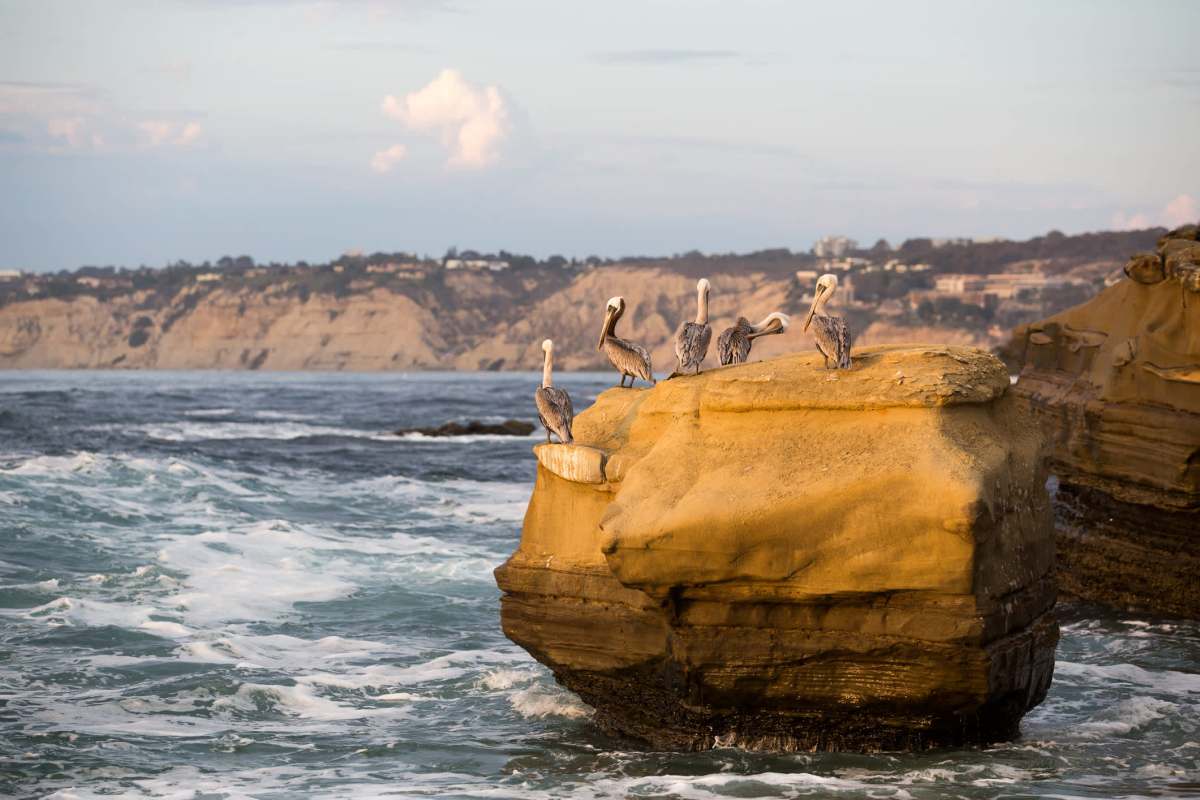
California's beaches are becoming a warning sign of a warming ocean.
Scientists and volunteers are finding an increasing number of dead and starving seabirds along the coast, likely caused by marine heat waves that disrupt the food they rely on.
Researchers say El Niño could intensify the problem by placing additional strain on coastal waters that are already unusually warm.
What's happening?
On San Diego beaches, marine ornithologist Tammy Russell told the Associated Press that seabird remains can show up within minutes of a shoreline walk. Some scientists suspect months of persistently elevated coastal temperatures are driving the die-offs.
Among the birds hit hardest are California brown pelicans, loons, and grebes, according to the AP. As the nearshore layer of cold, nutrient-rich water contracts, food sources like krill, anchovies, and sardines are no longer as accessible, leaving many birds to starve.
Temperature readings collected at several monitoring sites along the coast have also been unusually high this year, raising concern that the marine food chain is shifting as the heat wave continues.
TCD Picks » Quince Spotlight
💡These best-sellers from Quince deliver affordable, sustainable luxury for all




"We've been seeing cormorants walk to shore and then just die within the hour. I mean, one time it happened within 15 minutes, and I've never seen that before," Russell, of the Scripps Institution of Oceanography at the University of California, San Diego, told the AP. "That has been heartbreaking for me and we're seeing this happening across the whole coast."
This spring, wildlife rehabilitation centers have taken in hundreds of badly undernourished seabirds. Many of the birds found dead or too weak to survive were both young and severely thin.
Why is this concerning?
Seabirds are often an early warning sign that ocean ecosystems are under stress. When the animals cannot find enough food near shore, it can indicate broader disruptions that ripple through fisheries, coastal economies, and communities that depend on healthy marine waters.
It also means more pressure on rescue organizations, more wildlife suffering on public beaches, and more evidence that climate-driven ocean warming is making recovery increasingly difficult.
Scientists say these kinds of mass deaths are not unprecedented. But warmer ocean conditions are helping make them more frequent, the AP reported. One major example was "the blob," a warm-water event a decade ago that caused widespread marine losses, including millions of common murres, and its effects are still being studied.
For Californians, that can mean shifting marine biodiversity, stressed coastal habitats, and a less stable future for ocean-dependent jobs and recreation.
What are people saying?
"We don't know how bad this is going to get," Russell said.
J.D. Bergeron, CEO of International Bird Rescue, told the AP, "It's not abnormal to see dead birds on the beach, but the quantity of dead birds is unusual."
"When birds starve, especially the pelicans, they start to look in unusual places for food," Bergeron added.

Get TCD's free newsletters for easy tips, smart advice, and a chance to earn $5,000 toward home upgrades. To see more stories like this one, change your Google preferences here.