


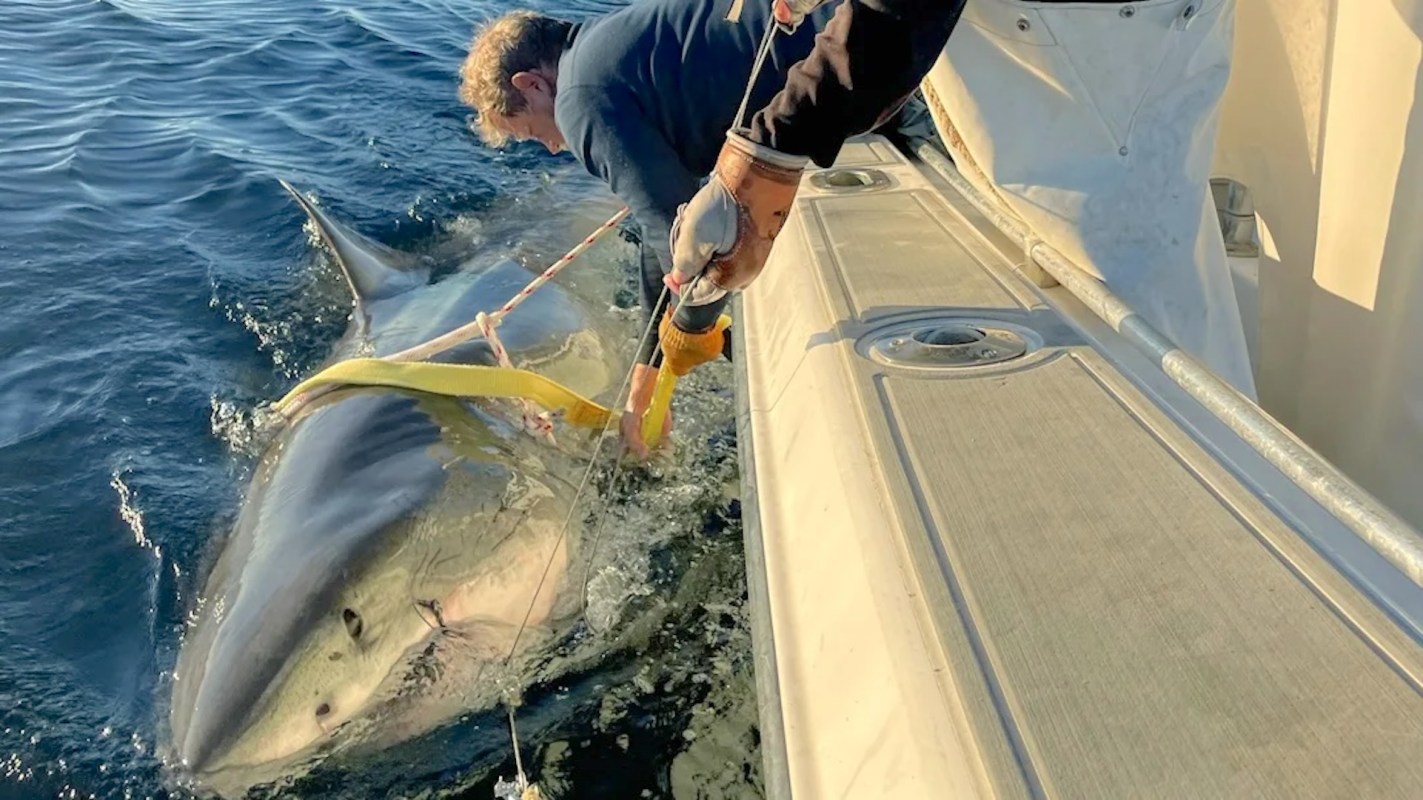
Contender, the largest male great white shark ever documented in the Atlantic, has appeared in tracking data again off the North Carolina coast.
OCEARCH's global shark tracker registered another late-June signal from the nearly 14-foot, roughly 1,700-pound shark, according to Fox Weather. The ping was not detailed enough to show his exact location, but it did indicate that he is still moving through the region.
What happened?
Tagged by OCEARCH in January 2025 off the Florida-Georgia coast, Contender has since been monitored by ocean observers using the organization's free OCEARCH Global Shark Tracker app.
Contender's last mapped location came from the Outer Banks in April. Then, on Thursday, June 25, researchers logged a new signal known as a "Z-ping," Fox Weather reported.
OCEARCH has explained that its SPOT satellite tags are attached to a shark's dorsal fin. The device uses two copper contacts to complete a circuit underwater; when the shark comes to the surface, that circuit breaks, prompting the tag to send a location signal.
As OCEARCH Chief Scientist Dr. Robert Hueter explained, "If the shark stays at the surface for 10, 20, 30 seconds, we'll get a good fix on where the shark is."
TCD Picks » Quince Spotlight
💡These best-sellers from Quince deliver affordable, sustainable luxury for all




Because this transmission was so short, scientists could confirm only that Contender surfaced, not the exact point at which it did so.
Why does it matter?
Data from tagged sharks helps scientists better understand migration routes, feeding patterns, and seasonal movement along heavily visited coastlines. That information can improve conservation planning and help coastal communities understand when large marine predators may be nearby.
As warming ocean temperatures, shifting prey populations, and increasingly crowded shorelines change where animals and people overlap, sightings of large sharks near beaches can seem more common.
That does not mean sharks are suddenly seeking people out. Rather, it reflects the growing role human activity plays in shaping the conditions that bring wildlife and people into closer contact.
Research like this can help improve beach safety messaging and protect sharks that are often misunderstood.
Great whites are also key apex predators, meaning their movements can give scientists a clearer picture of overall ocean health. When researchers know where these animals travel, they can better protect the ecosystems people rely on for food, tourism, and coastal resilience.
What are people saying?
Hueter said it was "really a miracle of science," according to Fox Weather.
When the shark breaks the surface, the device "wakes up" and attempts to transmit a location signal.
In other words, even a mystery ping still confirms that Contender is active and traveling.

Get TCD's free newsletters for easy tips, smart advice, and a chance to earn $5,000 toward home upgrades. To see more stories like this one, change your Google preferences here.






