


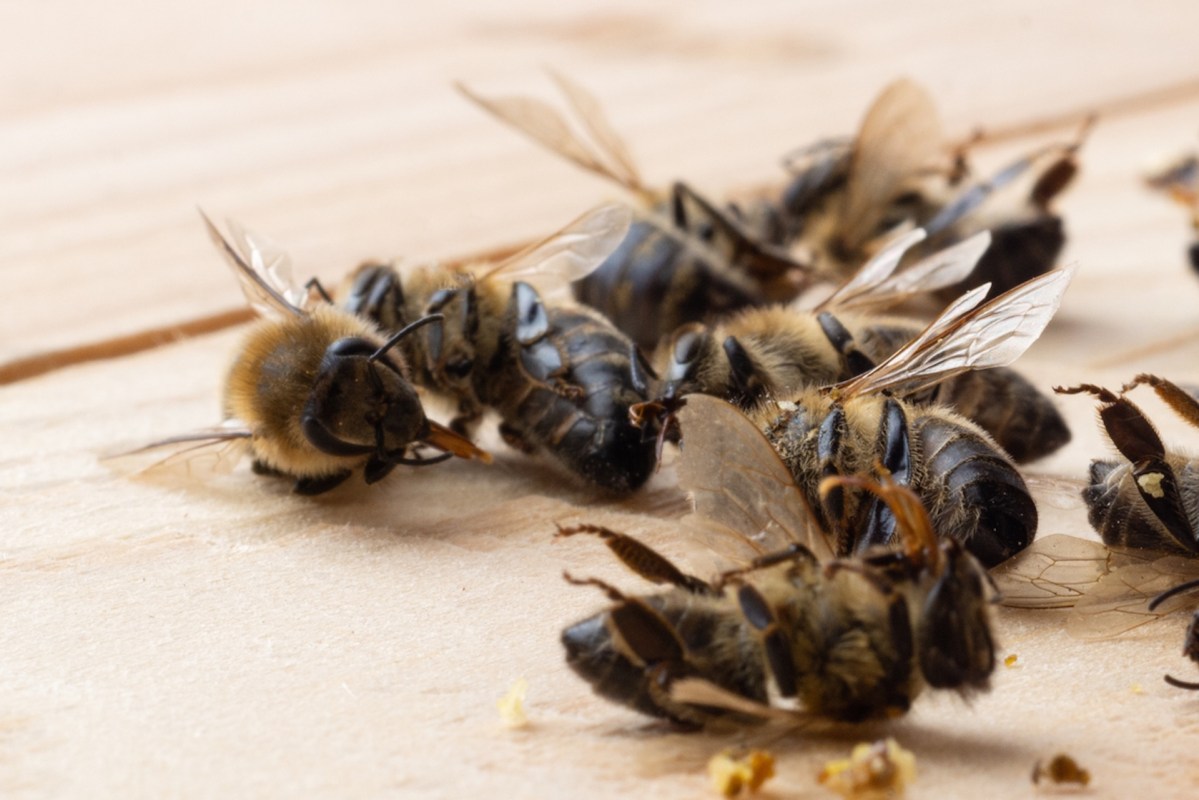
A parasitic insect may explain why an Oakland homeowner kept finding bees dying by a porch light, the Mercury News reported. The victims could be "zombees," honeybees infected by so-called zombie flies.
What happened?
After finding bees dead or dying in the same porch-side area morning after morning, an Oakland reader named Midori asked columnist Joan Morris for help. According to the Mercury News, Midori suspected the nearby light, so they turned it off and replaced it with an amber bug bulb.
"In the past month, I have come out in the morning to find bees dying on my front porch," Midori wrote. "I don't want the bees to die and am looking for answers."
Because the deaths kept happening, the advice column said the light itself was unlikely to be the main issue. Morris noted that Varroa mite infestations in hives and pesticide exposure can also kill bees, but a parasitic fly called Apocephalus borealis was the most probable cause here.
Often called "zombie flies," these parasites lay eggs in a bee's abdomen. As the bees weaken, they can become disoriented, leave the hive, and possibly move toward lights.
The columnist's answer also said Oakland has seen confirmed cases before. Beyond that, verified honeybee "zombee" reports have been documented in West Coast states, British Columbia, South Dakota, and Vermont.
TCD Picks » Quince Spotlight
💡These best-sellers from Quince deliver affordable, sustainable luxury for all




Why does it matter?
Honeybees and other pollinators do far more than buzz through gardens. They help support flowering plants, urban green spaces, and crops that communities depend on every day.
When parasites, disease, or pesticides weaken pollinators, that can undermine local ecosystems and food production resilience, slowing progress toward a healthier future.
Morris' response also directed readers to ZomBee Watch, a citizen science project for reporting sightings and tracking these cases.
Community reporting can help scientists understand where infections are spreading and how threats to pollinators are changing.

Get TCD's free newsletters for easy tips, smart advice, and a chance to earn $5,000 toward home upgrades. To see more stories like this one, change your Google preferences here.






