


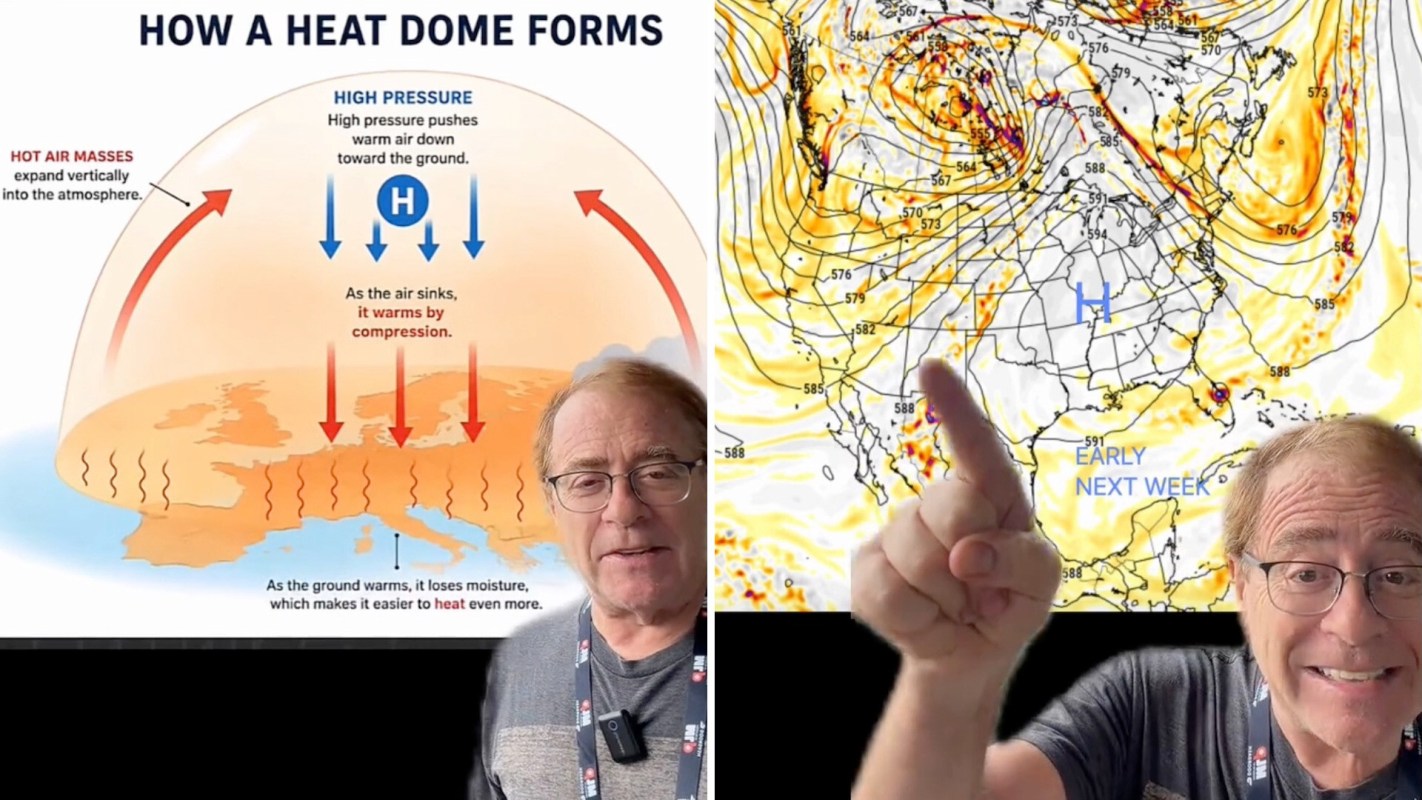
One meteorologist is fighting back against misinformation after commenters attempted to catch him in a "gotcha" moment relating to the heat domes across the globe.
What's happening?
Meteorologist Todd Gross (@TheToddGross) didn't pull any punches when he responded to an inaccurate comment saying heat domes are unrelated to climate change.
In the TikTok video where Gross responded, he stated, "Of course they are [natural], … but it's the frequency and intensity of this current heat dome in Europe and the one that's coming up to the United States during this upcoming week."
@thetoddgross Replying to @Aaron m#recordheat #europe #heatdome #meteorologisttoddgross #newyorkcity ♬ original sound - Todd Gross🪐Meteorologist
Gross continued, "The intensity that has never been reached before in recent centuries. … Yes, this is a sign of global warming."
He then described the unusually intense heat in Germany. Berlin was at about 104 degrees Fahrenheit. Some areas were nearing 106 degrees Fahrenheit despite it still being early afternoon there.
Gross said a comparable heat dome is expected to form over the eastern U.S. this week.
TCD Picks » Quince Spotlight
💡These best-sellers from Quince deliver affordable, sustainable luxury for all




As explained by Gross, meteorologists have long known about patterns like this one, but he said that the severity and repeated return of these events are becoming more difficult to ignore.
Heat domes and "Omega block" arrangements are part of normal atmospheric behavior, Gross said. But the rising frequency and strength of these events are becoming harder to brush aside.
Why are more frequent heat domes concerning?
A heat dome is more than just an unpleasant stretch of hot weather. When heat becomes trapped for several days, it can raise the risk of dehydration, heat exhaustion, and poor sleep. It can also strain power systems and create dangerous indoor temperatures, especially for people without air conditioning.
Extreme heat can become far more dangerous when homes and buildings are not designed to cool down effectively.
For Gross, the bigger signal is not one isolated hot day but the larger pattern behind it. He said that when record highs are challenged again and again, while record lows are tested much less often, it points to a broader warming trend.
What are people saying?
Several commenters shared their thoughts and experiences with recent extreme heat.
"It got up to 107 in my neighborhood in Berlin. Brutal," one person wrote.
Another commenter said, "Idk how anyone walking on this planet can deny climate change."
A third person wrote, "As a glassblower in western Massachusetts, I'm not looking forward to this upcoming heatwave."

Get TCD's free newsletters for easy tips, smart advice, and a chance to earn $5,000 toward home upgrades. To see more stories like this one, change your Google preferences here.






