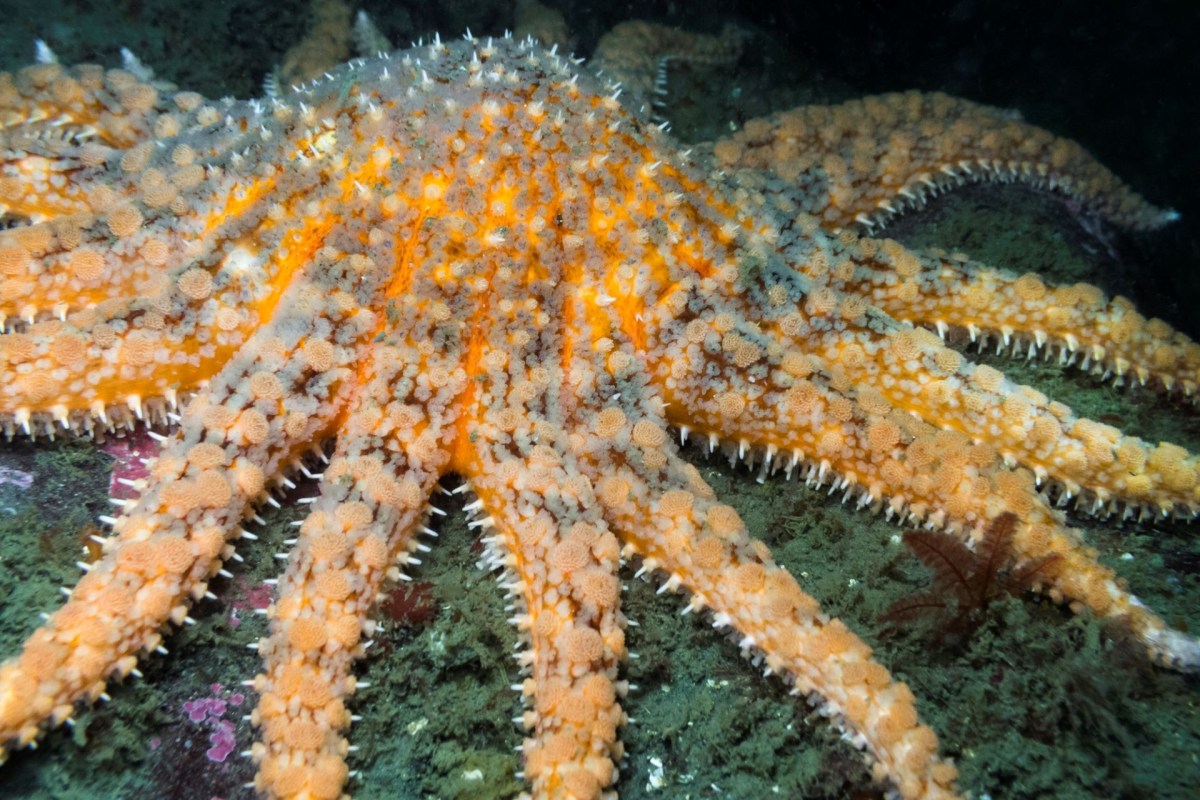
Scientists have now developed a highly advanced tool to monitor ocean life, allowing them to monitor species "without ever seeing them."
Thanks to the work of researchers at the National Oceanic and Atmospheric Administration's Pacific Marine Environmental Laboratory, scientists can now use a novel technology they call "rapid environmental DNA (eDNA) detection."
That new tool could help scientists better protect wildlife and the coastal ecosystems many communities depend on.
What happened?
After sunflower sea stars suffered a broad population collapse due to sea star wasting disease spread during the 2013-2016 Pacific marine heat wave, known as "the Blob," scientists needed more tools to monitor the species.
To address the issue, rather than relying only on diver sightings, researchers at NOAA's Pacific Marine Environmental Laboratory developed this rapid eDNA method for monitoring the sunflower sea stars.
The detection method searches seawater for genetic traces left by the sea star species, which is now so rare that traditional dive surveys often miss it entirely, according to NOAA.
TCD Picks » Quince Spotlight
💡These best-sellers from Quince deliver affordable, sustainable luxury for all




NOAA added that the new method can pick up DNA fragments in just one liter of seawater, return results within a day, and help guide divers toward follow-up searches.
In one recent case, according to the agency, an eDNA hit in Northern California's Noyo Bay helped divers find a juvenile sea star roughly the size of a teacup.
Why does it matter?
Sea urchins can strip underwater forests when nothing keeps their numbers in check, and sunflower sea stars are among the predators that help prevent that.
But when those predator populations collapse, urchin numbers can surge, turning thriving kelp habitat into barren areas and making recovery far more difficult.
The effects reach well beyond marine biology. Kelp forests support fish populations and commercial fisheries, provide habitat for hundreds of species, and help filter nutrient pollution.
The eDNA method is also far less expensive and more efficient than relying solely on divers, especially in deeper waters or locations that are difficult to access.

Get TCD's free newsletters for easy tips, smart advice, and a chance to earn $5,000 toward home upgrades. To see more stories like this one, change your Google preferences here.