


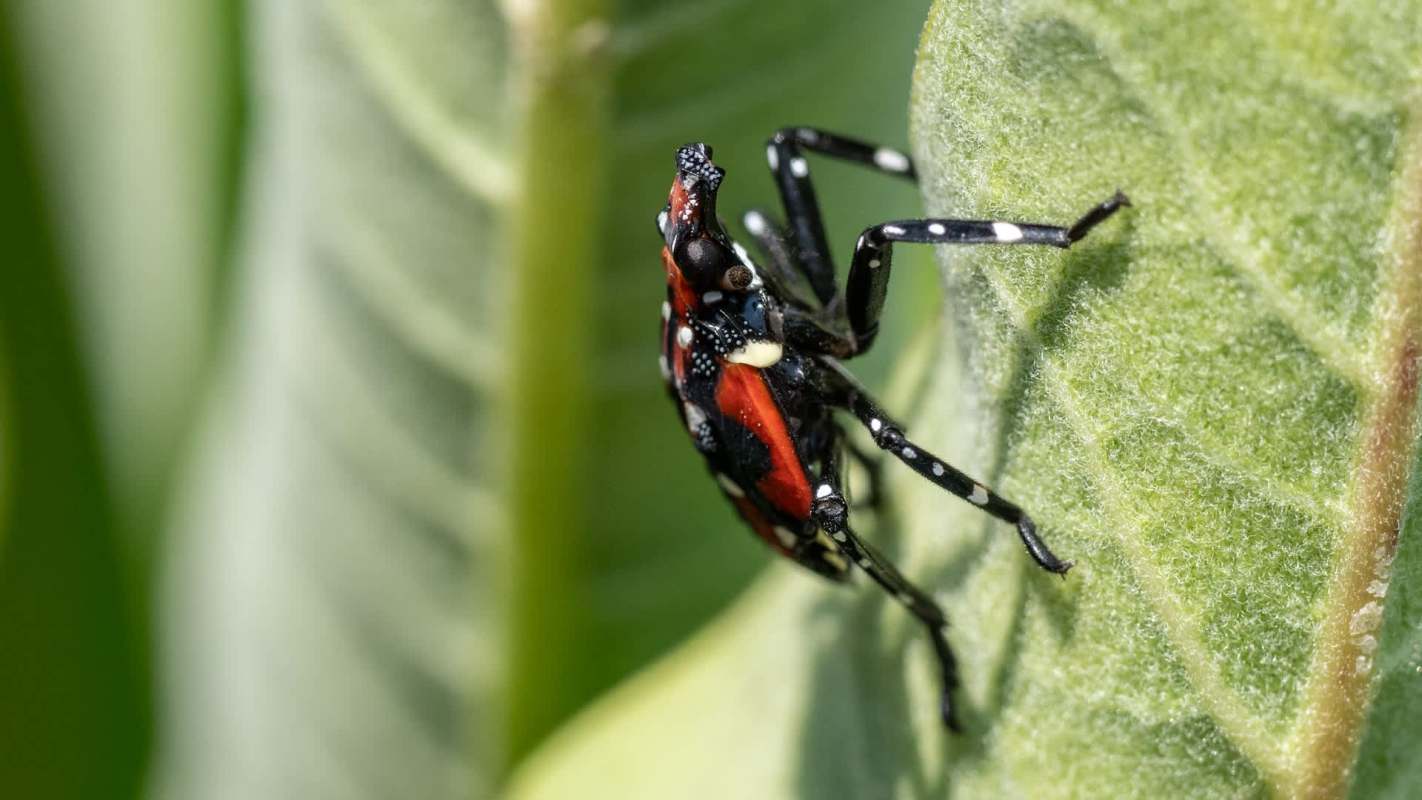
Northern Virginia residents who are seeing tiny red insects in their yards may be looking at spotted lanternfly nymphs.
Earlier this month, commonly spotted black-and-white bugs were identified as lanternfly nymphs, an invasive insect, Northern Virginia Magazine reported. These red, spotted bugs are what happens when the lanternfly nymphs shift into the next stage of their life cycle.
Now, experts want people to recognize and kill them before they mature into adults.
What's happening?
Jules Amanita, the Virginia Department of Agriculture and Consumer Services' spotted lanternfly field supervisor, said the insect goes through four nymph stages before becoming the winged adult many people recognize.
Size changes along with color. During the first three nymph stages, the bugs can be anywhere from tick-sized to about the size of a black bean, according to Northern Virginia Magazine. By the last nymph stage, they are red with spots and roughly as large as a stink bug.
Even with that brighter coloring, identification is not always straightforward.
TCD Picks » Quince Spotlight
💡These best-sellers from Quince deliver affordable, sustainable luxury for all




Red nymphs can be mistaken for boxelder bugs or milkweed bugs, but spotted lanternfly nymphs usually rest at about a 60-degree angle and move at about a 30-degree angle. Fairfax County guidance says adult spotted lanternflies could begin appearing in Northern Virginia as early as July.
Why does it matter?
Spotted lanternflies are not dangerous to people or pets, but that does not make them harmless.
They are an invasive species that threatens agricultural crops and other plants, meaning a bug found in one yard can quickly become a bigger problem for neighborhoods, farms, and local ecosystems.
Once lanternflies reach adulthood, they become harder to control. Catching them during the nymph stage gives residents a better chance to reduce local populations before the insects spread farther.
What can I do?
For larger infestations, homeowners can build a circle trap to catch them.
Vacuuming is another option, whether with a household vacuum or through a pest control service, according to Northern Virginia Magazine. Contact insecticides can kill lanternflies directly, while systemic treatments can be applied to plants so that the bugs die.
Not every method is recommended. Residents are urged to read and follow insecticide labels to avoid environmental harm. Home remedies are discouraged, and sticky traps are also considered a poor option because they may trap and kill non-target wildlife.
The Virginia Department of Agriculture and Consumer Services and the Virginia Cooperative Extension both offer more resources on identification and control.

Get TCD's free newsletters for easy tips, smart advice, and a chance to earn $5,000 toward home upgrades. To see more stories like this one, change your Google preferences here.







