


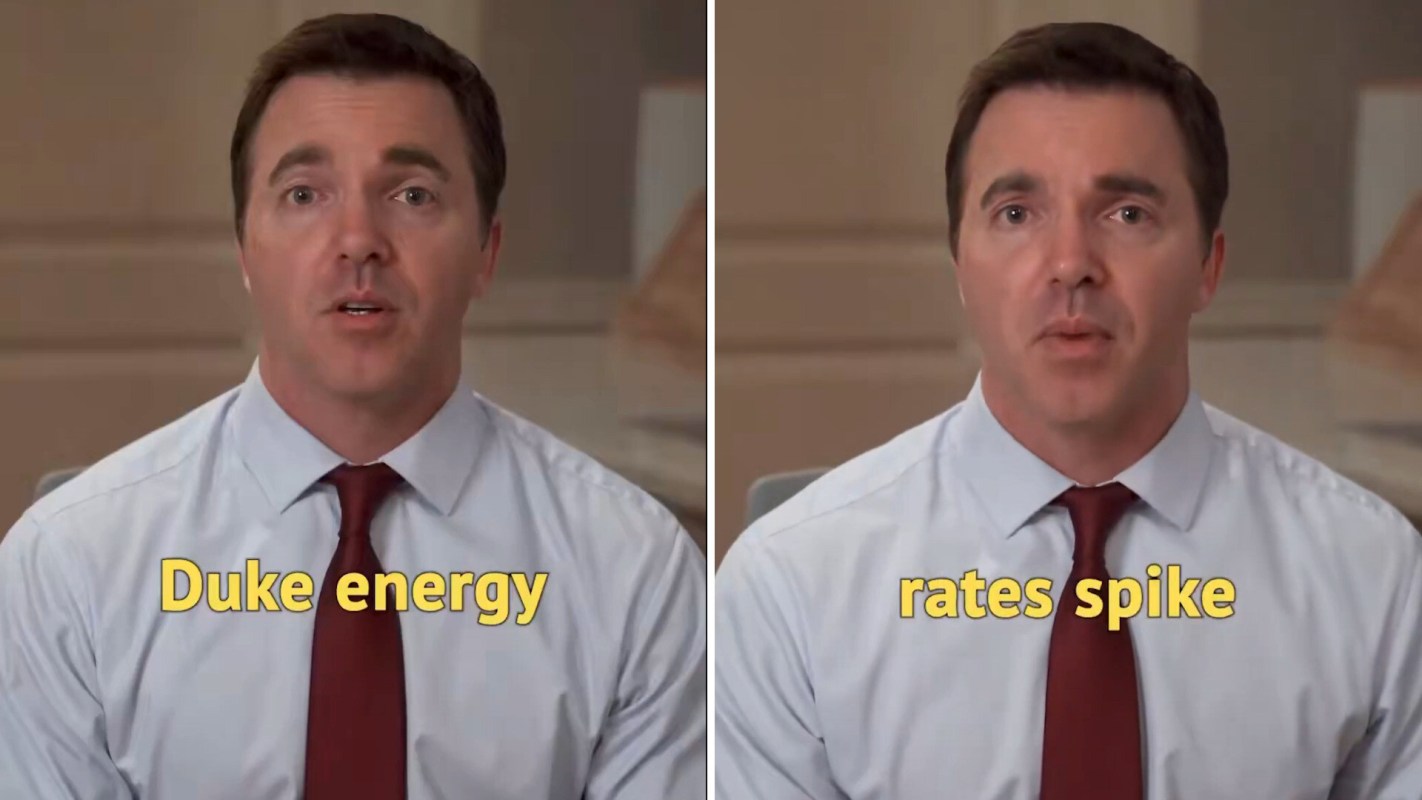
North Carolina households may face a smaller Duke Energy Carolinas rate increase than the utility first sought after objections to its latest proposal.
Still, Attorney General Jeff Jackson says the revised hike remains too high for families already grappling with rising everyday costs.
What's happening?
Objections from Jackson's office, the Public Staff, other intervenors, and many North Carolinians helped prompt Duke Energy Carolinas to trim its proposed residential increase from 18% to 11.6%, Jackson said Monday, according to Queen City News.
Under Duke Energy's revised filing, residential customers would see increases of 7.5% in 2027 and 4.2% in 2028, while the company's overall request would total 9.3% rather than 14.3%, with 5.6% slated for 2027 and 3.7% for 2028.
Even with the reduced request, Jackson said the proposal still asks too much of customers.
As Attorney General, part of my job is to protect consumers.
— Jeff Jackson (@JeffJacksonNC) June 1, 2026
That includes your energy bill.
So today, I'm formally opposing Duke's proposed 15% increase.
Our case is over 700 pages, but here's the short version: pic.twitter.com/7YdJZbxCHd
"That happened after our office objected, along with Public Staff, other intervenors, and many North Carolinians," he said. "It's a step in the right direction, but it's still too high."
TCD Picks » Quince Spotlight
💡These best-sellers from Quince deliver affordable, sustainable luxury for all




The case is scheduled to go before the North Carolina Utilities Commission for a hearing on July 7. If the filing is approved without changes, the new rates would start taking effect Jan. 1, 2027.
Why does it matter?
Utility rate cases can directly affect monthly household budgets, especially for families already struggling to keep pace with higher housing, food, and transportation costs. Even a smaller increase can add up over time, particularly during North Carolina's hottest and coldest months, when electricity use typically rises.
A key issue for Jackson's office is whether residential customers could end up covering infrastructure costs tied to data centers and other major power users. He argued that ordinary households should not be left with that bill.
The case could also help shape how future energy growth is handled in the state. As electricity demand rises, regulators are being asked to balance reliable service with affordability for people who have the least flexibility in their monthly budgets.
What's being done?
Jackson plans to keep pressing the Utilities Commission for a lower increase while fighting what he sees as unfair costs being passed on to households.
Duke Energy, meanwhile, said it is still calculating how the revised request would affect actual customer bills and expects to share that information soon. The company also said it changed its filing after hearing concerns from customers and stakeholders.
"Over the last few months, we have listened carefully to feedback from customers and stakeholders," a Duke Energy spokesperson said. "In response, we have proposed an alternative path that lessens the projected cost impact on customers while continuing to make the investments necessary to serve North Carolina's growing energy needs."
In the meantime, households can also look into other cost-cutting home energy solutions to help soften the impact of future rate changes.

Get TCD's free newsletters for easy tips, smart advice, and a chance to earn $5,000 toward home upgrades. To see more stories like this one, change your Google preferences here.






