


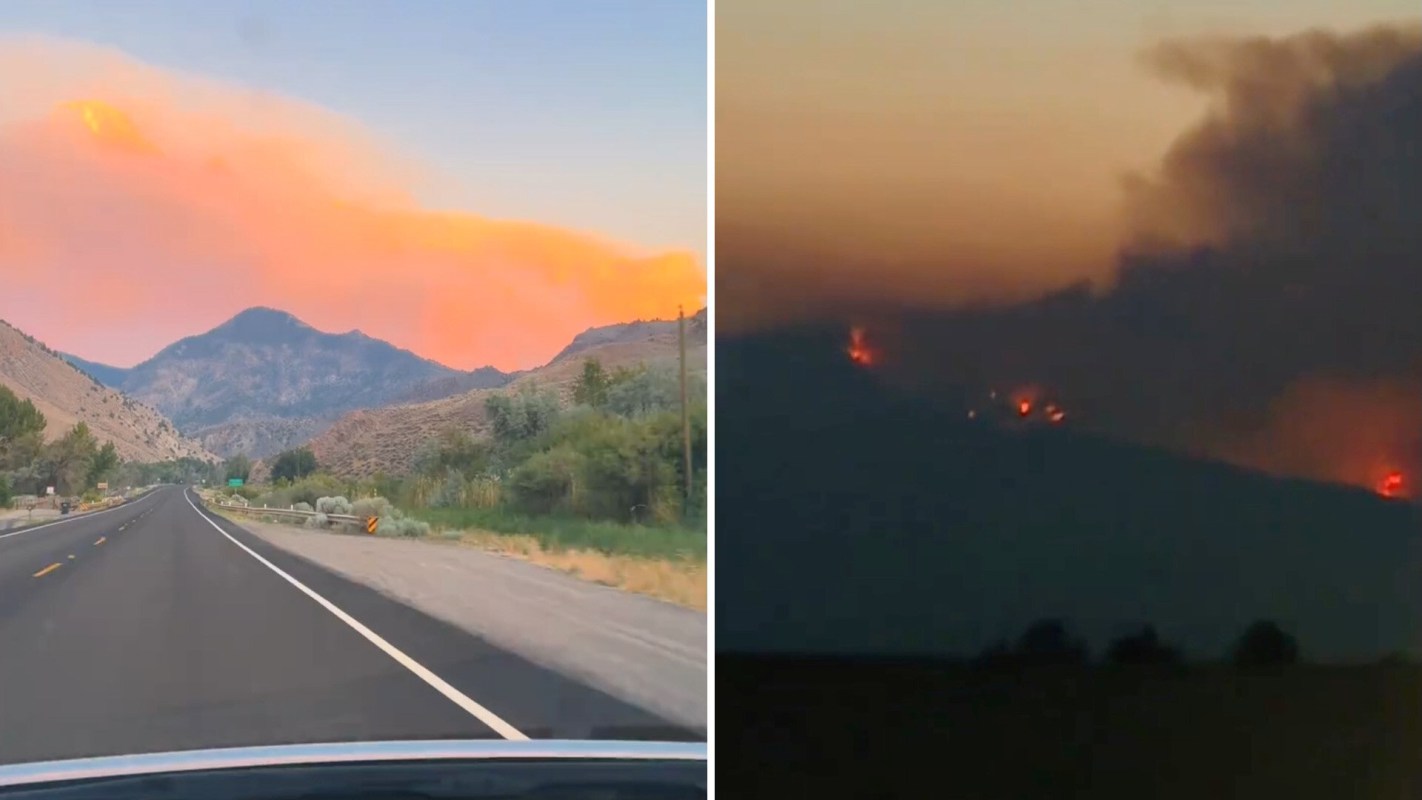
The view from a road in Utah this week was not just hazy — it was haunting.
One brief online video showed how smoke, a nearby fire, and fear altered what would otherwise have been a normal drive through the state.
What's happening?
A TikTok video posted by moooooooose (@the.senoran.moose) showed the view from a vehicle and included this caption: "Driving through Utah today was heavy. The smoke. The fire. The fear I know humans and animals felt. My god."
@the.senoran.moose Driving through Utah today was heavy. The smoke. The fire. The fear I know humans and animals felt. My god😭 #utah #fire #wildfire #fyp ♬ Sad - Max-Music
One commenter wrote: "Same. Driving back into Utah County yesterday, after being gone over the weekend, broke my heart. We live in one of the most beautiful places on the planet. It felt like driving into one of those dystopian movies, where everyone has to live underground because the air got so bad."
"It's so scary here," another added. "It's hard to breathe outside."
Why does it matter?
Smoke from wildfires is more than an unsettling backdrop.
TCD Picks » Quince Spotlight
💡These best-sellers from Quince deliver affordable, sustainable luxury for all




It can reduce visibility on roads, make outdoor activity dangerous, and send harmful particles deep into people's lungs. For children, older adults, and people with asthma or heart and lung conditions, those risks can become especially serious.
Wildfires and the smoke they generate can force families indoors, disrupt travel and work, threaten homes and wildlife, and hurt local businesses that depend on clean air and safe conditions. That means these events are not just environmental emergencies — they are also public health, community safety, and economic stability issues.
The creator's description of "fear" points to a reality many communities now know too well: Even when people avoid direct fire damage, the stress of smoke-filled skies, evacuation threats, and uncertainty have a big impact.
What can I do?
When wildfire smoke moves into your area, monitor local air quality alerts and fire updates. Limiting time outdoors can reduce exposure, especially for those with breathing issues.
At home, keeping windows and doors closed, using air purifiers, and running air conditioning systems on recirculate can help. If you have to go outside, a well-fitting N95 mask can offer more protection from smoke particles than a cloth face covering.
Drivers should also be cautious.
Smoke can sharply reduce visibility, and conditions may change quickly near active fire zones. Keeping a small emergency kit in your car, charging your phone, and knowing alternate routes can make a stressful situation safer.

Get TCD's free newsletters for easy tips, smart advice, and a chance to earn $5,000 toward home upgrades. To see more stories like this one, change your Google preferences here.







