


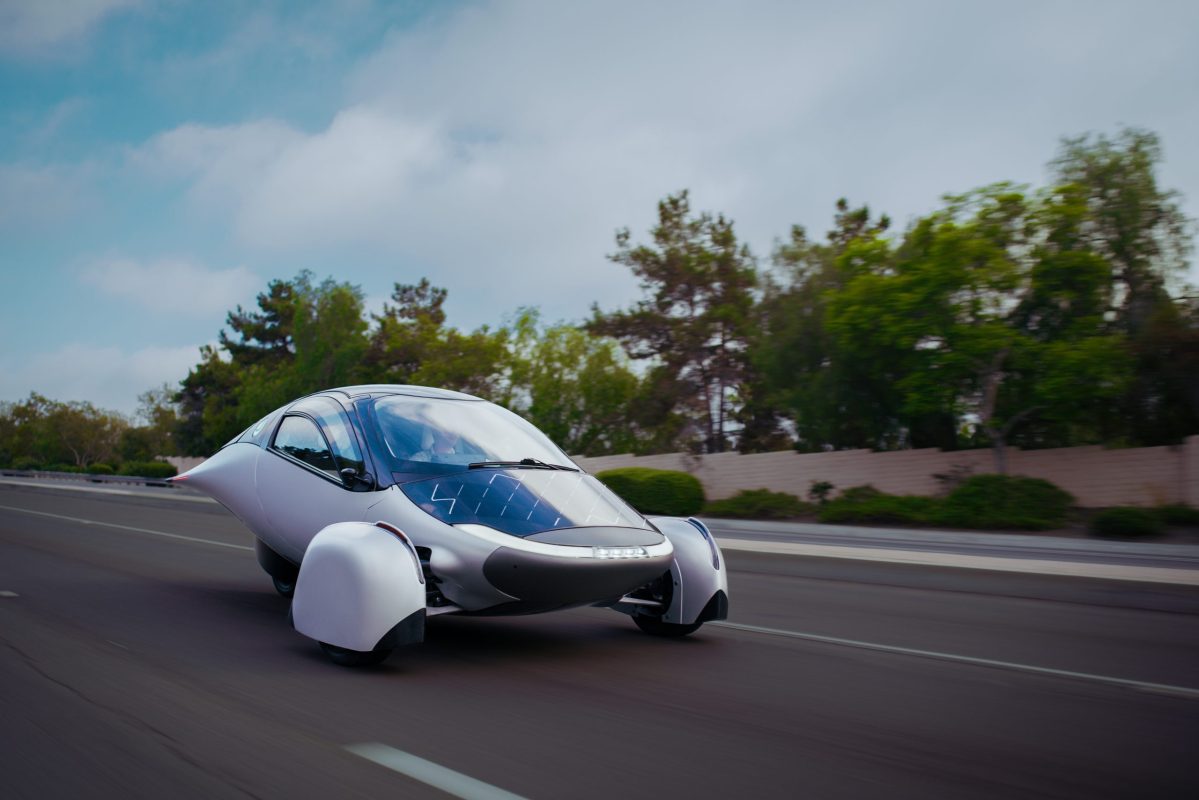
Fresh footage from inside Aptera's California assembly facility is reigniting a familiar debate: Is the long-hyped solar EV startup finally close to shipping vehicles, or is production still much farther off than its timeline suggests?
What happened?
Electrek's recent test-drive story and factory walk-through gave the public a clearer view of where Aptera stands, even as the visit highlighted why doubts about the company's readiness persist.
The San Diego County startup has centered its pitch on a highly efficient three-wheeled EV, with solar panels built into the vehicle's exterior to add driving range.
Aptera had previously said its first customer deliveries would begin in June 2026, Electrek reported, which means that the target date is now approaching quickly.
The report focuses in part on Aptera's Carlsbad plant, a roughly 77,000-square-foot site the company expects to use for final assembly.
Compared with earlier public updates, the factory shown in the tour appears more orderly, with lightweight chassis parts, several composite body shells, and defined production stations visible throughout. Electrek also reported seeing "perhaps 15 or so vehicle bodies in various stages of assembly," while noting the company's curved solar panel production and ultra-efficient electronics.
TCD Picks » Quince Spotlight
💡These best-sellers from Quince deliver affordable, sustainable luxury for all




Still, the footage also hints at how much work may remain. Aptera reportedly hopes to deliver 5,000 identical "Launch edition" vehicles before expanding options, yet the scale visible in the factory appears to fall well short of that goal.
Why does it matter?
If Aptera succeeds, it could bring something genuinely different to the EV market: a highly efficient vehicle that may require far less plug-in charging for some drivers.
That could be especially helpful for people without easy access to home charging, while also helping owners reduce fuel costs. Even conventional EVs already save many drivers money on gas and routine maintenance, since they do not need oil changes and generally have fewer moving parts than gas-powered vehicles.
Aptera's approach also points to a broader idea in transportation: prioritizing efficiency instead of simply relying on larger batteries. Electrek reported that the vehicle uses low-power computing, simplified communications systems, and a charging setup designed to avoid wasting energy when taking in small amounts of solar power.
Aptera's challenge now is proving that its unusual design can move from an eye-catching prototype to a real product.
What are people saying?
On the positive side, Electrek described the factory as "further along than we expected" and said Aptera was "quite open and frank during the tour."
But the outlet also questioned the timeline, writing that June deliveries seemed "quite unlikely."
Aptera looks more real than it once did, but not yet as close to mass deliveries as its deadline suggests.
"We don't have an updated date for first deliveries," Electrek concluded, "which means the mantra will probably be as it always was: wait and see."

Get TCD's free newsletters for easy tips, smart advice, and a chance to earn $5,000 toward home upgrades. To see more stories like this one, change your Google preferences here.






