


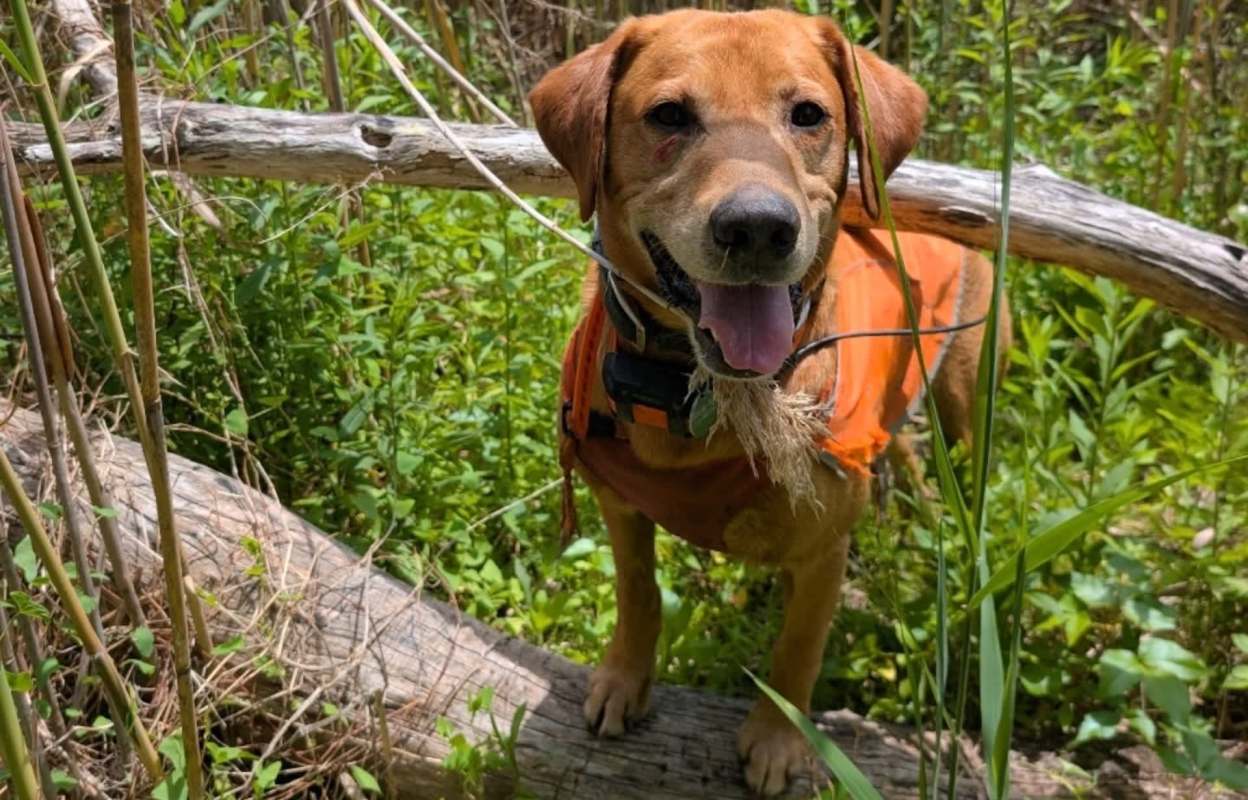
Scientists on Long Island are turning to a young Labrador retriever named April as they investigate the decline of Eastern box turtles, GoodGoodGood reported.
What's happening?
As Eastern box turtles suffer due to a combination of threats, including human development and habitat fragmentation, scientists and some unlikely partners have teamed up to survey the local turtle populations.
The Group for the East End, alongside Bark and Code, are taking specially trained "turtle-sniffing dogs" across Long Island to locate the turtles.
This collaboration's newest conservation detection dog, April, has her own Instagram account (@AprilShowersBringSalamanders). She's started completing turtle surveys alongside NYU biology professor Dr. Ana Thonis, and other experts, GoodGoodGood reported.
April and Newt, an experienced Labrador with five years of turtle-tracking work over six states, are helping the team search for Eastern box turtles at eight Long Island sites.
The dogs use GPS trackers, bright orange safety gear, and insect repellent. They move through the woods following the scent of turtles hidden beneath brush and leaf litter.
TCD Picks » Quince Spotlight
💡These best-sellers from Quince deliver affordable, sustainable luxury for all




In open ground, April can reportedly detect a turtle from as far as 100 yards away. Her training also allows her to ignore non-target animals such as snapping turtles.
Once a turtle is found, researchers record its size and weight, photograph it, draw a small blood sample, and add a harmless notch to the shell before returning it to its habitat.
Why is this important?
Eastern box turtles do not have federal threatened or endangered status, but experts say the species is increasingly at risk of shrinking. Fragmented habitats, vehicle strikes, and pesticides can all cause harm to them.
Researchers say those threats are becoming more evident on Long Island, where turtle populations aren't doing well. Box turtles are part of the area's ecosystem, and monitoring their numbers can help communities better understand how development is affecting nearby wildlife.
Because these turtles can live for a long time, short-term observations do not provide a full picture. Ongoing monitoring can help guide smarter land-use decisions, stronger conservation policy, and practical solutions like small wildlife tunnels.

Get TCD's free newsletters for easy tips, smart advice, and a chance to earn $5,000 toward home upgrades. To see more stories like this one, change your Google preferences here.







