


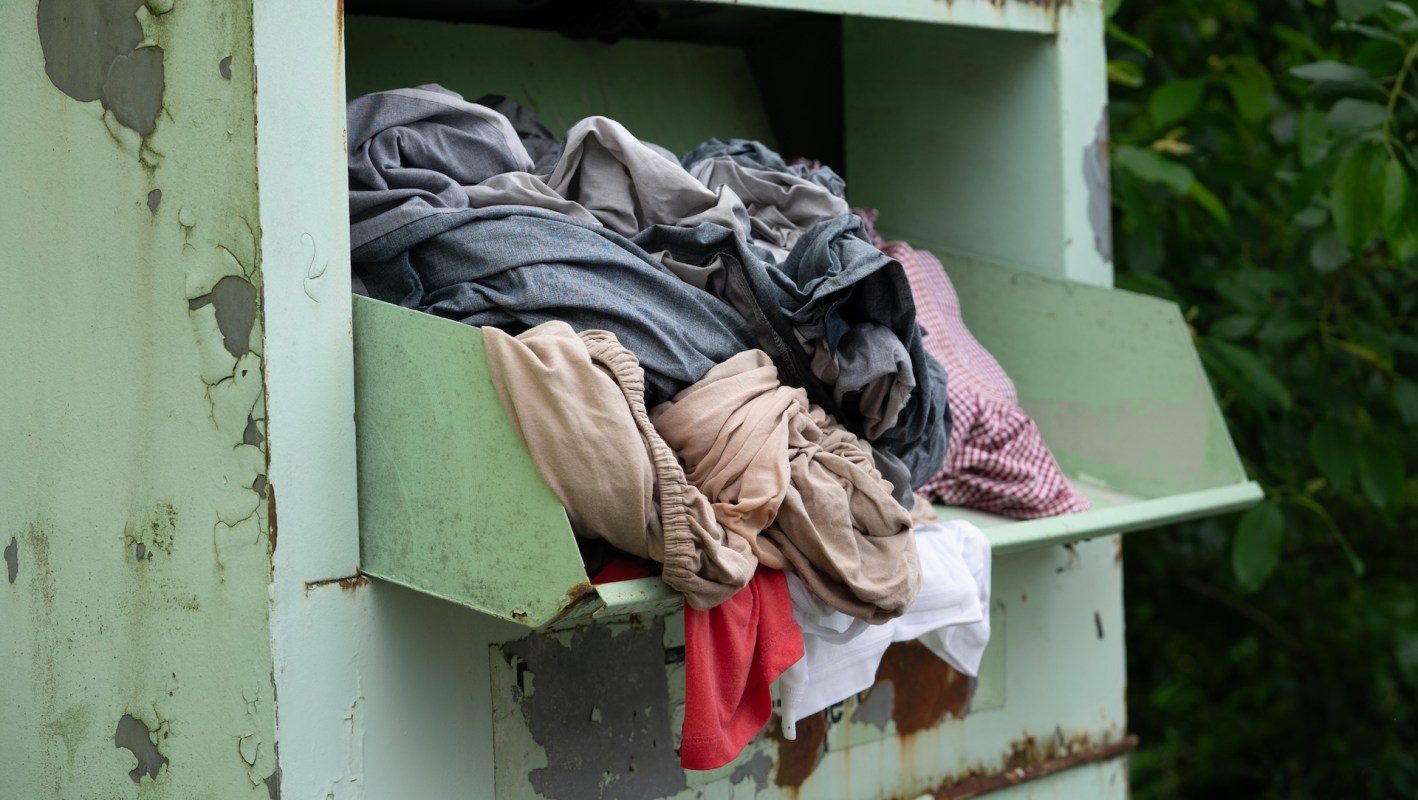
Local zoning laws could make it harder for California to reduce the massive clothing waste tied to fast fashion through clothing collection bins.
What happened?
Mattias Wallander, the CEO of textile recycling company USAgain, explained the issue via CalMatters.
The scale of California's textile waste is vast, and there are real-world obstacles that could weaken one of the proposed fixes. As Wallander stated, almost 1.2 million tons of textiles go to California landfills every year, and the state spends about $99 million annually to dispose of clothing, including items that are still usable.
Fast fashion and overconsumption are fueling those numbers. Americans buy much more clothing than they used to, and much of it is fad-based, lower quality, and made to be replaced quickly. About 85% of unwanted clothing in the U.S. is landfilled or incinerated, and another 5 billion pounds of returned goods are dumped in U.S. landfills each year.
California's Senate Bill 707, the Responsible Textile Recovery Act of 2024, is one attempt to tackle the issue. It would make producers, rather than taxpayers, responsible for end-of-life textile costs. But Wallander argued that the law's results could be limited if cities continue to restrict clothing collection bins.
Regardless, as Wallander wrote, "Collection bins are one of the easiest, lowest-friction ways for people to part with unwanted clothing."
TCD Picks » Quince Spotlight
💡These best-sellers from Quince deliver affordable, sustainable luxury for all




Why does it matter?
Fast fashion carries major hidden costs, from polluting waterways with dyes and microfibers to driving air pollution across global supply chains. It also often depends on exploitative labor practices to keep prices low.
It can also be a poor deal for consumers. Cheaply made garments tend to wear out quickly and have to be replaced again and again.
Recycling alone is not ready to solve the textile waste problem.
"Less than 1% of collected textiles are recycled back into fibers for remanufacturing," Wallander wrote. Fiber-to-fiber recycling also remains costly and difficult to scale. For now, extending the usable life of clothing through reuse remains one of the strongest available tools.
Loosening collection restrictions could make a real difference. Collectors across California said they could increase volumes by 50% to 75% if the government eased the rules.
If SB 707 works as intended, it could keep hundreds of thousands of tons of clothing out of landfills, cut pollution, and support at least 1,000 green jobs in California.
Wallander concluded, "The fix is within reach, but only if we scale up the infrastructure to support it."

Get TCD's free newsletters for easy tips, smart advice, and a chance to earn $5,000 toward home upgrades. To see more stories like this one, change your Google preferences here.






