


More than a decade ago, Boyan Slat set out to clear plastic already drifting through the Pacific Ocean.
Now, the Dutch engineer's nonprofit appears to be making more progress with a different tactic: keeping that waste from reaching the sea in the first place.
What happened?
Slat started Ocean Cleanup when he was just 18, with the Great Pacific Garbage Patch as an early focus. But as CleanTechnica noted, the sheer scale of that floating pollution pushed the organization toward an upstream strategy instead.
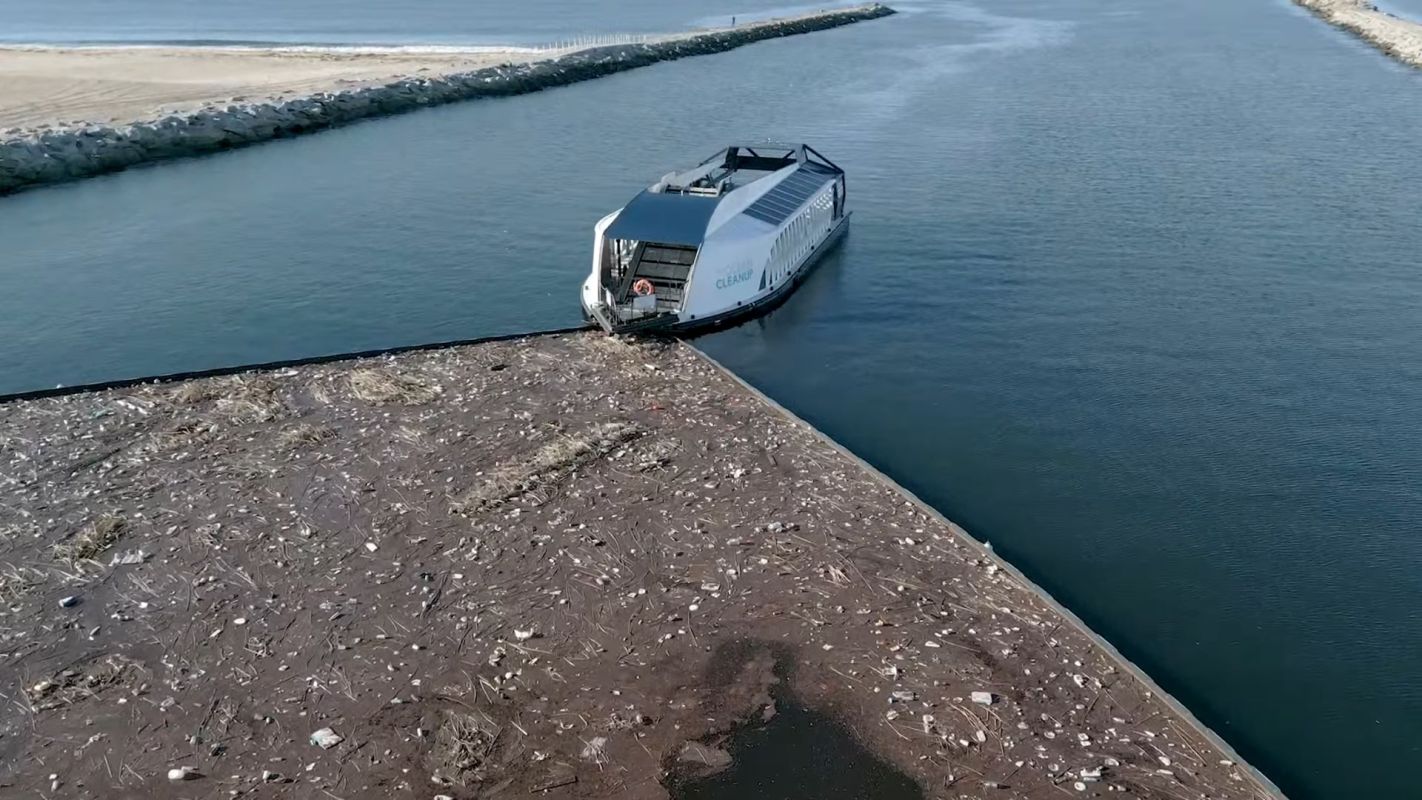
That shift has led the group to roll out solar-powered "Interceptor" systems that catch trash in rivers and creeks before it can be carried into the ocean.
In Los Angeles County, one of those systems sits where Ballona Creek empties into Santa Monica Bay. It removed 143,710 pounds of trash from the water in 2025.
Floating debris is funneled by a V-shaped boom toward a barge. A conveyor belt then lifts the trash from the water, and an automated shuttle sorts it into six dumpsters. The full system can store about 10 tons of waste.
TCD Picks » Quince Spotlight
💡These best-sellers from Quince deliver affordable, sustainable luxury for all




Why does it matter?
A major share of ocean plastic pollution begins in rivers.
Ocean Cleanup research found that roughly 1,000 rivers are tied to nearly 80% of the plastic that enters the ocean each year, and that rivers account for 90% of ocean pollution.
Intercepting bottles, packaging, and other debris before it travels downstream can help protect beaches, marine life, and nearby communities all at once. Cleaner waterways can also improve daily life for residents by reducing visible litter in public spaces and making coastlines more enjoyable.
CleanTechnica reported that beach communities south of Ballona Creek are now spending less on grooming because less debris is washing ashore.
James Patterson, who oversees the Ballona Creek system, said, "We have to turn the faucet off before we can scoop the ocean, or else all we're doing is taking out legacy trash to replace it with new trash."
He also highlighted the complexity behind the technology. "It may seem simple, but truly a master of engineering goes on inside of these," he said.
Patterson added that expansion will depend on the needs of each location rather than a single standard model.
"There's no one size fits all," he said.
Each river presents different conditions, permitting timelines, and engineering requirements, but the early results suggest the strategy is already having an impact.

Get TCD's free newsletters for easy tips, smart advice, and a chance to earn $5,000 toward home upgrades. To see more stories like this one, change your Google preferences here.






