


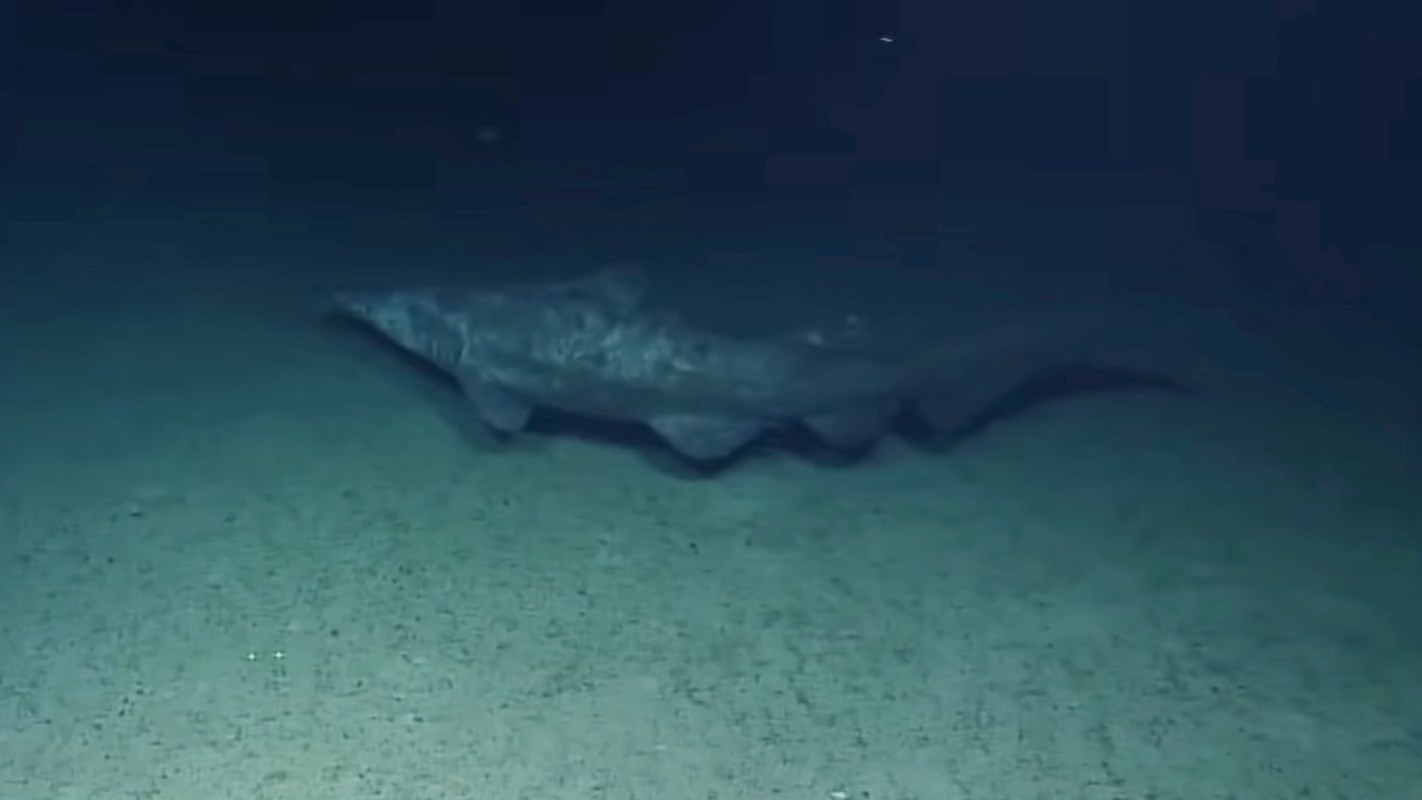
Newly released deep-ocean footage has offered scientists and the public an unusual glimpse of the goblin shark, one of the sea's least-often-seen animals.
The videos show separate examples of the ancient-looking shark in its natural environment, and one of them appears at a depth beyond what scientists had previously associated with the species.
What happened?
Researchers from the University of Hawaiʻi at Mānoa documented two living goblin sharks in Pacific waters, an unusual achievement for a species seldom observed alive.
The research team published its findings in a study that appeared in the peer-reviewed Journal of Fish Biology.
The goblin shark stands out for its pink coloration, elongated snout, and jaws that project forward. Scientists often call it a "living fossil" because it is the last remaining member of a shark lineage that stretches back about 125 million years, per PopSci. They also often grow up to 13 feet in length.
Since its formal identification in 1898, the animal has been encountered only rarely, in part because it usually inhabits waters around 3,000 feet deep. Yet, in one of the instances described in the study, the shark was found nearly 2,300 feet farther down, broadening scientists' understanding of where the species lives.
TCD Picks » Quince Spotlight
💡These best-sellers from Quince deliver affordable, sustainable luxury for all




The videos were collected during separate expeditions in 2024 and 2025.
Why does it matter?
Because so little is known about goblin sharks, recordings like these can fill in major gaps in scientists' picture of the species' movements and habits. One observation pushes the shark's documented distribution into the Central Pacific, and the other places it at a depth nearly 2,300 feet below prior expectations.
A better understanding of deep-sea species helps researchers determine how ocean ecosystems function, where biodiversity is concentrated, and how marine life may respond to mounting pressures.
Healthy oceans support coastal communities, global food systems, and climate stability. When scientists can identify where rare animals live and how they survive, it becomes easier to make conservation decisions that protect fragile ecosystems before they are disrupted.

Get TCD's free newsletters for easy tips, smart advice, and a chance to earn $5,000 toward home upgrades. To see more stories like this one, change your Google preferences here.






