


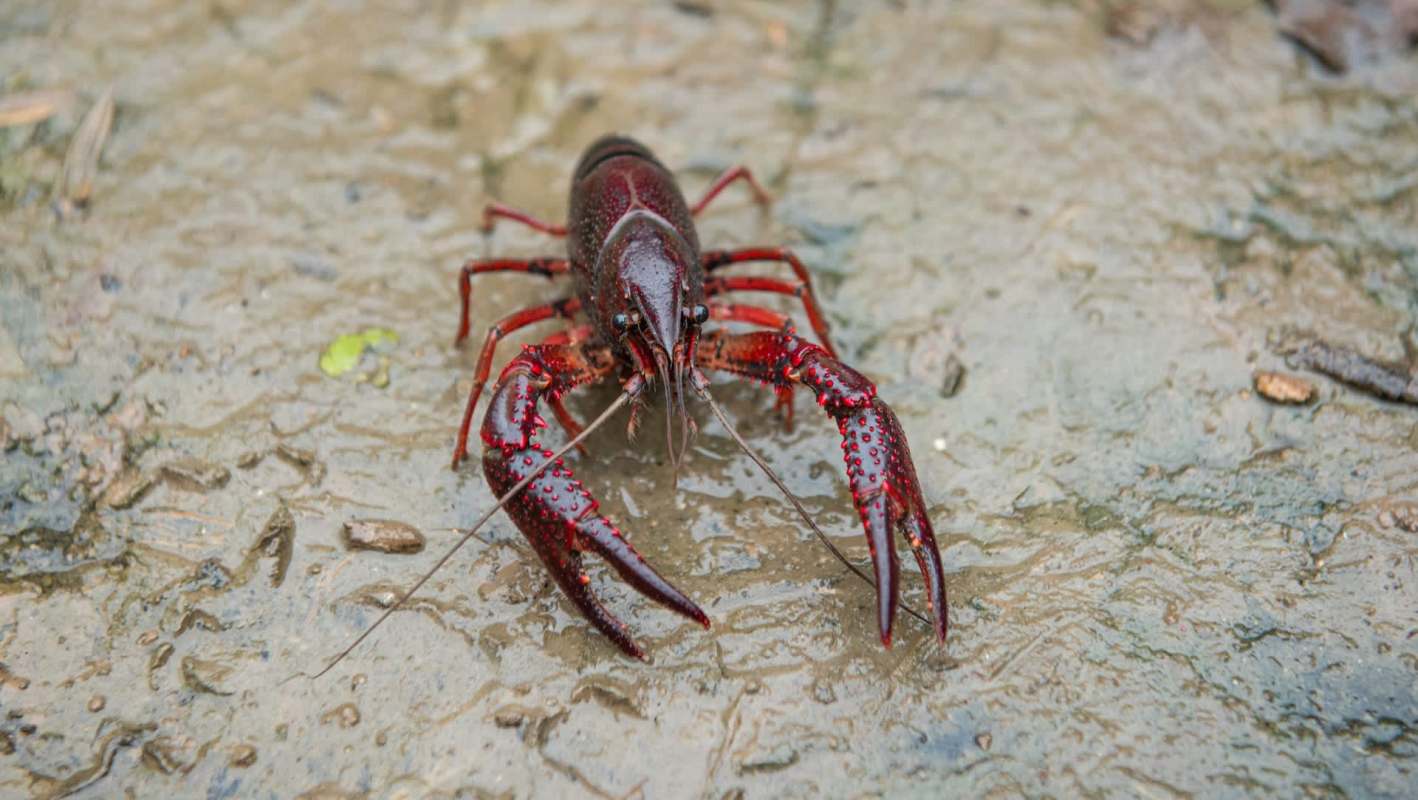
Ontario is dealing with a newly confirmed invasive crayfish in its waters, and authorities have warned that the dark red, lobster-like species could harm vulnerable freshwater habitat.
This is not limited to isolated sightings. The species is already breeding in at least one Ontario site, raising concerns for communities that rely on healthy lakes, ponds, and wetlands.
What happened?
The red swamp crayfish, or Procambarus clarkii, is an aggressive crayfish from the southeastern United States, according to a blogTO post.
The Ontario Federation of Anglers and Hunters said there is already "a reproducing population in Tilbury and a localized population in Lake Aquitaine, Mississauga."
Sometimes referred to as "freshwater lobsters," these crayfish are fairly easy to identify. Adults are usually about five to 13 centimeters long. They have dark red bodies, elongated heads, and claws with raised bright red, white, or black spots.
They are often found in freshwater areas with muddy or sandy bottoms and plenty of organic debris. Ontario has already listed the species under its invasive species rules and bans importing, transporting, breeding, buying, selling, trading, depositing, or releasing it.
TCD Picks » Quince Spotlight
💡These best-sellers from Quince deliver affordable, sustainable luxury for all




Why does it matter?
The concern is that they can be difficult to control once they become established.
The provincial government said red swamp crayfish can tolerate a wide range of oxygen, temperature, pollution, and pH conditions, giving them a major advantage over many native species.
Their feeding can quickly change an ecosystem. They eat small fish, mollusks, amphibians, eggs, and larvae, and can also thin out aquatic plants and damage important habitat.
Another concern is how fast their numbers can rise. Females may carry about 100 to 500 fertilized eggs under the tail, causing populations to grow quickly.
What are people saying?
Ontario's provincial government has already labeled the animals "regulated as a prohibited invasive species under the Invasive Species Act, 2015."
Officials are also urging the public to help prevent further spread and to "never buy, keep, or breed the species as a pet." Any illegal activity involving the species should be reported immediately.

Get TCD's free newsletters for easy tips, smart advice, and a chance to earn $5,000 toward home upgrades. To see more stories like this one, change your Google preferences here.






