


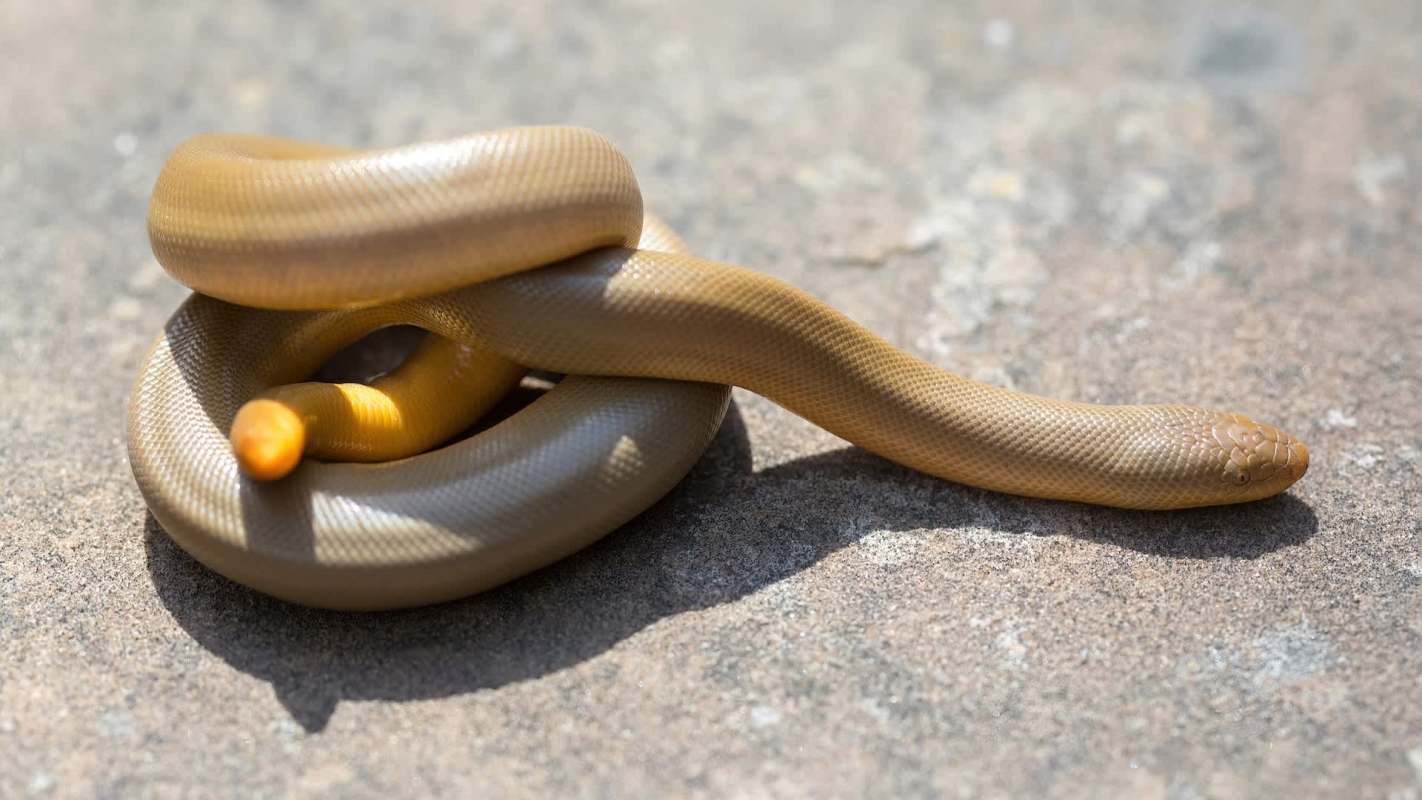
A newly identified snake in South China is drawing attention for an interesting illusion: It can make its tail look like a second head.
Nicknamed the "Guangxi two-headed snake," the small reptile was recently confirmed as a never-before-documented species, a reminder that even well-studied forests can still hold major surprises.
What's happening?
In Guangxi's Huaping National Nature Reserve, scientists identified a snake that had not previously been recognized by science. The newly described species is called Calamaria incredibilis.
CGTN reported that the animal was found by researchers from the Natural History Museum of Guangxi during a survey in a broadleaf forest at about 760 meters (2,493 feet) of elevation. By examining its physical characteristics and molecular evidence, the team concluded that it was an undocumented species.
At about 8.7 inches long, the snake is thin-bodied and small. CGTN said it is non-venomous, generally mild-tempered, slow-moving, and mostly nocturnal, with a brown back marked by seven broken dark stripes and scales whose dark edges produce a net-like pattern.
The "two-headed" nickname refers to its response when it feels threatened. CGTN reported that the snake bends itself into a figure eight and raises its blunt tail so it resembles another head, a move that may confuse predators. The researchers' findings were published in the journal Zoosystematics and Evolution.
TCD Picks » Quince Spotlight
💡These best-sellers from Quince deliver affordable, sustainable luxury for all




Why does it matter?
Discoveries such as this add new names to the tree of life and help scientists better understand how ecosystems function and what needs protection.
As CGTN noted, this small semi-fossorial snake spends much of its time in loose soil, beneath leaf litter, and among gaps in rocks. It eats earthworms and insect larvae, keeping food webs balanced and playing a part in the underground life that supports forest health.
The more researchers know about what lives in a reserve, the more precisely conservation plans can be tailored to protect it.
The find also points to the Huaping reserve as a place that may hold more overlooked wildlife. CGTN said this was the second newly identified species reported from the reserve this year, following the Huaping leaf litter toad, which was recognized as the world's 9,000th recorded amphibian species.
TCD Picks » Quince Spotlight
💡These best-sellers from Quince deliver affordable, sustainable luxury for all
What's being done?
Scientists are already carrying out careful fieldwork in protected habitats. In this case, they paired the traditional study of the snake's physical form with molecular analysis, which allowed them to verify that it was new to science.
The work provides conservationists with strong evidence to preserve habitats before rare species disappear unnoticed. It also helps reserve managers understand which microhabitats — such as leaf litter zones and rock crevices — deserve extra attention.
Each newly documented species helps scientists build a clearer picture of the natural world and strengthens the case for protecting the habitats where overlooked species persist.

Get TCD's free newsletters for easy tips, smart advice, and a chance to earn $5,000 toward home upgrades. To see more stories like this one, change your Google preferences here.







